
Some kids move all day, every day, and never seem to run out of gas. You have tried tiring them out, calming activities, earlier bedtimes, and consistent routines, and none of it changes the basic pattern: your child is always on, and the moment they have to slow down, whether for a meal, a car ride, or bedtime, things fall apart. If you have started wondering whether you are doing something wrong as a parent, you are probably not. This is a nervous system pattern more often than it is a parenting problem.
The Gas Pedal and the Brake Pedal
A child's nervous system runs on two settings. The sympathetic side is the gas pedal, the part that ramps up for sports, excitement, and anything fast paced. The parasympathetic side is the brake pedal, the part responsible for sitting still, settling at bedtime, and calming down after something exciting happens. Both sides are supposed to balance each other out. In a lot of high energy kids, the gas pedal is strong and the brake pedal is underpowered, so the child has plenty of get up and go but very little ability to slow back down once they get going.
What This Looks Like Day to Day
This pattern shows up earlier than a lot of people expect, sometimes as young as toddlerhood, and it tends to look different depending on your child's age and setting. A few signs parents describe across ages:
- Constant motion, running, climbing, jumping, even in settings that call for sitting still
- Trouble falling asleep despite being visibly tired
- Difficulty sitting through a meal, a car ride, or a classroom lesson
- Meltdowns or resistance when asked to stop an activity or switch gears
- Fidgeting and restlessness that does not let up even during quiet activities
- An intensity to play that can look like it is always turned up one notch too high
Interruption is often the hardest moment of all. A child locked into a game, a puzzle, or building something is not usually ignoring you on purpose when the transition falls apart afterward. Breaking out of whatever they were deep into takes a working brake pedal, and that is exactly the part running low.
Why This Is Not a Discipline Issue
None of this means your child is being defiant or that your parenting approach is off. A child stuck mostly on the sympathetic side of their nervous system is not choosing to ignore a request to slow down. Their body genuinely does not have enough parasympathetic counterbalance available in that moment to make slowing down feel possible. Asking a child in that state to just calm down is a little like asking a car with worn brakes to stop on a dime. The gas pedal works fine. The brakes are what is missing.
It can help to notice that this pattern rarely shows up in only one setting. A child running this hot tends to be the same at home, at school, and at a friend's house, not just difficult in one specific environment where the rules might be different. That consistency across settings is itself a clue that something in the nervous system, not the surroundings, is driving the pattern.
Where This Pattern Tends to Start
The parasympathetic brake pedal is driven largely through the vagus nerve, which runs from the brainstem down through the body, with key regulating points in the upper neck and the lower back and sacrum. Birth puts real physical stress through a newborn's neck, whether from a long labor, induction, forceps, vacuum extraction, or a C-section, and that stress can leave tension sitting right where this calming system needs to function well. Add in the ordinary sympathetic load of modern childhood, packed schedules, screens, and near constant stimulation, and a nervous system that started off with a weaker brake pedal gets even less chance to strengthen it. It is rarely that today's kids move more than kids used to. It is that they get fewer stretches of quiet, unstructured downtime where the brake pedal gets any practice engaging at all, so a system that is already leaning sympathetic has little chance to build up the other side.
How Our Doctors Approach This
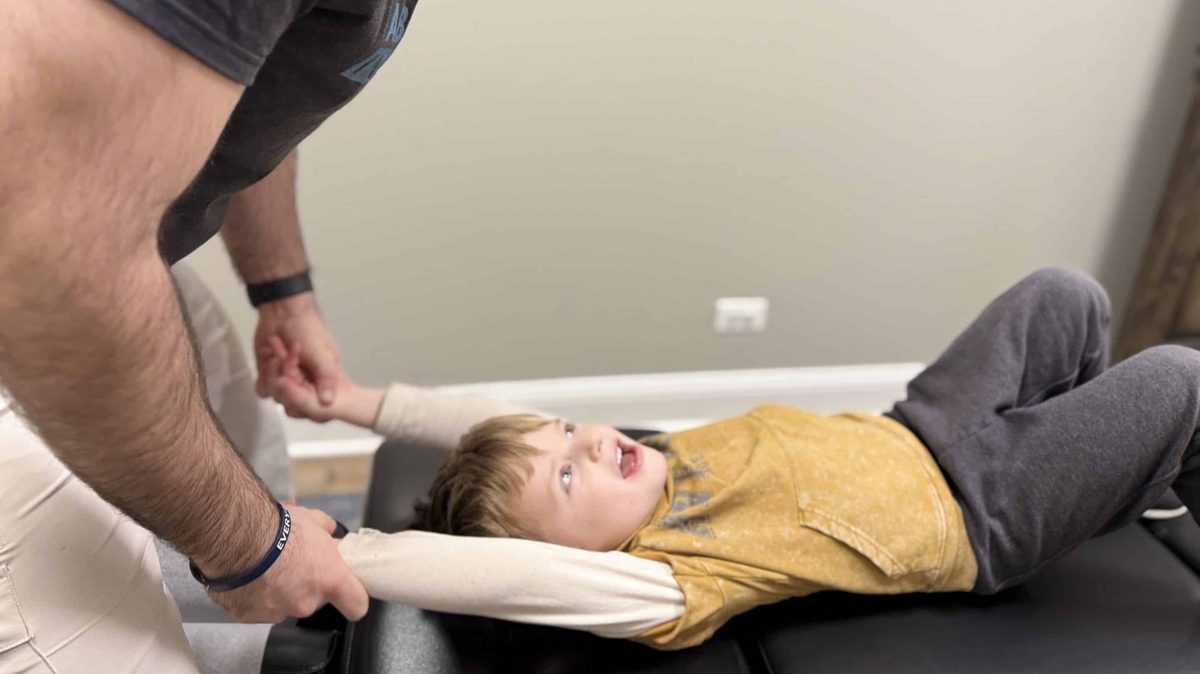
We start with your child's full history, pregnancy, birth, and the specific pattern you have been living with, and take it seriously from the first conversation. A gentle exam and INSiGHT neurological scanning then show us how balanced your child's nervous system actually is, rather than guessing from behavior alone. Using Koren Specific Technique and Talsky Tonal Chiropractic, our doctors work with light, nervous system focused contacts at the upper neck and lower back and sacrum, the two areas that drive the most parasympathetic input, aimed at giving that brake pedal more to work with. There is no cracking, popping, or twisting involved, and the pace is set by what your child can comfortably handle.
What Parents Often Notice
Families often describe an easier time settling at bedtime, longer stretches of sitting through a meal or a car ride, fewer meltdowns when an activity has to end, and a child who still has plenty of energy but seems to come back down to earth more easily afterward. Every child moves at their own pace. Some families notice a difference within a handful of visits, while a longer standing pattern takes steadier, more gradual care, and our doctors keep close track of how your child is responding so the plan can shift along the way.
Where to Go From Here
If your child never seems to find their off switch, it is worth taking a closer look at what their nervous system is doing underneath. Our behavior in children page goes further into this pattern, and there is a free guide on the nervous system side of it as well. Give our Royal Oak office a call at (248) 616-0900, or go ahead and book online.