
Chiropractor for Ear Pain in Royal Oak: Bernie's Story
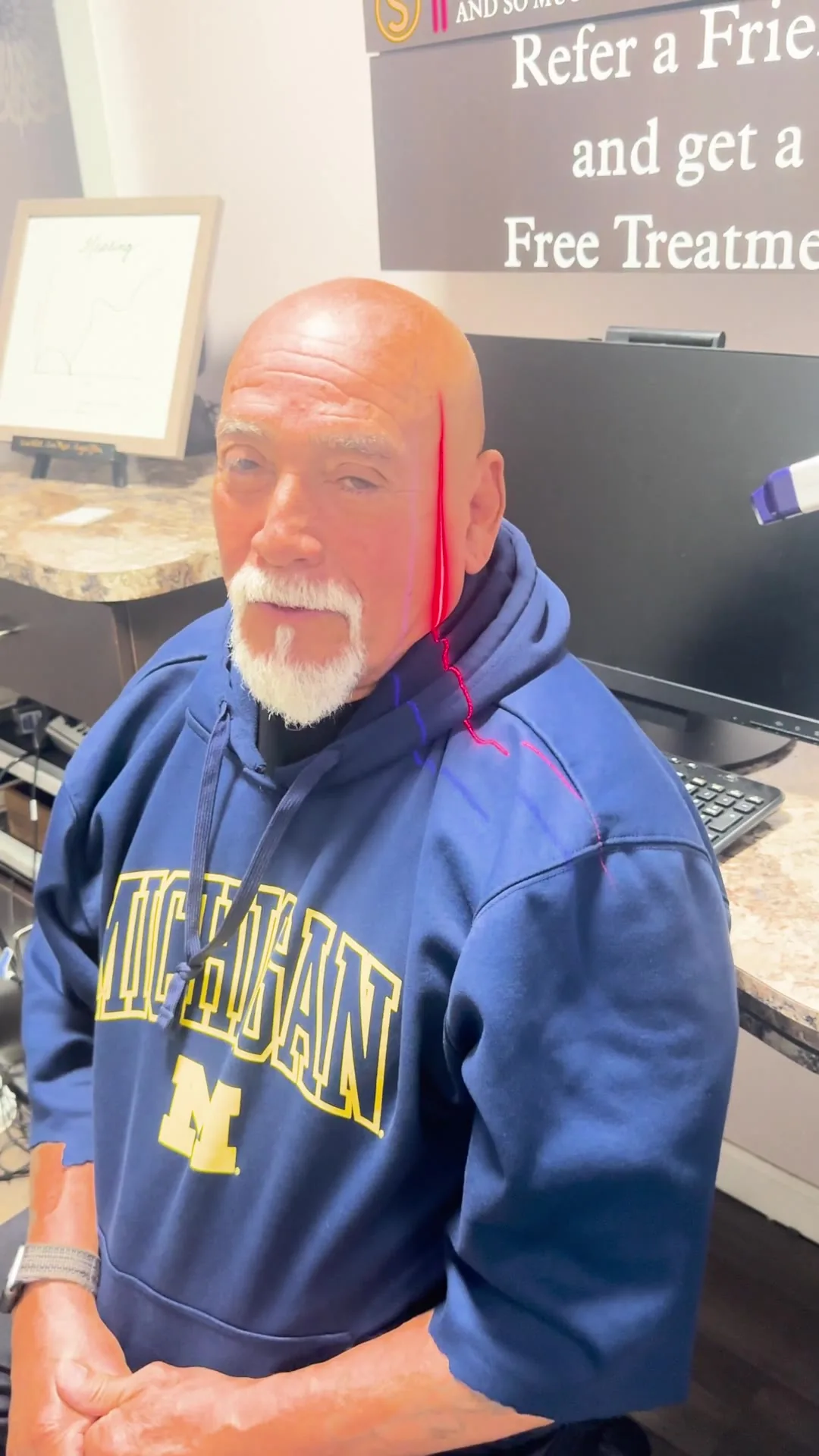
Bernie came to us with an ongoing ear issue. He shares what he told us about his care at our Royal Oak office, and his thanks to Dr. Saylor, Dr. Zach and our laser therapy.
Physical therapy. Injections. Medication. Maybe chiropractic care that cracked and twisted more than it helped. If you've tried the usual playbook for your chronic pain and the relief never quite stuck, you're not imagining it, and you're not out of options.
Pain that lingers long after an injury has healed often isn't about damaged tissue anymore. It's a nervous system that has learned to stay on high alert, amplifying ordinary signals long after the original cause resolved. Calming that system, rather than re-treating the same site over and over, is where gentle, nervous system focused care can help.
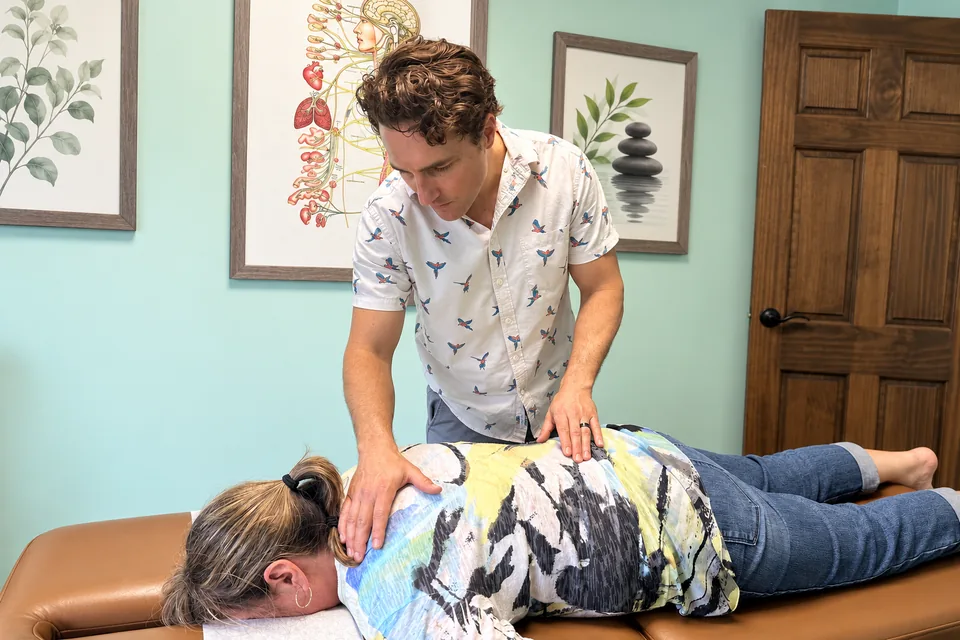
Because our adjustments can be delivered seated, standing, or in whatever position is actually comfortable for you, patients who can't tolerate being pushed, twisted, or laid flat on a table often find this is the first form of hands-on care they can actually tolerate.
Chronic pain doesn't look the same from one patient to the next, but a few patterns show up again and again. Pain that scans and exams say should have healed months or years ago. A body that's grown sensitive to touch, temperature, or pressure well beyond the original site.
Sleep that never resets, so you wake up as tired and sore as you went to bed. A tired, foggy feeling that shows up alongside the pain. Flares that spike during stressful weeks even when nothing physically changed, and a history of appointments and medications that helped a little, for a while, and then stopped.
Long-standing pain often outlives the original injury because the nervous system itself becomes sensitized, amplifying signals long after the tissue has healed.
By the time pain has lasted this long, it is rarely about a single damaged structure anymore. A subluxation or old injury can leave the nervous system stuck in a heightened stress response, so ordinary signals get amplified and generalized well beyond where the trouble started. A fight or flight state that never fully downshifts also interferes with sleep, digestion, and the body's own healing processes, which is part of why medication and treatments aimed only at the pain site tend to help less and less over time.
Chronic pain deserves more time than a rushed first visit allows. We start with your whole history: every treatment you've tried, when the pain started, and what makes it better or worse, so we understand the full picture before we touch your spine. From there, we run painless INSiGHT scans, thermal, heart rate variability, and muscle scans that show us where your nervous system is under stress, not just where it hurts.
Using Koren Specific Technique (KST) and Talsky Tonal Chiropractic (TTC), our doctors locate and correct the specific areas of nervous system tension driving your pain response, adjusted in whatever position actually works for you that day, whether that's seated, standing, or lying down if that's tolerable. As your nervous system settles, we space out care and adjust the plan based on how you're responding, along with practical guidance for movement, sleep, and stress.
Chronic pain built up over months or years, so care is not a single adjustment and done. Our doctors typically see the nervous system settle first, patients sleeping a little easier or feeling less on edge, before flares grow shorter and further apart. We reassess with INSiGHT scans along the way to confirm your plan is actually calming your nervous system rather than repeating a routine that has already stopped moving the needle.
Patients report fewer and shorter flares, better sleep, and more energy, often alongside less guarding in daily movement and less reliance on medication. Many also tell us they finally understand what triggers a flare and how to get ahead of it before it takes hold, which changes how confident they feel in their own body day to day.
Take the First Step If chronic pain has outlasted everything you've tried, a conversation is a good place to start. Our doctors in Royal Oak are happy to answer your questions.
Book OnlineWhen pain lingers well past normal healing time, it is often less about ongoing tissue damage and more about a nervous system that has learned to stay on high alert. The signals get amplified and can spread beyond the original site. Calming that overactive nervous system response, rather than re-treating the same spot again and again, is central to how our doctors approach chronic pain.
Most conventional chronic pain treatment focuses on the site of pain itself. Our doctors start by running painless INSiGHT scans, thermal, heart rate variability, and muscle scans, to see where your nervous system is actually under stress, then use Koren Specific Technique (KST) and Talsky Tonal Chiropractic (TTC) to make light, nervous system focused corrections. There is no cracking, twisting, or forceful manipulation involved.
Every case is different, and pain that has built up over months or years usually takes more than one visit to unwind. Many patients notice their nervous system settling first, sleeping a little better or feeling less on edge, before flares become shorter and further apart. Our doctors track your response with INSiGHT scans and adjust your plan based on what your body is telling us.
Yes. Our adjustments are light, nervous system focused contacts with no cracking, twisting, or sudden movements, and they can be delivered seated, standing, or lying down, whatever position is actually comfortable for you that day. Patients who can't tolerate being pushed, twisted, or laid flat on a table often find this is the first hands-on care they can tolerate.
Long standing pain can take longer to respond, but it is rarely too late to calm a nervous system that has been stuck in overdrive. Our doctors have helped many patients who had tried everything else find real, lasting change once the underlying nervous system pattern driving the pain was addressed instead of just the pain site itself.
Bernie came to us with an ongoing ear issue. He shares what he told us about his care at our Royal Oak office, and his thanks to Dr. Saylor, Dr. Zach and our laser therapy.
You stopped mentioning the ache months ago because it just became part of your day. That quiet adjustment is not recovery. It is your nervous system compensating, and it usually hides a bigger problem.
Bracing before you bend, skipping the walk, sitting out the family hike. Guarding against pain feels protective, but it can quietly keep a nervous system stuck in alarm mode.
See what Royal Oak families say in our Google reviews and patient stories, or browse everything we offer.
Our doctors put together a full article on chronic pain that explains what's really behind it and what lasting relief looks like. Get instant access below.

