Multiple Sclerosis Nervous System Support

Multiple Sclerosis Nervous System Support

Gentle Autonomic Nervous System Support for MS

Woman sitting on her bed with her head in her hands, worn down by fatigue

Fatigue that doesn't track your MRI. Sleep that doesn't restore you. Heat that wipes out your entire afternoon. Cognitive fog nobody has quite been able to attribute to anything specific. If you're living with multiple sclerosis, you already know your day-to-day experience often has very little to do with what a scan shows.

A lot of that gap comes down to the autonomic nervous system, the part of your body that runs heart rate, temperature regulation, digestion, and the balance between alertness and rest, all without you thinking about it. MS can disrupt this system directly, and it's a layer that often gets far less attention than lesion count or relapse frequency. Our doctors focus specifically on supporting autonomic nervous system function, gently and consistently, alongside the neurology care you're already receiving.

How MS Shows Up

No two MS days look quite the same. One week it's a wave of fatigue that no amount of sleep touches. Another it's a hand that won't quite cooperate, a leg that feels heavier than usual, or a bout of dizziness that makes stairs feel risky. Heat, whether from a shower, a summer afternoon, or a workout, can flip symptoms on almost instantly and leave you needing to lie down. Cognitive fog shows up as losing your train of thought mid-sentence or rereading the same paragraph three times. Bladder urgency, digestive changes, and blood pressure swings when you stand up too fast are common too, and all of it traces back to the same nervous system that keeps everything else running quietly in the background.

The same nervous system that governs your heart rate and body temperature is often driving your hardest afternoons, long before anything shows up on a scan.

Upper Cervical Focus

The upper cervical spine sits close to the brainstem, where much of autonomic regulation begins. Our doctors pay particular attention to this area, using light, precise adjustments rather than broad, generalized work across the spine.

Balance changes, coordination shifts, and cognitive fog often trace back to this same brainstem-adjacent area. When nerve communication through the upper cervical spine improves, many patients notice those shifts settling alongside changes in fatigue and heat tolerance.

How We Track What's Actually Happening

Our neurological assessment includes heart rate variability testing, which gives our doctors an objective measure of autonomic balance instead of relying on how you describe a day. Combined with thermal and sEMG scans, we get a fuller picture of where your nervous system is under strain.

Many MS symptoms trace back to a nervous system stuck favoring stress over rest. As care continues, we re-check that balance and watch it shift, ideally back toward the parasympathetic side that supports digestion, sleep, and steady energy.

Adjusted the Way Your Body Can Tolerate

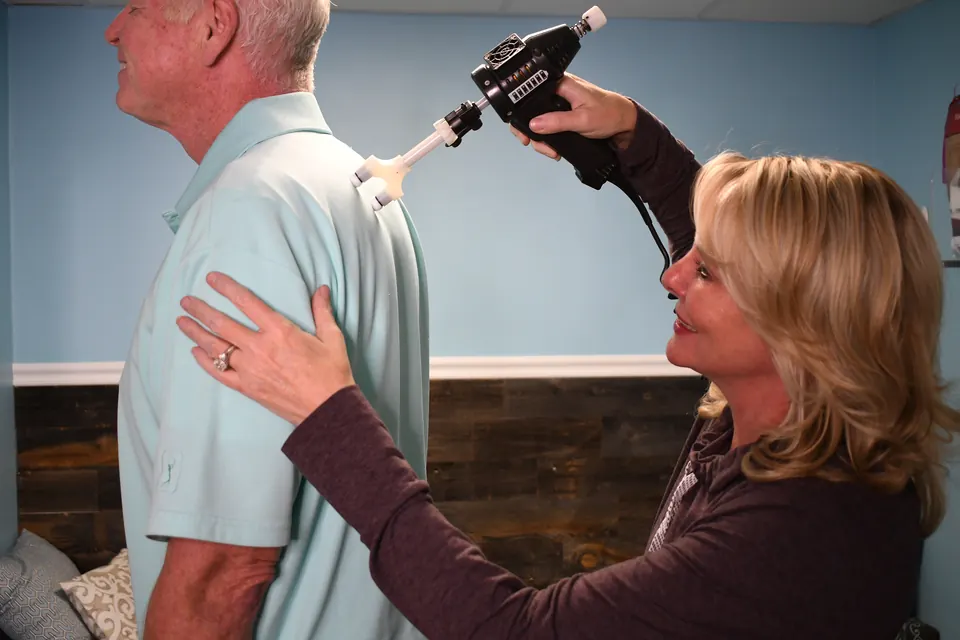
Using Koren Specific Technique (KST) and Talsky Tonal Chiropractic (TTC), our doctors adjust you seated, standing, or lying down, whatever position your body can tolerate that day. There is no cracking, twisting, or force involved, and we adapt every visit to your current sensitivity and mobility.

What Families Notice

Patients often describe more stable energy through the day, better tolerance for heat, and sleep that finally feels restorative. Bladder, bowel, and blood pressure symptoms, all governed by the same autonomic layer, sometimes settle too.

Our doctors are glad to communicate with your neurologist and treat this as one piece of a larger, coordinated plan. Many families say having that steady layer of support, alongside the medical care already in place, makes hard days a little more manageable.

Take the First Step

If MS has you managing symptoms a scan can't explain, a conversation with our doctors is a good place to start, right here in Royal Oak.

Book Your Consultation

Common Questions

Can chiropractic care actually help with MS?
Our doctors don't treat MS itself. What we focus on is the autonomic nervous system, the layer that governs fatigue, temperature regulation, sleep, and digestion, which is often disrupted right alongside the demyelination a neurologist tracks. Gentle upper cervical care aims to support that layer, working alongside the neurology care you already have in place.
Why does heat make my symptoms so much worse?
Heat sensitivity in MS is tied to the same nervous system pathways we work with. When the autonomic system is already under strain, even a modest rise in body temperature can slow nerve signaling further and bring on fatigue, blurred vision, or weakness. It usually settles once you cool back down, and many patients notice better heat tolerance as their nervous system balance improves.
Is your care safe alongside my neurologist and medications?
Yes. What we do is entirely separate from your medical management, and we're glad to communicate directly with your neurologist so care stays coordinated. Our doctors use light, nervous system focused contacts with no cracking, twisting, or forceful manipulation, and we adjust in whatever position, seated, standing, or lying down, your body can tolerate that day.
How do you know if the nervous system care is actually working?
We don't just ask how you're feeling. Heart rate variability testing gives our doctors an objective read on autonomic balance, and thermal and sEMG scans add a fuller picture of where your nervous system is under strain. We re-check that balance as care continues, so progress is measured, not guessed at.
What if my MS symptoms change from week to week?
That variability is exactly what we plan around. Every visit starts with where your body is that day, not where it was last week, and we adjust you in whatever position is comfortable given your current sensitivity and mobility. Consistency in care matters more than any single visit going perfectly.
Will this help with the fatigue and brain fog specifically?
Fatigue and cognitive fog are two of the symptoms families report noticing change most, alongside better heat tolerance and more restorative sleep. Both trace back to the brainstem-adjacent upper cervical area our doctors focus on, so as nerve communication through that region improves, many patients notice those shifts settling too.

Related: Neurological Assessment · Seizure Disorder Support · POTS & Dysautonomia · Vertigo & Dizziness · Chronic Fatigue

Free Article

The Nervous System Layer MS Care Often Misses

Our doctors put together a full article on multiple sclerosis nervous system support that explains what's really behind it and what lasting relief looks like. Get instant access below.