If you're dealing with a child who struggles with constipation, Van Every Family Chiropractic Center offers a simple explanation you might not expect. The muscles in the intestine that push stool along have a real connection to the spine.
Specialized nerve cells in the intestine, called ganglion cells, connect to the celiac ganglion, which also helps run the stomach, liver, gallbladder, spleen, kidney, and parts of the colon. That ganglion connects back to the spinal cord through the lower thoracic and upper lumbar spine, so pressure on those nerve roots from a misalignment can show up as constipation.
How Constipation Shows Up
Constipation rarely looks the same from one child to the next. Some go fewer than three times a week and strain hard for what does come. Others have stools that are hard or painful to pass and start holding it in altogether rather than deal with the discomfort, which only makes the next attempt harder. Bloating, a hard or distended belly, and stomach aches often ride along with it. Many parents notice the pattern starts or worsens around a growth spurt, a bout of illness, the switch to solid foods, or a stressful stretch like starting daycare, timing that points toward the nervous system rather than diet alone.
Our Approach
We ask about your child's birth, feeding, and diet, and when the constipation started or worsened, looking for the pattern behind it. Our doctors then examine the lower thoracic, lumbar, and sacral spine, where the nerves controlling bowel motility originate, to find where tension may be interfering with normal function.
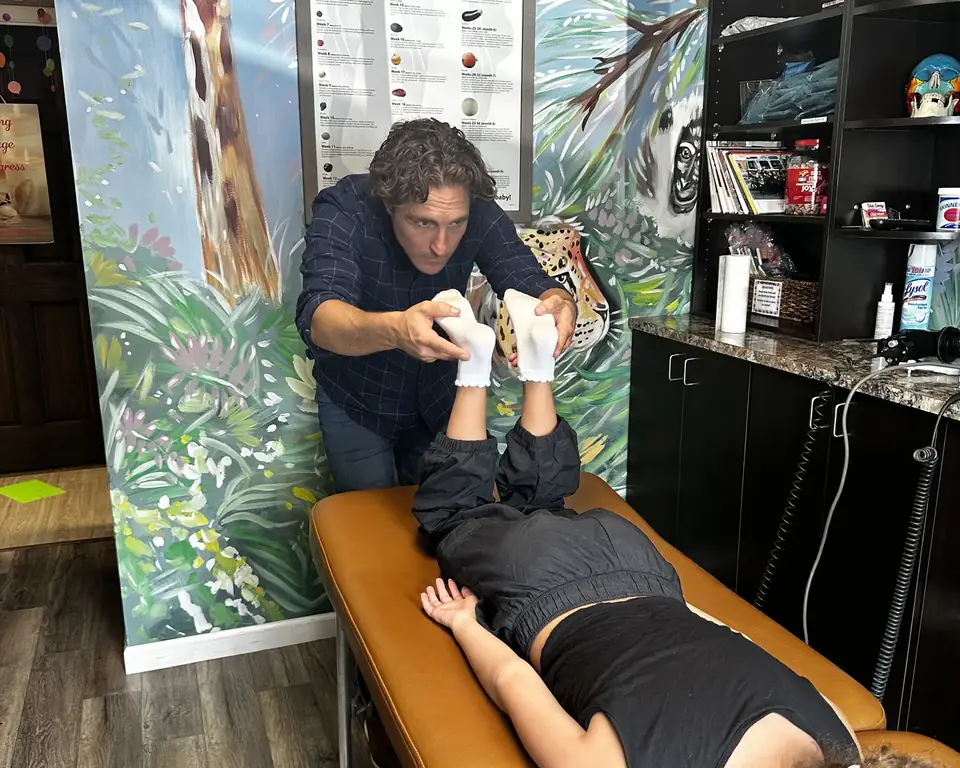
Using Koren Specific Technique (KST) and Talsky Tonal Chiropractic (TTC), we adjust the specific areas we find, with no cracking or twisting, comfortable for kids of any age. We track how bowel habits change alongside nervous system function on INSiGHT scanning and adjust the plan as your child responds.

What to Expect
Every child's nervous system settles in at its own pace. Some families notice a change in how often or how comfortably their child goes within the first few visits, while cases that have been going on for months or longer can take more time to unwind. Because the adjustments are gentle, there is no added discomfort layered on top of a child who may already dread the bathroom. We keep watching the pattern with you, so you can see your child's nervous system responding rather than just hoping the next attempt goes better.
A Mom's Story
Read more from Mandi: I knew this could not be the best solution, and it was only masking the problem. I began seeing a chiropractor before my daughter was born and was adjusted throughout my pregnancy. I started seeing Dr. Saylor, and after talking to her about my daughter's stomach issues, she suggested I bring her in. My only regret was not bringing her in sooner. From the first adjustment on, my daughter, who used to scream and cry anytime she had to go to the bathroom, was no longer in pain. She will be 7 soon, and she no longer struggles with her stomach issues. She tells me now when she thinks it's time for an adjustment, and she always insists on going first.
Why Diet Alone Often Isn't Enough
Fiber, water, and other dietary changes are worth trying, and they help many kids. But diet is not the whole picture. If the nerves controlling bowel motility are not functioning well, fiber and water alone often cannot fully resolve the problem.
Addressing the nervous system piece is often what makes the rest of the plan finally work. We build a care plan around what we actually find in your child's spine and nervous system, not a generic protocol applied to every family.
Take the First Step
Learn whether gentle chiropractic care could be part of your plan for your child's constipation. Our doctors in Royal Oak are happy to answer your questions.
Common Questions
What causes constipation in children?
Is chiropractic care safe for babies and young children?
How long before we see a change?
Will diet and fiber still matter?
What does an exam for constipation actually involve?
What age can chiropractic care for constipation start?
Related: Gut Health in Kids · Colic & Infant Digestive Issues · Digestive & GI Issues · IBS