

What Autism Obsessions Are Really About
Restricted interests are one of the clearest signs of autism, and one of the least understood. Here is what is happening in the nervous system when your child cannot let a topic go.
Specialized, Compassionate Support for Neurological Differences
At Van Every Family Chiropractic Center, we have deep expertise and genuine passion for caring for children and adults with autism spectrum disorder (ASD), sensory processing differences, and other neurodevelopmental conditions. Our gentle, neurologically-focused approach helps optimize nervous system function, supporting better regulation, communication, and quality of life.
Autism and neurodevelopmental conditions are fundamentally neurological, and the nervous system controls everything: sensory processing, motor control, digestion, sleep, emotional regulation, and immune function. When spinal misalignments create interference, they disrupt the flow of information between brain and body. Removing that interference supports better overall function, an easier time responding to other therapies your child is already in, and more ease navigating daily life. We celebrate neurodiversity while helping each child function at their personal best.
Our doctors work with children on the autism spectrum, kids with sensory processing differences, ADHD, developmental delays, speech and language delays, and learning disabilities. Each of these has a real neurological component, and each responds to the same underlying question: how well the nervous system is communicating between brain and body.
Every family's starting point looks different. Some come to us after years of therapies and still feel like something is missing. Others are looking for the gentlest possible first step. Either way, we build our recommendations around what your child's nervous system actually shows us, not a standard protocol applied to every diagnosis on the chart.
The nervous system controls sensory processing, digestion, sleep, and emotional regulation all at once, which is why support here can ripple into so many areas of a child's day.
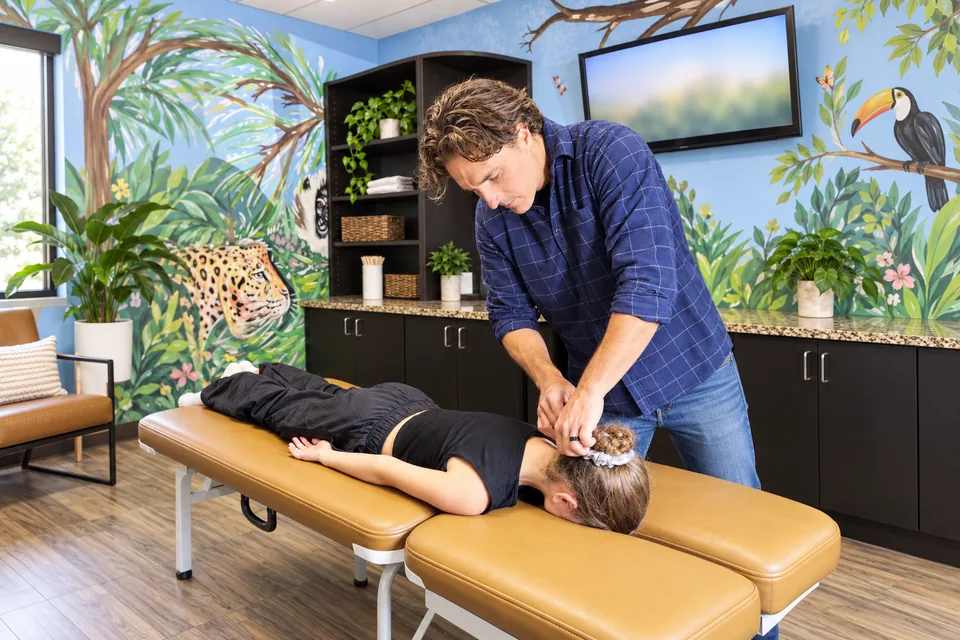
We understand sensory overwhelm and adjust our office accordingly: lighting, sound, and a quiet space when a child needs one. We never rush. If your child needs a practice visit just to get comfortable in our space before anything else happens, we take that time, because building trust comes first.
Using Koren Specific Technique (KST) and Talsky Tonal Chiropractic (TTC), our doctors adjust your child seated, standing, or however they are most comfortable, with no cracking or forceful manipulation, often with less pressure than you would use to check a ripe tomato.
We begin with a detailed conversation about your child's history and current challenges, followed by a gentle exam and painless INSiGHT scans, thermal, heart rate variability, and muscle scans, that show us how the nervous system is actually functioning. Often what those scans reveal are tension patterns held since birth, early development, or ongoing sensory overwhelm, patterns the body has not yet learned it is safe to release on its own. We explain what we find in plain terms and build a plan around your child, coordinating with the speech, occupational, or ABA therapists already on their team.
Less sensory overwhelm and better tolerance of textures, sounds, and lights. Falling asleep easier and staying asleep longer. Less constipation and fewer GI issues, along with a better appetite. Fewer illnesses, and a quicker recovery when they do get sick.
Fewer meltdowns and smoother transitions. More eye contact and verbalization. Better coordination and balance, and an overall calmer, more engaged child.
Many of the families we see are already working with a developmental pediatrician, a speech therapist, an occupational therapist, or an ABA team. We ask what those providers are already seeing so our care adds real information to the picture instead of working in a silo, and we are glad to share notes with the rest of your child's team whenever that's useful.
Take the First Step Your child deserves care built around them. Come talk with our doctors in Royal Oak about what a sensory-sensitive visit could look like.
Book OnlineOur doctors focus on optimizing nervous system function, the same system that governs sensory processing, digestion, sleep, and emotional regulation. That support can translate into better overall function, an easier time responding to other therapies your child is already receiving, and more ease navigating daily life. We celebrate neurodiversity and build every plan around helping your child function at their personal best.
Yes. Our doctors use Koren Specific Technique (KST) and Talsky Tonal Chiropractic (TTC), light, nervous system focused contacts with no cracking or forceful manipulation, techniques specifically well suited to children with sensory sensitivities. Our patient approach and deep understanding of sensory sensitivities make us especially effective with this population, including many children who have struggled with other healthcare experiences.
We never rush and always respect your child's boundaries. We pay close attention to non-verbal cues and adjust our approach accordingly, and we can modify lighting, sound, and other sensory aspects of the room. If your child needs extra time to feel comfortable, we take that time. Many families find that after a few visits, their child looks forward to coming.
Absolutely. Chiropractic care works well alongside speech therapy, occupational therapy, physical therapy, ABA therapy, developmental pediatrics, nutritional support, and behavioral health care. We are glad to communicate with your child's other providers so care stays coordinated instead of siloed.
The INSiGHT scans are painless and take just a few minutes. They measure thermal patterns, heart rate variability, and muscle activity along the spine to show us objectively how your child's nervous system is functioning, rather than relying on guesswork. We use them to build your child's plan and to track progress at follow-up visits.
Let us know about any sensory sensitivities in advance. Bring comfort items if your child has them, and try to visit at a time of day when your child is typically at their best. Siblings are welcome. It's okay if the first visit is just getting comfortable in our space. Building trust comes first.
Restricted interests are one of the clearest signs of autism, and one of the least understood. Here is what is happening in the nervous system when your child cannot let a topic go.
The sensory meltdowns, the gut issues, the sleep that never regulates. They can look like separate problems, but they're often one nervous system carrying too much at once.
A teacher gives a soft, kind correction, and a while later your child is still crying on the bathroom floor. That reaction is not drama. Here is what is actually happening.
See what Royal Oak families say in our Google reviews and patient stories, or browse everything we offer.
Our doctors put together a full article on autism & neurodevelopmental care that explains what's really behind it and what lasting relief looks like. Get instant access below.
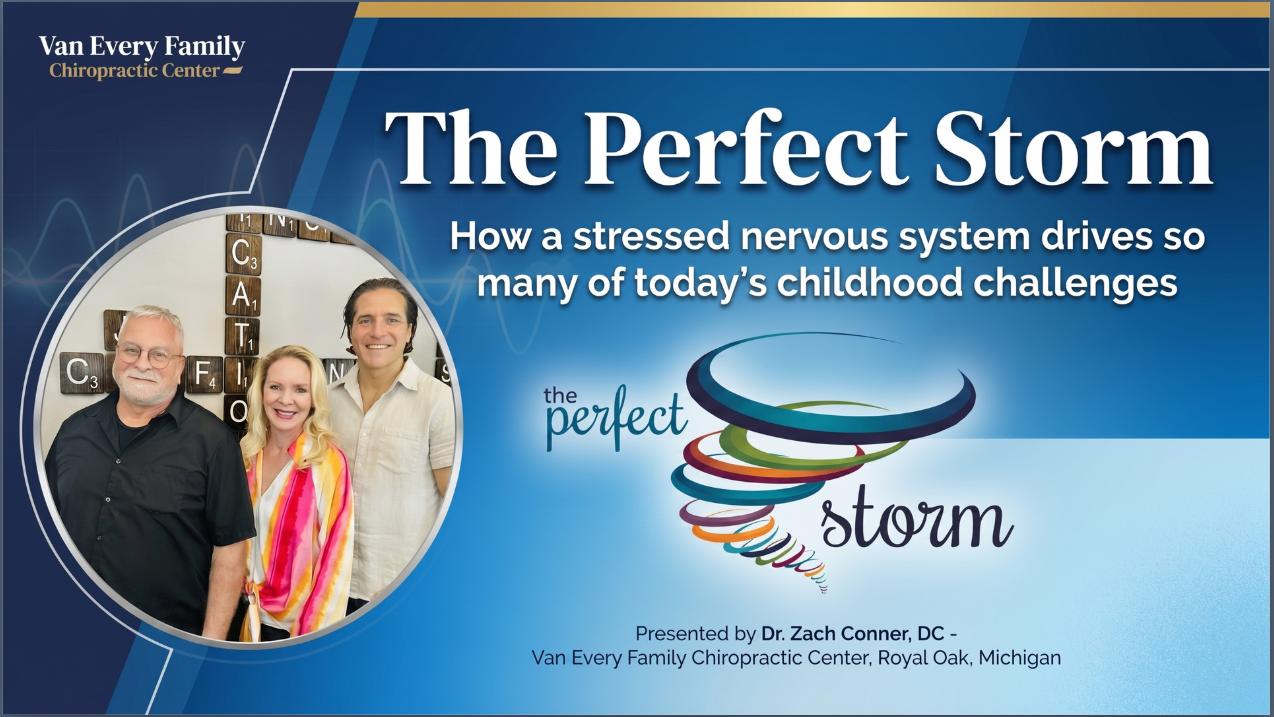
Van Every Family Chiropractic Center Royal Oak, Michigan
Free on-demand webinar for parents
Looking for answers for your child?
Focus struggles. Big emotions. Restless nights. Tummy troubles. Join our doctors for a free parent webinar exploring the nervous system connection and ways to support your child.
Explore the free webinarFree · About an hour · Watch anytime

