Therapy. Medication. Breathing exercises. Meditation apps. Journaling. Cutting caffeine. You have done it all, and the anxiety is still there. Not because you are not trying hard enough, and not because you are broken.
Most anxiety treatment targets the thinking brain: the thoughts, the triggers, the coping strategies. That work matters. But anxiety also lives in the body, in a nervous system that has learned to stay braced for the next thing to go wrong. If that physical layer never gets addressed, the racing heart, the tight chest, and the restless nights keep coming back no matter how much progress you make in your head.
Our doctors look specifically at how your spine and nervous system are functioning, then use gentle, nervous-system focused adjustments to support the physical side of a calmer nervous system, alongside whatever else is already working for you.
How Anxiety Shows Up
Anxiety rarely stays only in your head. Patients describe a racing heart or a tight chest that shows up even after a calm, uneventful day, along with sleep that will not cooperate, trouble falling asleep because the mind will not quiet down, or waking at 3 a.m. with a pounding heart for no obvious reason. A knot between the shoulder blades or a jaw that stays clenched through the day is common, and so is a stomach that will not settle even when nothing is actually wrong. Some people notice it as restlessness, an inability to sit still through a movie or a meal. Others notice it as exhaustion, because a nervous system that never fully powers down burns through energy even at rest.
Our doctors separate stress into three categories: physical, chemical, and emotional. Anxiety usually carries a heavy physical load, tension held in the muscles, spine, and nervous system that talk therapy alone was never built to reach, which is why breathing exercises and coping strategies that used to help can gradually stop making a dent.
What Is Actually Happening
Underneath the racing thoughts is a nervous system stuck in sympathetic dominance, the fight-or-flight branch that is supposed to switch on only when there is a real threat. When it stays on, it keeps your heart rate elevated, your muscles braced, and your digestion on hold long after the actual stressor has passed. Therapy and medication work primarily on the thinking brain and can be genuinely effective, but they were never designed to reset a nervous system that has learned to stay braced. That is the layer our doctors address directly.
Our Approach
We start with a real conversation, what you have tried, what has helped, and what has not, so we are not repeating ground you have already covered. From there, our doctors run painless INSiGHT scans, thermal, heart rate variability, and muscle readings, that show where your nervous system is actually holding tension, backed by a written report of findings.
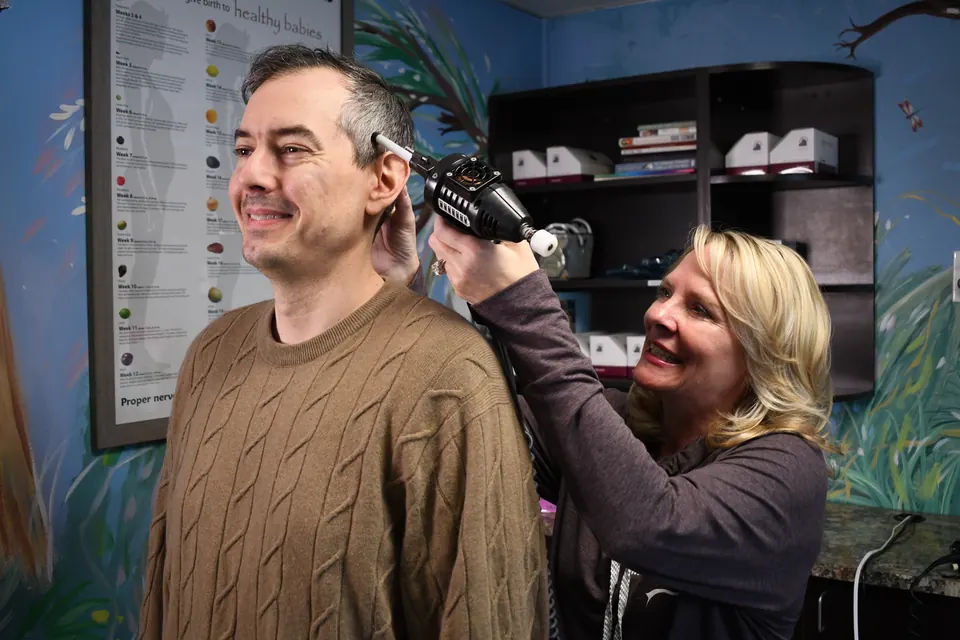
Using Koren Specific Technique (KST) and Talsky Tonal Chiropractic (TTC), our doctors make precise, nervous-system focused corrections with no cracking or twisting, adjusting you seated, standing, or in whatever position is actually comfortable. We are glad to stay in touch with your therapist or prescriber so every part of your care lines up.

What Changes
Patients tell us their body feels less braced, with fewer racing-mind nights and looser shoulders. Existing coping tools, breathing, grounding, medication, tend to work better once the physical layer eases, because they are no longer fighting a nervous system stuck on high alert.
Progress does not move in a straight line. Some notice a shift within a few visits, and more established patterns take longer, so we track it visit by visit using your INSiGHT scans and adjust the plan as we go.
You Are Not Doing It Wrong
If you have done the work, therapy, medication, meditation apps, journaling, and your body still will not settle, the missing piece is often physical rather than a lack of effort.
A nervous system stuck in a heightened state can keep firing anxiety signals no matter how much progress you have made in your head. Addressing that layer directly, alongside the tools you already have, is often the piece nobody mentioned.
Take the First Step
If you have done the work and your body still will not settle, come talk with our doctors in Royal Oak.
Common Questions
I already do therapy and take medication for anxiety. Will this replace that?
Why does my anxiety come back even when nothing is actually going on?
What actually happens during a visit?
Are the adjustments uncomfortable?
How long before I notice a difference?
I have never been formally diagnosed, I just feel anxious all the time. Can this still help?
Related: Anxiety & Stress · Fight or Flight · Vagus Nerve Health · Chronic Fatigue · Gentle Chiropractic (No Cracking)