

Why We Measure Your Child's Nervous System First
Symptoms are often the last clue to show up, after a child's nervous system has already been working overtime for a while. Here is why we measure function directly instead of waiting.
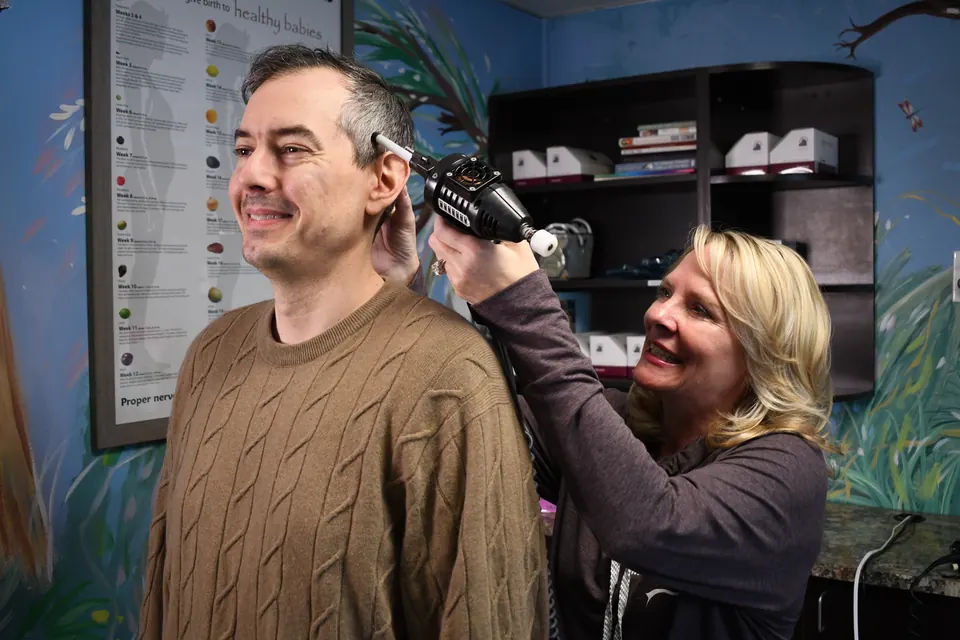
Where does it hurt, what's bothering you, what medications are you on. Most health evaluations start there, and those answers matter. They just don't tell our doctors how your nervous system is actually functioning.
Our neurological assessment does something different. Three non-invasive scans, heart rate variability, paraspinal thermography, and surface EMG, give us objective data about your nervous system instead of a guess based on symptoms alone. That data becomes the foundation for your care plan, and the baseline every future re-check gets measured against.
The same three scans work for a newborn, a teenager, or a grandparent. Nothing about the assessment involves an adjustment, and a wiggly toddler doesn't stop us from getting a usable reading.
HRV measures the tiny variation in time between each heartbeat, which reflects the balance between your sympathetic (stress) and parasympathetic (rest) nervous system. Low variability points to a nervous system stuck in overdrive, running on stress hormones even when nothing around you demands it.
That kind of imbalance rarely shows up on an X-ray or a symptom checklist. Measuring it directly gives us a number to track instead of a guess.
Two spines can look identical on an X-ray and still tell two completely different stories once you measure how they're actually communicating with the rest of the body.
Paraspinal thermography uses a handheld infrared scanner to read temperature symmetry along both sides of your spine. Uneven readings between the left and right side can flag areas where nervous system regulation is disrupted.
Surface EMG (sEMG) uses sensors placed briefly along your spine to measure the electrical activity in the muscles that support it. That reading shows us where tension is concentrated, often in places you would not think to mention on your own.
No single scan tells the whole story by itself. Together, the three create a composite picture of how your nervous system is coordinating and where it is working harder than it should. That combined view becomes your baseline, the number we compare against at every re-check so progress is something we can show you, not just describe. Parents and patients alike tell us that seeing the numbers move is different from just being told you're doing better.
At a follow-up visit, our doctors sit down with you and walk through your results side by side with normal ranges. You will see the visuals directly, not just hear numbers read out loud, and we build your care plan around what the scans actually show, using light, nervous system focused Koren Specific Technique (KST) and Talsky Tonal Chiropractic (TTC) adjustments.
Every scan is painless, non-invasive, and free of radiation. A few minutes of sitting or standing still, or not sitting perfectly still at all, is enough to get a usable reading, which is why the same process works just as well for a wiggly toddler as it does for an adult.
Take the First Step Curious what your own scan would show? Come find out with our doctors in Royal Oak.
Book OnlineHeart rate variability (HRV) reads the balance between your stress and rest nervous system responses. Paraspinal thermography reads temperature symmetry along your spine to flag areas of nervous system disruption. Surface EMG (sEMG) reads the electrical activity in the muscles supporting your spine to show where tension is concentrated. Together they give us objective data instead of a guess based on symptoms alone.
No. All three scans are painless, non-invasive, and free of radiation. A few minutes of sitting or standing still, or not sitting perfectly still at all, is enough to get a usable reading, so the whole assessment fits easily into a single visit.
Yes. The same three scans work for a newborn, a teenager, or a grandparent, and a wiggly toddler does not stop us from getting a usable reading. Nothing about the assessment involves an adjustment, so there is nothing for a child to brace against.
An X-ray shows structure and a symptom checklist reflects how you feel that day, but neither tells us how your nervous system is functioning. Two spines can look identical on an X-ray and still tell completely different stories once we measure how they are actually communicating with the rest of the body. Low HRV, an uneven thermography reading, or concentrated sEMG tension can all be present without showing up on a scan or a symptom list.
Yes. At a follow-up visit, our doctors sit down with you and walk through your results side by side with normal ranges. You see the visuals directly rather than hearing numbers read out loud, and your care plan is built around what the scans show.
Your first assessment becomes your baseline, and we rescan periodically so progress is something we can show you in the numbers, not just describe. Many patients tell us that seeing the data move is a different experience than simply being told they are doing better.
Symptoms are often the last clue to show up, after a child's nervous system has already been working overtime for a while. Here is why we measure function directly instead of waiting.
The scan looks better. The symptoms haven't caught up yet. That gap can feel discouraging, but it's actually one of the more reliable signs that recovery is unfolding in the right order.
You are watching for the big breakthrough, the words, the eye contact, the calmer days. Long before that arrives, there are smaller signs worth learning to notice.
See what Royal Oak families say in our Google reviews and patient stories, or browse everything we offer.
Our doctors put together a full article on neurological assessment that explains what's really behind it and what lasting relief looks like. Get instant access below.

