
Anxiety Can Linger Even After Therapy and Medication Help
Therapy, medication, and breathing apps all help. But anxiety also has a physical side that those tools alone do not always reach.
5 Things Every Person Should Know About Anxiety
What if the anxiety you have been trying to think your way through is actually a signal from your nervous system? That is the connection most people miss, and it changes how you approach the problem.
Our doctors at Van Every Family Chiropractic Center in Royal Oak provide gentle, nervous system focused care for adults dealing with chronic anxiety, stress, and tension. The approach uses light, low-force techniques that communicate directly with the nervous system, helping the body find its way back to a calmer, more regulated state, without the forceful manipulation most people picture when they hear "chiropractic."
Anxiety is not only a thinking problem. A racing heart at rest, a jaw that will not unclench, shoulders that stay up near the ears: these are physical signs that the nervous system may be stuck in overdrive, and most people never learn to recognize them as signals rather than character flaws. Noticing the pattern is usually the first step toward doing something about it.
The vagus nerve is the key to shifting from stressed to calm. Activating it, through slow exhales, humming, or cold water on the face, can nudge the nervous system toward rest-and-digest in under two minutes. It works anywhere, though it works better on a nervous system that is not chronically stuck in the "on" position, which is where ongoing support tends to matter most.
The same nervous system that learned an anxious pattern is the one that can unlearn it. That adaptability is the whole point.
Chronic stress rewires the nervous system over time, which is why a pattern that started with one hard year can still be running five years later. The same adaptability that created the pattern is what makes it possible to change, and understanding that cycle is usually the first real step.
Sleep, digestion, and anxiety share the vagus nerve as a common pathway. That is why they tend to move together: when one improves, the others often follow close behind, and when one gets worse, so do the rest.
Anxiety rarely looks the same from person to person. For some it is a persistent low hum of worry that colors every decision, from what to say in a meeting to whether the front door is really locked. For others it arrives as a panic attack: a sudden wave of fear with a racing heart and tight chest that can feel like something is seriously wrong even when it is not. Many people carry it in the body long before they would ever call it anxiety, as heart palpitations at rest, trouble falling or staying asleep, chronic tightness across the neck and shoulders, or a fog that makes it hard to concentrate or make even small decisions.
Your autonomic nervous system runs on two branches. The sympathetic branch, fight-or-flight, raises your heart rate, tenses your muscles, and pulls blood away from digestion during real emergencies. The parasympathetic branch, rest-and-digest, slows the heart rate, supports digestion, and allows healing and recovery.
The two are supposed to take turns. The problem is a nervous system that gets stuck in sympathetic dominance, so the stress switch stays on even when there is no real threat in the room. Over time that creates chronic anxiety, tension, and eventual exhaustion.
You cannot think your way out of a nervous system pattern, but you can support the nervous system itself, and gentle chiropractic care is one way to do that. We start with your story, your symptoms, and what you have already tried, along with INSiGHT scans that measure thermal patterns, heart rate variability, and muscle tension along your spine, since understanding your nervous system's baseline matters before any recommendation makes sense.
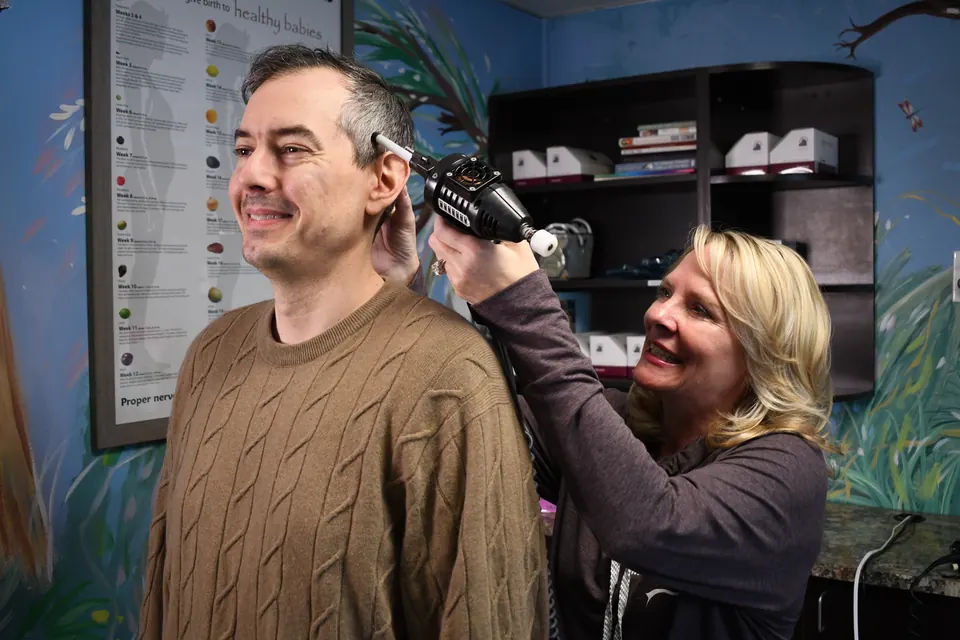
Using Koren Specific Technique (KST) and Talsky Tonal Chiropractic (TTC), our doctors use gentle assessment to see how the spine and nervous system are coordinating, then build a plan around the person in front of us rather than a generic protocol.
Some people notice a difference within the first few visits. A nervous system pattern built up over years understandably takes longer to shift, and our doctors will tell you honestly which one your situation looks like.
Adjustments help shift the nervous system out of sympathetic dominance and back toward parasympathetic balance. The vagus nerve is your main parasympathetic nerve, and proper upper cervical alignment supports the healthy vagal function that helps a person actually calm down.
Anxiety also creates muscle tension, and muscle tension feeds anxiety right back. Addressing stress at the level of the spine and nervous system breaks that loop instead of just managing it one flare at a time. Many patients describe feeling genuinely relaxed after an adjustment, as the gentle work releases stored tension rather than adding to it.
Our INSiGHT scans include heart rate variability testing, one of the clearest measures of autonomic nervous system function and stress resilience available. HRV measures the variation in time between heartbeats, and low HRV correlates with anxiety and chronic stress. This gives our doctors an objective picture of where your nervous system is actually holding onto stress, not just how you feel emotionally on a given day. We use this reading, along with thermal and sEMG scans and a report of findings, to track your progress as your nervous system settles.
Even preschoolers experience anxiety now, largely because everything is a new experience they are constantly adjusting to. Too much screen time and overloaded schedules do not help, and kids in high-level sports like gymnastics or soccer rarely get a real break. Left unaddressed, this can show up as bedwetting, behavioral changes, or tics.
Anxious kids tend to become anxious adults, so addressing it early matters. Using Koren Specific Technique (KST) and Talsky Tonal Chiropractic (TTC), our doctors adjust seated or standing, with no cracking or sudden movement, which makes this approach genuinely comfortable for nervous kids and adults alike. See also anxiety in children.
Take the First Step Curious whether your nervous system is contributing to your anxiety? Our doctors in Royal Oak are happy to talk it through.
Book OnlineAnxiety has a physical component as well as a mental one. When the nervous system gets stuck in a stress response, the body stays braced for a threat that has already passed. Gentle, nervous system focused chiropractic care aims to support the body's ability to shift out of that pattern, working alongside whatever else you are already doing for your anxiety.
The vagus nerve is the main pathway your nervous system uses to shift from a stressed, on-alert state into a calmer, rest-and-digest state. It also plays a role in sleep and digestion, which is part of why those often improve or worsen alongside anxiety. Care that supports nervous system function is, in part, care that supports vagal tone.
We start with your history, your symptoms, and what you have already tried, then use INSiGHT scans to measure thermal patterns, heart rate variability, and muscle tension along your spine. Using Koren Specific Technique (KST) and Talsky Tonal Chiropractic (TTC), our doctors make light, nervous system focused contacts, no cracking, twisting, or forceful manipulation, based on what the assessment shows.
Often, yes. Chronic stress rewires the nervous system over time, so a pattern that started with one hard year can still be running years later. That does not mean it is permanent. The same adaptability that created the pattern is what makes it possible to shift, though longer standing patterns understandably tend to take more time.
It varies. Some people notice a difference within the first few visits, especially around sleep or a general sense of ease. A nervous system pattern built up over years takes longer to shift, and our doctors will tell you honestly which one your situation looks like once we have a fuller picture.
No, it is a different angle on the same problem. Anxiety usually has both a mental and a physical side, and this care addresses the physical, nervous system side. Many patients use it alongside therapy, medication, or other support they already have in place.
Heart rate variability (HRV) measures the variation in time between heartbeats, which reflects your autonomic nervous system balance. Low HRV is associated with anxiety and chronic stress. We use HRV testing, part of our INSiGHT scans, to objectively measure your stress levels and track improvement as your nervous system becomes more balanced.
No. Using Koren Specific Technique (KST) and Talsky Tonal Chiropractic (TTC), our doctors use light, nervous system focused contacts with no cracking, twisting, or sudden movements. Many anxious patients find their adjustments genuinely relaxing and end up looking forward to their visits.
Yes. Even young kids can get stuck in fight-or-flight, especially with packed schedules, screen time, and big feelings they do not yet have words for. Using Koren Specific Technique (KST) and Talsky Tonal Chiropractic (TTC), our doctors adjust kids seated or standing with no cracking or sudden movement, so care feels calming rather than something to brace for.
It depends on your individual needs and how your nervous system responds. Our doctors determine the right approach after a thorough history, consultation, and INSiGHT scans with HRV testing, which gives us the information needed to recommend a care plan based on your specific nervous system findings. Many patients benefit from more frequent visits initially, tapering off as their nervous system stabilizes.
Therapy, medication, and breathing apps all help. But anxiety also has a physical side that those tools alone do not always reach.
Medication helps a lot of people, and it is not the only path forward. If you are looking for a non-medication approach alongside what is already helping, here is where to start.
Chronic muscle tension, trouble sleeping, big emotional swings. When a child's system stays revved up, everyday life feels harder than it should. Here is what calming it down actually involves.
See what Royal Oak families say in our Google reviews and patient stories, or browse everything we offer.
Our doctors put together a full article on anxiety & the nervous system that explains what's really behind it and what lasting relief looks like. Get instant access below.

