

Two People With the Same Scoliosis Curve Can Feel Different
A curve is only part of the story. Two people with the same Cobb angle can live very different daily lives, and the difference often comes down to the nervous system.
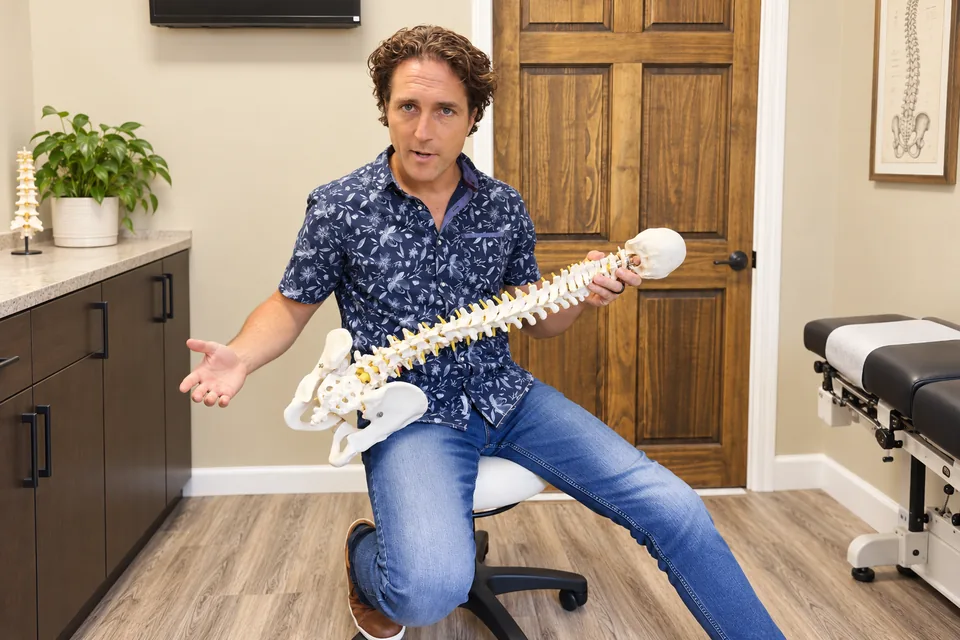
Scoliosis is a sideways curve of the spine, often with rotation, that most commonly shows up during the growth spurt just before puberty. Cerebral palsy and muscular dystrophy can cause it, but most cases are idiopathic, meaning the exact cause isn't known. That accounts for roughly 80 percent of what we see, whether the curve is S-shaped or C-shaped.
Whether you are a parent who just learned your child has scoliosis, a teenager living with the diagnosis, or an adult managing years of degenerative change, chiropractic care can help. It won't answer every question science hasn't settled, but it offers a conservative option before surgery becomes the conversation, and a consistent way to keep tabs on the curve as your child grows or your own spine changes with age.
At Van Every Family Chiropractic Center, our doctors use Koren Specific Technique (KST) and Talsky Tonal Chiropractic (TTC), gentle, nervous system focused adjustments with no cracking or twisting, safe for growing spines and adaptable for adults managing degenerative change.
Scoliosis rarely announces itself with pain, especially early on. What families and patients notice first is usually visual: one shoulder or shoulder blade sitting higher than the other, an uneven waistline, or one hip that looks more prominent than its partner. Bending forward can reveal a rib hump, the rotational part of the curve showing up as one side of the ribcage sitting higher than the other.
Some kids and adults also deal with back pain, tire faster than expected from the extra effort it takes to hold an unbalanced posture upright, or notice their head doesn't sit centered over their pelvis when they check a mirror. In more pronounced curves, there can be less room in the chest for the lungs to expand fully. If any of this sounds familiar, it is worth getting checked.
A curve without a known cause doesn't mean a curve without options.
Scoliosis is easiest to manage when it's caught early, especially before a growth spurt. We often recommend starting care between 7 and 8 years old and having the spine checked yearly from there.
A mild curve still needs regular checkups, since scoliosis is most likely to progress while bones are still growing. Watching a curve closely during those years makes a real difference in how it turns out.
We start with a thorough evaluation of your curve type, severity, and, for children, growth stage and progression risk. Our doctors stabilize the pelvis, balance the sacrum, and support the spine with adjustments specific to your curve pattern, age, and stage of growth. A gentle INSiGHT scan, thermal, heart rate variability, and muscle (sEMG) readings, gives us a report of findings on how the curve is affecting nervous system function, not just what it looks like from the outside.
Using Koren Specific Technique (KST) and Talsky Tonal Chiropractic (TTC), our doctors make precise, light corrections without cracking or forceful manipulation, addressing the primary curve and the compensatory patterns it creates through the rest of the spine. For adults, degenerative changes bring a different set of goals: less pain, more mobility, and slower progression rather than growth stage monitoring. We coordinate with pediatricians and orthopedic specialists as needed, and refer for bracing evaluation if a curve continues to progress.
We track curve measurements and functional improvements over time, adjusting the care plan based on how you respond. For adolescents, we monitor closely through growth spurts, since that's when a curve is most likely to change. For adults, care settles into an ongoing rhythm focused on comfort, mobility, and preventing further degeneration rather than chasing a growth-stage timeline. If you've already had scoliosis surgery, our doctors can work around hardware and fused segments to support function in the parts of the spine that still move.
Growing kids and teens often show more stable or slower-progressing curves with consistent care through their growth years. Adults more often report less back pain, better posture, and more comfort sitting or standing for long stretches.
Across every age, patients tell us their mobility, muscle balance, and confidence in daily activities improve, even when the curve itself doesn't fully straighten. That's often the more meaningful measure: not a number on an X-ray, but how your body feels and moves day to day.
Take the First Step Ready to learn more about managing scoliosis naturally? Come talk with our doctors in Royal Oak.
Contact UsWe cannot fully straighten a scoliotic spine, but we can often improve function, reduce pain, and help maintain the best possible quality of life. For growing children, early care may help influence how the curve develops and potentially slow progression during the growth years when it matters most.
We work with all types: adolescent idiopathic scoliosis, the most common, appearing during growth spurts; congenital scoliosis present at birth; neuromuscular scoliosis secondary to conditions like cerebral palsy; and degenerative adult scoliosis that develops from disc degeneration and arthritis over time.
Yes. Our doctors use a gentle, nervous system focused approach that is safe for growing spines, with no cracking, twisting, or forceful manipulation. We monitor curve progression carefully during growth spurts and coordinate with pediatricians and orthopedic specialists as needed.
Monitoring matters, but active conservative care can support spinal health during that watching period. Gentle chiropractic adjustments, paired with the right exercises, can help improve spinal mobility and function while you wait. We always coordinate with your child's orthopedist on the overall management plan.
Yes. We provide supportive care for patients after scoliosis surgery, working around hardware and fused segments to optimize function in the parts of the spine that still move. We also help manage related issues like stenosis and disc problems that can develop above or below a fusion.
Yes. For children and teens, the focus is on monitoring progression through growth, supporting healthy development, and potentially slowing any curve increase. For adults, care shifts toward pain management, maintaining mobility, preventing further degeneration, and improving day to day quality of life.
A curve is only part of the story. Two people with the same Cobb angle can live very different daily lives, and the difference often comes down to the nervous system.
A screening at school, or a shoulder that just looks a little uneven. Here is what's actually happening in the nervous system behind a scoliosis curve.
See what Royal Oak families say in our Google reviews and patient stories, or browse everything we offer.
Our doctors put together a full article on scoliosis that explains what's really behind it and what lasting relief looks like. Get instant access below.
