
Recovery Can Stall Even After a Successful Surgery
A good surgeon and a smooth recovery are two different things. Here is why the weeks after surgery depend on your nervous system, not just the procedure itself.
Gentle Chiropractic Support While Your Body Heals
A successful surgery and a smooth recovery are two different things. The weeks that follow are when your body does the real work: knitting tissue back together, calming inflammation, rebuilding strength, and clearing out everything the healing process leaves behind. How well that goes depends less on willpower and more on how well your nervous system is running the show.
Every part of recovery, from immune activity to tissue repair to how much pain you feel, is coordinated by the nervous system. Surgery itself is a significant stress on that system. Anesthesia, positioning on the operating table, guarding around the surgical site, and the emotional load of the whole experience can leave your body stuck in protection mode long after the procedure is over.
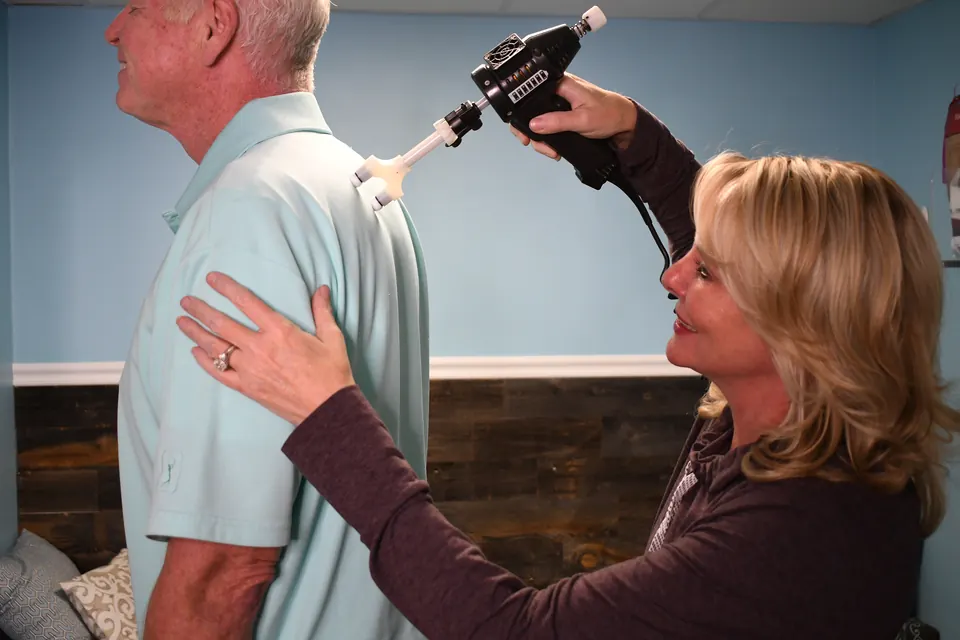
Using Koren Specific Technique (KST) and Talsky Tonal Chiropractic (TTC), our doctors use light, nervous system focused contacts, no cracking or twisting, to help your body shift out of that stress pattern so healing can move at full speed. We work carefully around surgical sites and adapt every visit to where you are in your recovery.
It is one of the most common things we hear from post-surgical patients: someone told them that once you have had surgery, or once you have hardware, rods, screws, or a fusion in your neck or back, a chiropractor is off the table for good. That warning is almost always about one specific thing, and it is worth naming. It is about the forceful, high-velocity manipulation, the twisting, cracking, and popping most people picture when they think of chiropractic. Near a fresh incision or a fused segment, that concern is completely fair, and we share it.
That is not what we do. Using Koren Specific Technique (KST) and Talsky Tonal Chiropractic (TTC), our care is built on light, nervous system focused contacts: no twisting, no cracking, no popping, and none of the big structural manipulation the warning is really about. We adapt every contact to your body and work carefully around incisions, hardware, and fusions, and touchless cold laser therapy lets us support healing tissue with no pressure at all. The reason you were told to stay away simply does not apply to this kind of care, and many of the patients we see for recovery came to us with exactly that concern.
Your surgeon repaired the structure. Healing it is your nervous system's job, and it does that job best when it is calm, regulated, and free of interference.
Two people can have the same procedure with the same surgeon and recover very differently. One is back to their routine on schedule, the other deals with lingering pain, swelling that will not settle, poor sleep, and fatigue that hangs on for months. The difference often is not the surgery. It is the state of the body doing the recovering.
After surgery, the body naturally braces. Muscles around the surgical site guard, posture shifts to protect the area, and the spine picks up new compensation patterns from weeks of limited movement, hospital beds, and favoring one side. Add the physiological stress of the procedure itself and the nervous system can get stuck with the gas pedal down: shallow sleep, higher pain sensitivity, sluggish digestion, and an immune system that is busy managing stress instead of directing repair.
Your immune system runs the entire repair project after surgery. It cleans the surgical site, controls inflammation, protects healing tissue, and builds the new structure. And the immune system takes its orders from the nervous system. When the nervous system is stuck in fight or flight, resources go toward staying on alert. When it shifts into the rest and heal state, those same resources go toward recovery.
This is where chiropractic care earns its place in a recovery plan. Gentle adjustments reduce the stress patterns held in the spine and help the nervous system move back toward balance, which is exactly the state where immune function works best. Our patients recovering from surgery often notice the downstream effects: deeper sleep, steadier energy, calmer digestion, and a healing timeline that stops dragging.
Our office also offers Erchonia cold laser therapy, a touchless treatment that is especially well suited to post-surgical care. Operating at a 635nm wavelength, the laser stimulates the body's cells to produce more energy, which supports tissue repair and helps calm pain and inflammation, all without pressure on tender or healing areas.
Because there is no force involved, laser therapy can be used near surgical sites much earlier than hands-on work, making it a natural first step in recovery care. Many of our post-surgical patients combine laser sessions with gentle adjustments as their healing progresses.
Arnica montana has been used for generations to support the body through bruising, swelling, and soreness, which is why it is one of the most common remedies people reach for after surgery. Taken as directed in the recovery window, arnica supports the body's own process of clearing bruising and settling swollen tissue.
Quality matters with any supplement, and that is why we make professional grade arnica and other recovery support available through our Fullscript online dispensary, where our patients save 30% on more than 4,000 practitioner grade products. Our doctors are happy to point you toward what fits your situation, from arnica to the nutrients your body draws on most heavily while it rebuilds tissue.
Post-surgical care at our office starts with listening: what procedure you had, how your recovery has gone so far, and what your surgical team has you working on. A gentle INSiGHT scan, thermal, heart rate variability, and muscle (sEMG) readings, shows us objectively how much stress your nervous system is carrying so we are working from data rather than guesswork.
From there, care is light, precise, and adapted to your body. You can be adjusted sitting, standing, or lying down, in whatever position is comfortable, and we work around incision sites, hardware, and movement restrictions. Chiropractic care fits naturally alongside physical therapy and your surgical follow-ups, each doing its own job: your rehab rebuilds strength and range, and we keep the nervous system that runs it all working clearly.
Patients recovering from surgery often report that pain settles sooner, swelling and bruising resolve more quickly, and sleep improves within the first weeks of care. Many are surprised by how much energy returns once their nervous system is no longer stuck in protection mode.
Just as important, the compensation patterns that surgery leaves behind, the guarded posture, the favored side, the stiff neck from weeks on the couch, get addressed before they harden into the next problem.
Recovering from Surgery? Come talk with our doctors in Royal Oak about supporting your healing with gentle chiropractic care, cold laser therapy, and arnica. Saturday appointments are available.
Book OnlineIt depends on your procedure, and our doctors will talk through your timeline at your first visit. Because Koren Specific Technique (KST) and Talsky Tonal Chiropractic (TTC) use light, nervous system focused contacts with no cracking or twisting, care can usually begin much earlier than people expect. Touchless cold laser therapy is often the first step, with gentle adjustments added as your healing progresses.
It is one of the most common concerns we hear, and it comes from a real place. The caution is about forceful, high-velocity manipulation, the twisting, cracking, and popping, which is not something you want near a fusion, hardware, or a healing incision. That kind of force is simply not part of our care. Koren Specific Technique (KST) and Talsky Tonal Chiropractic (TTC) use light, nervous system focused contacts: no twisting, cracking, or popping, and none of the big structural manipulation the warning is really about. Many of the patients we help through recovery were told exactly that, and gentle care turned out to fit their situation well.
Yes. We work carefully around surgical sites, hardware, fusions, and any movement restrictions your body has, and our techniques let us adjust you in whatever position is comfortable, sitting, standing, or lying down. The contacts are light and precise, and touchless cold laser therapy lets us support healing tissue with no pressure at all. Nothing about your visit involves force on healing tissue.
They do different jobs, and they work well together. Physical therapy rebuilds strength, mobility, and function in the affected area. Chiropractic care keeps the nervous system that coordinates all of that healing working clearly, so your body gets more out of the rehab work you are already doing.
Arnica montana is a plant based remedy with a long history of use for bruising, swelling, and soreness, which makes the recovery window after surgery one of its most popular uses. We carry professional grade arnica through our Fullscript online dispensary, where our patients save 30%, and our doctors can help you choose what fits your recovery.
Our Erchonia cold laser works at a 635nm wavelength that stimulates cells to produce more energy, which supports tissue repair and helps settle pain and inflammation. It is completely touchless, so it can be used near tender or healing areas without any pressure, often earlier in recovery than any hands-on care.
Surgery is a whole body event. Anesthesia, table positioning, guarding, and weeks of altered movement all load stress into the spine and nervous system, which is why people come out of a knee or abdominal surgery with neck tension, poor sleep, and low energy. Addressing that stored stress is exactly what our care is designed to do, and it is often the missing piece in a stalled recovery.
A good surgeon and a smooth recovery are two different things. Here is why the weeks after surgery depend on your nervous system, not just the procedure itself.
Someone told you that once you have hardware or a fusion, a chiropractor is off the table for good. That warning is about one specific kind of technique, and it is not the kind we use.
See what Royal Oak families say in our Google reviews and patient stories, or browse everything we offer.
Our doctors put together a full article on post-surgery recovery that explains what's really behind it and what lasting relief looks like. Get instant access below.
