
Your POTS Symptoms Were Never Just Anxiety
Racing heart on standing, brain fog, exhaustion sleep will not fix. If you have been told your tests are normal, here is the nervous system piece often left out.
Natural Support for Autonomic Nervous System Dysfunction
POTS (Postural Orthostatic Tachycardia Syndrome) and other forms of dysautonomia affect the autonomic nervous system, the part of your nervous system that controls involuntary functions like heart rate, blood pressure, digestion, and temperature regulation. At Van Every Family Chiropractic Center, we offer supportive care that addresses the underlying nervous system dysfunction contributing to these challenging conditions.
Dysautonomia is an umbrella term for conditions involving dysfunction of the autonomic nervous system (ANS). The ANS controls vital automatic body functions including heart rate and blood pressure regulation, breathing, digestion, temperature regulation, and sleep-wake cycles. Our doctors use Koren Specific Technique (KST) and Talsky Tonal Chiropractic (TTC), gentle, neurologically-focused approaches that help support healthier autonomic function alongside your medical team.
POTS and dysautonomia rarely show up the same way twice. Some people feel their heart rate spike past 120 beats per minute the moment they stand up, followed by dizziness or a near faint that makes stairs and grocery aisles feel unsafe. Others notice profound fatigue and exercise intolerance, a body that can't tolerate the activity it used to handle without a second thought. Brain fog, temperature swings between too hot and too cold, digestive trouble like nausea or IBS-like symptoms, restless or unrefreshing sleep, and adrenaline surges that feel like anxiety but come from somewhere else entirely round out the picture for many patients.
The brainstem that runs your autonomic nervous system sits at the base of your skull, right where the vagus nerve passes through the upper cervical spine.
The autonomic nervous system is closely tied to the spine. The brainstem, home to the ANS control center, sits at the base of the skull, the vagus nerve passes directly through the upper cervical spine, the sympathetic chain runs alongside the thoracic spine, and sacral nerves contribute to parasympathetic function. When tension builds in these areas, whether from a viral illness, an injury, or accumulated life stress the body hasn't released, autonomic regulation can suffer. Gentle, precise adjustments in these areas are where our support begins.
Our INSiGHT scans, including heart rate variability testing, give us objective data on autonomic function rather than a guess, so our doctors can track improvement over time and share it with your cardiologist or neurologist.
We start with a comprehensive evaluation, including INSiGHT neurological scanning with HRV testing, to objectively assess your autonomic nervous system function and identify where tension is affecting the upper cervical spine, thoracic spine, and sacrum.
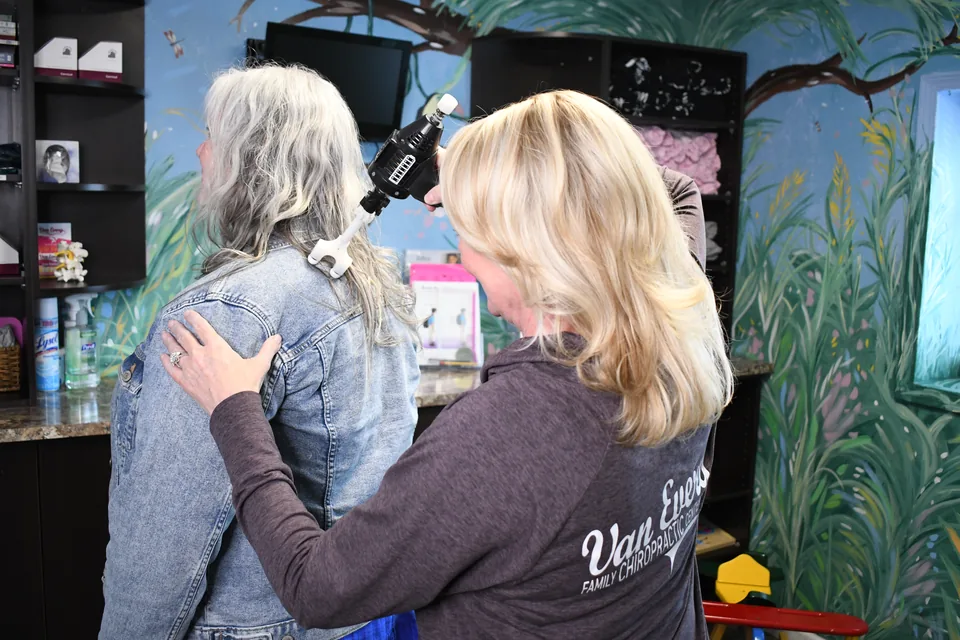
Using Koren Specific Technique (KST) and Talsky Tonal Chiropractic (TTC), our doctors make light, nervous system focused corrections in these areas, no cracking, popping, or forceful manipulation, so care never adds a stress response on top of what your body is already managing.
We understand POTS patients have unique needs, so our doctors can adjust you lying down if standing triggers symptoms, use no sudden movements, and proceed at a pace your nervous system can handle. Every visit is built around how you're feeling that day, not a fixed protocol, and we communicate with your other providers as needed to support your overall treatment plan.
Patients often notice a more stable heart rate when changing positions, fewer near-fainting episodes, and steadier energy through the day. Better temperature regulation, improved digestion, more restful sleep, and greater tolerance for daily activities tend to follow as autonomic function settles.
We're glad to communicate with your cardiologist or other specialists, and we treat chiropractic care as one supportive piece of a larger dysautonomia management plan.
Take the First Step If dysautonomia is running your days, our doctors in Royal Oak are glad to talk through what gentle, paced care could look like.
Book OnlineThe autonomic nervous system is closely tied to the spine. The brainstem, the ANS control center, sits at the base of the skull, the vagus nerve passes through the upper cervical spine, the sympathetic chain runs alongside the thoracic spine, and sacral nerves contribute to parasympathetic function. Tension in any of these areas can interfere with autonomic regulation, which is why our doctors pay particular attention to the upper cervical spine, thoracic spine, and sacrum.
Our doctors support patients with POTS, neurocardiogenic syncope, orthostatic hypotension, inappropriate sinus tachycardia, autonomic neuropathy, post-viral dysautonomia including long COVID, EDS-related dysautonomia, and mast cell activation-related dysautonomia.
Our doctors take every precaution to avoid triggering symptoms. We can adjust you lying down, use no sudden movements, and proceed gently using Koren Specific Technique (KST) and Talsky Tonal Chiropractic (TTC), techniques chosen specifically to calm the nervous system rather than activate it. Most POTS patients tolerate this gentle approach well.
Yes. Our doctors believe in collaborative care and are glad to communicate with your cardiologist, neurologist, or other specialists. We treat chiropractic care as one supportive piece of a larger dysautonomia management plan alongside your medical team.
Every patient is different, and dysautonomia is a complex condition. Our doctors don't discuss specific timelines until after a comprehensive history, consultation, and INSiGHT scans with HRV testing, which gives us the objective data needed to build a care plan tailored to your autonomic nervous system. Improvement is often gradual, and we use HRV testing to track your progress and adjust care accordingly.
No, though they can feel similar. The adrenaline surges and racing heart that come with POTS are driven by autonomic nervous system dysfunction rather than a psychological cause, even though the episodes can mimic a panic attack. Getting an accurate picture of what's driving your symptoms is part of why our doctors start with INSiGHT scanning and HRV testing rather than guessing from the symptom pattern alone.
Racing heart on standing, brain fog, exhaustion sleep will not fix. If you have been told your tests are normal, here is the nervous system piece often left out.
Dizziness, a racing heart on standing, fatigue that will not lift. The terms dysautonomia and POTS get used almost interchangeably, but knowing how they relate helps you understand what is actually happening.
Cardiologist, neurologist, chiropractor. Figuring out who actually belongs on a POTS care team can be as confusing as the condition itself. Here is where each piece fits.
See what Royal Oak families say in our Google reviews and patient stories, or browse everything we offer.
Our doctors put together a full article on pots & dysautonomia that explains what's really behind it and what lasting relief looks like. Get instant access below.