
Strabismus & Crossed Eyes in Children

Strabismus & Crossed Eyes in Children

The Nervous System Side of a Wandering or Crossed Eye

You see it in the photos before anyone else does. One eye drifting inward toward the nose, or wandering out toward the edge. A gaze that doesn't quite meet yours the way it used to. Maybe a doctor has already used the word strabismus, or maybe you only know that something about how your child's eyes work together looks off.

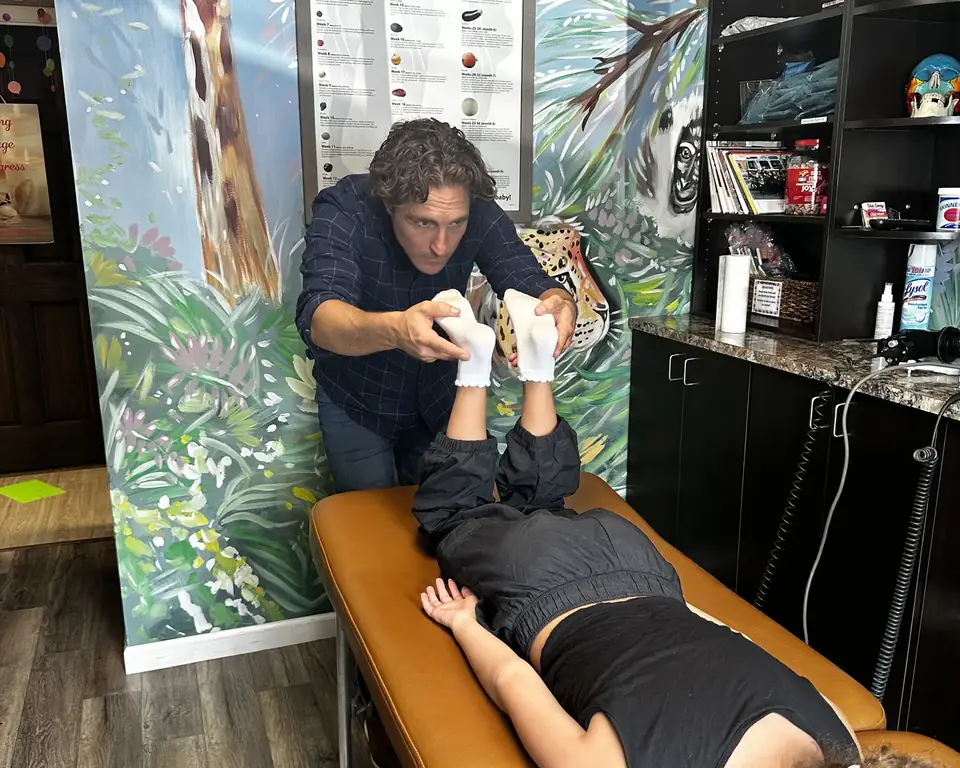
The muscles that aim each eye don't decide where to point on their own. They're run by nerves that originate in the brainstem, and the brainstem sits right at the top of the neck. Our doctors use gentle, hands-on assessment and Koren Specific Technique (KST) and Talsky Tonal Chiropractic (TTC) adjustments to support that upper cervical region, always alongside your child's eye doctor.

What Parents of These Kids Often Notice

One eye turning in, out, up, or down, constant or coming and going, is the most recognizable sign and exactly what an eye doctor needs to evaluate. Head tilting or turning to see, closing or covering one eye in bright light, and trouble with depth, clumsiness, or tracking often show up alongside it.

Many of these children have a difficult or assisted birth, or a fall that hyperextended the neck, in their early history. A history like that points to the upper neck and nervous system, and it's part of the story an eye exam alone may not capture.

Coordinating two eyes into one picture happens in the brainstem, not in the eye muscles themselves, which is why this is as much a nervous system question as an eye-muscle question.

What Is Actually Happening

A child's eye muscles are directed by nerves that originate in the brainstem, the region that sits at the very top of the cervical spine. When the upper neck is under tension or misaligned, the brain can have a harder time coordinating the two eyes as a team. That's why eye alignment is so closely tied to the nervous system, and why the upper neck is worth looking at alongside the eye exam.

Our INSiGHT neurological scans, thermal, HRV, and sEMG, give us objective data about the nervous system pattern in your child, including the upper cervical tension that can interfere with how well the brain coordinates the two eyes. Nervous system care and vision therapy address alignment from different angles, and the two together often work better than either alone.

Our Approach

Our doctors do not diagnose or treat strabismus, and never ask a family to step away from their ophthalmologist or optometrist. Patching, glasses, vision therapy, and any recommended surgery stay firmly in your eye doctor's hands. Our role is Koren Specific Technique (KST) and Talsky Tonal Chiropractic (TTC), light, nervous-system focused contacts with no cracking, popping, or twisting, calibrated to your child's age and comfort.

What to Expect

Because early matters for vision development, our doctors move promptly on the nervous system side while encouraging continued eye-care follow-up. Every child settles at a different pace, and we rescan over time so you can see the nervous system picture rather than just hope for it.

What Families Sometimes Report

Calmer, more settled overall, and some families notice steadier coordination and fewer bumps and stumbles, since the same upper-neck region helps coordinate eye movement, head position, and balance. We frame this as a possibility, always alongside the eye-care plan.

Some parents feel their child engages more comfortably with patching, glasses, or vision therapy when the nervous system is less guarded. Any change in the eyes themselves is always something to confirm with the eye doctor.

Take the First Step

If you want to look at every angle of your child's eye alignment, come talk with our doctors in Royal Oak about what gentle nervous system support could look like, alongside your eye doctor.

Book Your Consultation

Common Questions

Are you treating strabismus directly?
No. Our doctors do not diagnose or treat strabismus, and never ask a family to step away from their ophthalmologist or optometrist. Our role is to support the upper neck and nervous system that help coordinate eye movement, as one part of a team that always includes your eye-care providers.
Why does the upper neck matter for eye alignment?
The muscles that turn each eye are directed by nerves that originate in the brainstem, which sits at the very top of the cervical spine. When the upper neck is under tension, the brain can have a harder time coordinating the two eyes as a team.
Is this safe for young children?
Yes. Our techniques are extremely gentle and age-appropriate. For younger children, the contact is particularly light and our doctors follow their cues carefully. No cracking, no twisting, no forcing.
My child has already had surgery. Can this still help?
We can still look at the upper neck and nervous system pattern after surgery. Any visual changes are always something to confirm with the eye doctor, and we coordinate with whatever eye-care your child is receiving.
Should I still take my child to the eye doctor?
Yes, absolutely, and we'll encourage that at every step. Strabismus must be properly examined, early vision development is time-sensitive, and prompt follow-up with an ophthalmologist or optometrist is essential. Our care is complementary to that.

Related: Infant & Newborn Chiropractic · Sensory Processing Disorder · Developmental Delays · Torticollis

Free Article

The Nervous System Side of a Wandering Eye

Our doctors put together a full article on strabismus & crossed eyes in children that explains what's really behind it and what lasting relief looks like. Get instant access below.