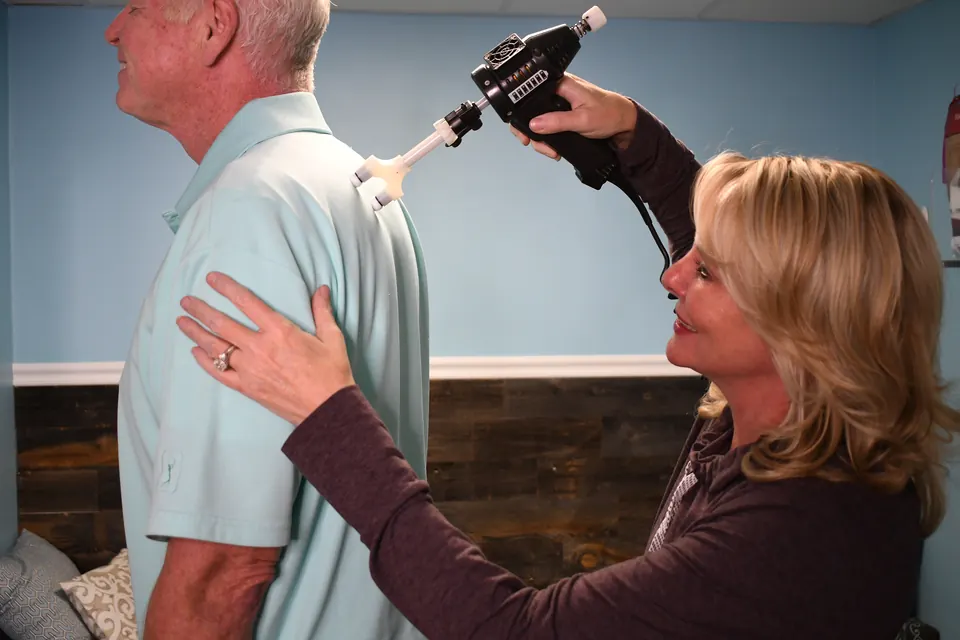
Dr. Anna Saylor giving an older patient a gentle KST adjustment with the ArthroStim
Special Populations

Scleroderma Nervous System Support

Gentle Support for Autoimmune and Connective Tissue Conditions

Book Online

Skin that tightens in places it never used to. Fingers that go white and numb at the first hint of cold. Reflux that will not quit, and a fatigue that arrives without warning and lingers without permission. If you are living with scleroderma, we do not need to explain what the hard days feel like.

Underneath many of these symptoms sits the autonomic nervous system, the part of the body that governs blood flow, digestion, and temperature regulation. In scleroderma, that system often runs in overdrive, which plays into Raynaud's flares, reflux, and a fatigue that never quite matches what you actually did that day.

At Van Every Family Chiropractic Center, our doctors use Koren Specific Technique (KST) and Talsky Tonal Chiropractic (TTC), gentle, nervous system focused adjustments with no cracking or twisting, aimed at supporting that autonomic balance alongside your rheumatology team. You can be adjusted seated, standing, or in whatever position is most comfortable for your skin and joints that day.

How Scleroderma Shows Up

Scleroderma rarely stays in one lane. Fingers or toes turn white or blue and go numb in cold or under stress, sometimes taking a long time to warm back up. Reflux, bloating, or slow digestion shows up and does not fully respond to diet changes alone. Skin and connective tissue tighten around the joints, stiffening range of motion that used to come easily. Good days and hard days seem to arrive without warning, which makes it hard to plan very far ahead.

Raynaud's flares and digestive flares often trace back to the same overactive nervous system, not two separate problems.

What Is Actually Driving It

Scleroderma itself is an autoimmune, connective tissue condition your rheumatology team manages directly. But many of the day to day symptoms, the cold fingers, the reflux, the fatigue that does not match your activity level, trace back to an autonomic nervous system running in overdrive. When the sympathetic, fight or flight side of that system stays switched on, blood vessels constrict more readily, digestion slows, and energy drains faster than it should. Supporting that autonomic balance is where our care fits in.

Our Approach

Using Koren Specific Technique (KST) and Talsky Tonal Chiropractic (TTC), our doctors make gentle, light contact corrections at the upper cervical spine aimed at calming that overactive sympathetic response, the same system tied to Raynaud's flares and digestive symptoms. Because the contact is so light, with no cracking, twisting, or forceful manipulation, care stays comfortable even when skin and joints are already tender.

You can be adjusted seated, standing, or in whatever position avoids added strain on tight or fragile areas. Our doctors are glad to communicate directly with your rheumatologist, so your care fits naturally alongside your broader treatment plan rather than working around it.

A Careful, Unhurried Visit

We start by asking about your diagnosis history, current symptoms, and what a good day versus a hard day looks like for you. From there, we run gentle INSiGHT scans, thermal, heart rate variability, and muscle (sEMG) readings, that give us a report of findings showing exactly where your autonomic nervous system is under stress.

If you are mid flare when it is time for your appointment, tell us. We adjust the visit, your positioning, and the intensity of care to whatever feels manageable that day.

What Patients Notice

Patients often notice fewer or milder Raynaud's episodes, more comfortable digestion, and steadier energy day to day. Sleep and joint comfort tend to improve alongside it.

Many also say it helps to have a form of hands-on care that works with a body already managing a lot, rather than adding one more thing to push through.

Take the First Step If you are looking for gentle nervous system support alongside your scleroderma care, come talk with our doctors in Royal Oak.

Book Online

Common questions

  • We are not treating the autoimmune process itself, that stays with your rheumatology team. Our doctors focus on the autonomic nervous system, the part of the body that governs blood flow, digestion, and temperature regulation. In scleroderma that system often runs in overdrive, which plays into Raynaud's flares, reflux, and unpredictable fatigue. Gentle adjustments are aimed at calming that overactivity.

  • It should not. Our doctors use Koren Specific Technique (KST) and Talsky Tonal Chiropractic (TTC), light, nervous system focused contacts with no cracking, twisting, or forceful manipulation. You can be adjusted seated, standing, or in whatever position keeps pressure off tight or fragile areas.

  • Yes, that is exactly how we intend it to fit. Our doctors are glad to communicate directly with your rheumatology team so your chiropractic care supports your broader treatment plan rather than working around it. If anything outside our scope comes up, we will refer you when appropriate.

  • We run gentle INSiGHT scans, thermal, heart rate variability, and muscle (sEMG) readings, at your visits. Those give us a report of findings showing exactly where your autonomic nervous system is under stress, so we can track changes over time rather than relying on guesswork.

  • Tell us and we will adjust the visit around it. We can change your positioning, shorten the visit, or lighten the intensity of care to whatever feels manageable that day. Scleroderma does not follow a schedule, and neither does our approach to caring for you.

  • Koren Specific Technique (KST) uses a handheld instrument called the ArthroStim to deliver precise, gentle corrections. Talsky Tonal Chiropractic (TTC) is entirely hands-on and tonal, with no instruments involved. Our doctors choose whichever fits your body and your comfort that day.

Scleroderma Nervous System SupportJanuary 16, 2026

The Vagus Nerve and the Body's Own Inflammation Reflex

The body has a built-in reflex for turning inflammation down once it has done its job. The vagus nerve runs that reflex, and understanding it opens up a different angle on autoimmune conditions like rheumatoid arthritis.

Free article

“Living with Scleroderma and Looking for Real Support”

Our doctors put together a full article on scleroderma nervous system support that explains what's really behind it and what lasting relief looks like. Get instant access below.