

The Postpartum Recovery No One Asks You About
A long labor, an emergency C-section, or a birth that left you feeling powerless. The aftermath often shows up in your own body and mind long after everyone is called healthy.
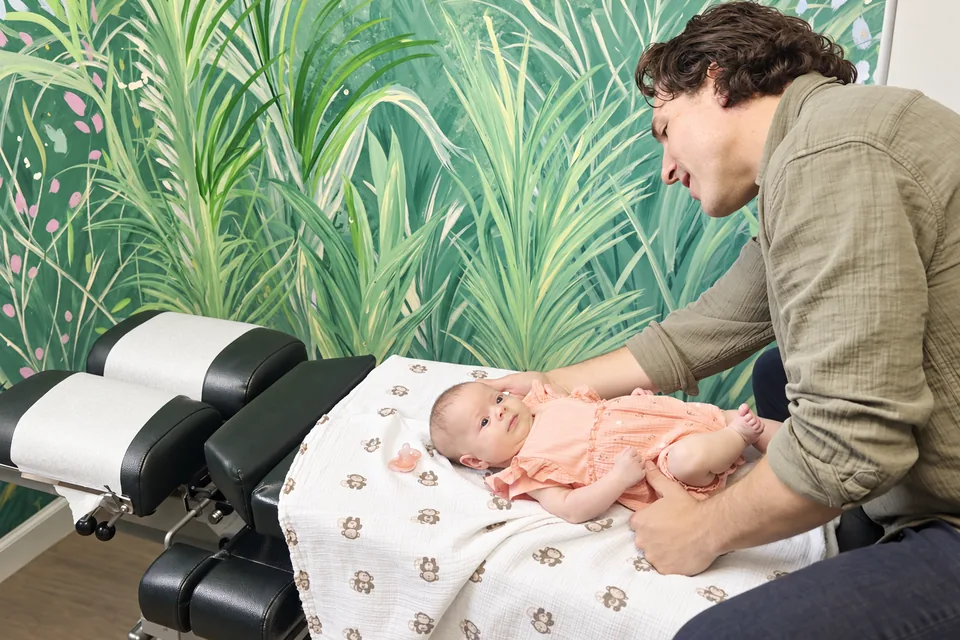
Maybe it was a long labor. Maybe there were interventions you didn't plan for: a C-section, vacuum extraction, forceps, or an induction that turned into something more intense than you expected. Maybe you've been carrying quiet guilt about how it all went. We want you to know: none of that is your fault, and your baby is not broken.
Birth is one of the most physically demanding events a body will ever go through, for you and for your baby. Even a textbook delivery puts real force through a newborn's tiny spine and nervous system, and a baby's developing nervous system doesn't always release that stress on its own. Our doctors use an extraordinarily gentle, newborn-specific approach to help that stress settle, so your baby's nervous system can do what it's built to do.
A baby who cannot seem to relax, or who cries even when fed, changed, and held. A consistent preference for turning the head one direction, or arching away from being held a certain way. Trouble latching or apparent discomfort during feeding, restless and fragmented sleep, and fussing during tummy time.
These signs can show up whether or not your delivery was described as difficult. A fast labor can put just as much force through a newborn's neck and spine as a long one, and a baby who looked fine at the hospital can still be carrying tension that only becomes obvious once you are home and paying close attention.
The compression and twisting forces of even a textbook delivery move through a newborn's spine long before that baby can tell you where it hurts.
The compression and twisting forces of birth, especially assisted deliveries, can leave tension patterns in a newborn's upper spine that the body has not yet learned it is safe to release. The vagus nerve, which runs through the neck and governs feeding, digestion, and the ability to settle, is closely tied to this same area.
Using Koren Specific Technique (KST) and Talsky Tonal Chiropractic (TTC), our doctors use light, nervous-system focused, tonal contacts, no cracking, twisting, or force, with pressure about what you would use to check a ripe tomato. Babies often sleep straight through an adjustment.
We start by listening: how labor went, what interventions were used, and what you have noticed since bringing your baby home. Our doctors perform a careful, hands-on exam alongside neurological scanning appropriate for your baby's age (thermal, HRV, and sEMG scanning through our INSiGHT technology), then explain exactly where tension is being held before any adjustment happens.
Many families come in during the first few weeks of life, especially after an assisted delivery, a C-section, or a long labor, though there is no wrong time to start. If your baby seems unsettled or just is not sleeping well, it is worth a visit regardless of how the delivery went.
A baby who settles and relaxes more easily. Improved latch and more comfortable feeding. Longer, more restful stretches of sleep.
Less arching, stiffening, or one-sided preference, along with reduced gas and digestive fussiness. Most parents describe a visibly calmer, more content baby within the first few visits.
Take the First Step If your baby's start was harder than you hoped, come talk with our doctors in Royal Oak about gentle care built for newborns.
Book OnlineNo. Even a straightforward, textbook delivery puts real force through a newborn's spine and nervous system. A fast labor can be just as physically demanding on a baby's neck as a long one, and a baby who looked completely fine at the hospital can still be carrying tension that only becomes obvious once you are home and paying close attention. We see babies whose deliveries were called easy and babies who came through significant intervention, and gentle nervous system care is worth considering either way.
A baby who has trouble relaxing even after feeding, changing, and being held; a strong preference for turning the head one direction; arching away from being held a certain way; trouble latching; restless, fragmented sleep; and fussing during tummy time can all point back to tension held in the spine and nervous system. None of these on their own means something is wrong, but together they are worth a look.
Yes. Using Koren Specific Technique (KST) and Talsky Tonal Chiropractic (TTC), our doctors use light, nervous system focused, tonal contacts, no cracking, twisting, or force, with pressure about what you would use to check a ripe tomato. Babies often sleep straight through an adjustment, and most parents are surprised by just how gentle it is.
Many families come in during the first few weeks of life, especially after an assisted delivery, a C-section, or a long labor, and some bring newborns in within days. There is no wrong time to start, though. If your baby seems unsettled or is not sleeping well, it is worth a visit regardless of how old they are or how the delivery went.
Every baby is different, but many parents describe a visibly calmer, more content baby within the first few visits. Our doctors reassess along the way and let you know what to expect as care continues, so you always understand why you are coming back.
We start by listening: how labor went, what interventions were used, and what you have noticed since bringing your baby home. Our doctors perform a careful, hands-on exam alongside neurological scanning appropriate for your baby's age, then explain exactly where tension is being held before any adjustment happens.
A long labor, an emergency C-section, or a birth that left you feeling powerless. The aftermath often shows up in your own body and mind long after everyone is called healthy.
Nearly one in three births in the United States happen by C-section. It can be a life saving, even life giving procedure, and it also places real physical stress on a newborn's neck and brainstem worth understanding.
A brief, frightening complication at delivery, oxygen support, maybe a NICU stay, and then relief once your baby is breathing well on their own. Here's what can still be worth a closer look afterward.
See what Royal Oak families say in our Google reviews and patient stories, or browse everything we offer.
Our doctors put together a full article on birth trauma that explains what's really behind it and what lasting relief looks like. Get instant access below.
Van Every Family Chiropractic Center Royal Oak, Michigan
Free on-demand webinar for parents
Looking for answers for your child?
Focus struggles. Big emotions. Restless nights. Tummy troubles. Join our doctors for a free parent webinar exploring the nervous system connection and ways to support your child.
Explore the free webinarFree · About an hour · Watch anytime