What the nervous system has to do with your child's breathing. Why the inhaler manages the moment but the flare-ups keep coming back.
You keep the inhaler in the backpack. You know the action plan by heart. You have seen the pediatrician, maybe the pulmonologist or the allergist. They have done the breathing tests, talked about triggers, and adjusted the medication. The inhaler does its job in the moment. But the flare-ups keep coming back, and you find yourself bracing for the next one.
Here is what most families have not been told: breathing is not only a lung function. It is a neurological function. The phrenic nerve drives the diaphragm, your child's main breathing muscle. The nerves to the lungs and airways come off the thoracic spine. The vagus nerve helps regulate the inflammatory response that decides whether airways stay calm or stay reactive.

The Layer Underneath the Medication
The inhaler manages the airway response in the moment. Underneath that is a nervous system layer, the one coordinating how the lungs, airways, and inflammatory response work together day to day. That is the layer our care focuses on.
Flare-ups that return despite a solid action plan and the right medication, suggesting something upstream of the airways may not be fully addressed yet.
Breathing that tightens up during running, sports, or hard play, often connected to how the autonomic nervous system responds to exertion in a developing child.
Coughing, wheezing, or shortness of breath at night, times when the autonomic nervous system shifts gears and airway tone can become more reactive.
Breathing that looks fast and shallow rather than deep and easy, sometimes connected to tension in the thoracic spine and restricted movement of the diaphragm.
Breathing trouble that reliably shows up during anxiety, excitement, or stressful stretches, pointing directly at the nervous system and respiratory connection.
Many parents report that flare-ups happen less often as nervous system regulation improves and the baseline airway inflammation calms. The shift tends to build gradually rather than all at once.
As the airways become less chronically inflamed and the vagus nerve's calming function improves, many families notice their child reacts less strongly to the usual triggers.
Families often notice their child breathes more comfortably day to day, particularly during sports, play, and seasonal transitions that used to be hard.
Many parents find that as nervous system regulation improves, their child often seems more settled day to day alongside the medication and avoidance strategies already in place. Any medication decision stays with the prescribing doctor.
Our approach focuses on the nerve pathways that coordinate breathing: the phrenic nerve to the diaphragm, the thoracic nerves to the lungs, and the vagal calming pathway.
INSiGHT neurological scans give us objective data on how your child's autonomic nervous system is functioning, including the sympathetic and parasympathetic balance that affects airway tone, bronchial reactivity, and the inflammatory response in the airways.
We pay particular attention to the cervical spine (where the phrenic nerve to the diaphragm exits), the thoracic spine (where the nerves to the lungs originate), and the craniocervical junction (where the vagus nerve exits).
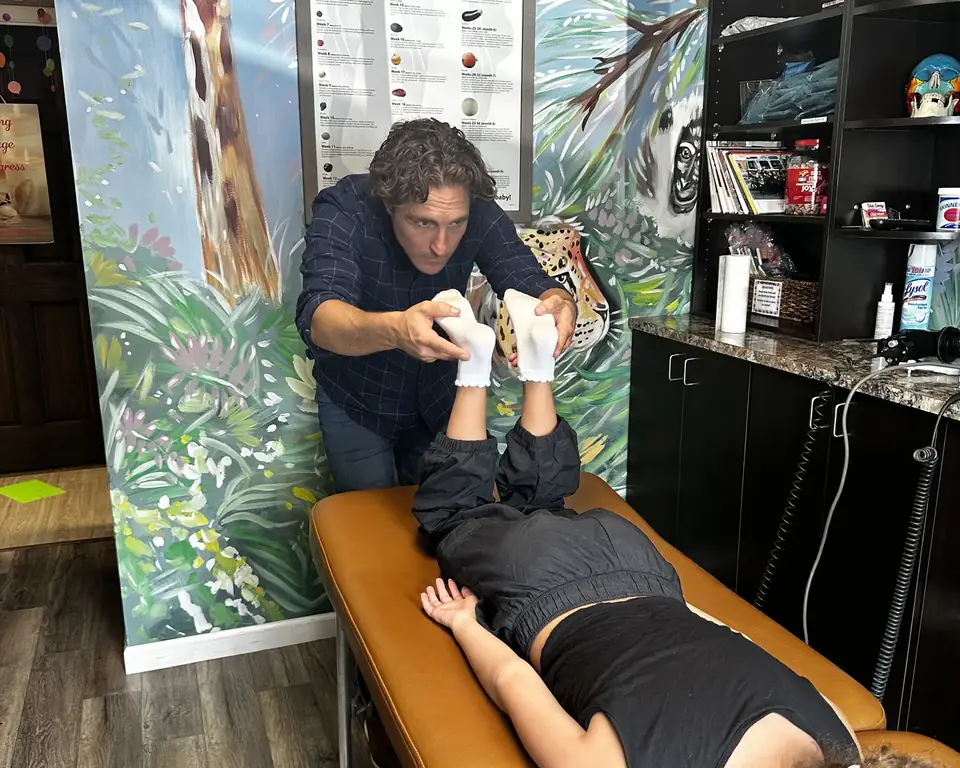
Our doctors use Koren Specific Technique and Talsky Tonal Chiropractic, light, nervous-system focused contacts, lighter than the pressure used to check if a tomato is ripe. No cracking, no twisting, no force, and we follow your child's cues throughout.
While every individual is unique and results vary, families frequently notice improvements in:
Many parents notice flare-ups happen less often as nervous system regulation improves and the baseline airway inflammation calms.
Breathing often feels deeper and easier day to day, particularly during sports, play, and seasonal transitions.
Reactivity to common triggers frequently decreases as the airways become less chronically inflamed.
As the airways calm, some families notice their child seems more comfortable day to day.
When the nervous system regulates, it's not just the breathing that shifts. Sleep, energy, mood, and resilience often improve alongside, because they are all connected to the same regulatory system.

Free Article
Our doctors put together a full article on if your child uses an inhaler, there may be an upstream piece nobody has mentioned that explains what's really behind it and what lasting relief looks like. Get instant access below.
Learn how the vagus nerve and nervous system stress shape breathing in a developing child, and why supporting that layer alongside the inhaler can help a child's system stay more settled day to day. Schedule a consultation with our doctors in Royal Oak, MI.
Book Your Consultation