

The Membrane Connection Behind Occipital Nerve Pain
Occipital neuralgia is usually treated as a nerve problem. There is a tension structure attached to your skull that most approaches never evaluate, and it may be the real driver.
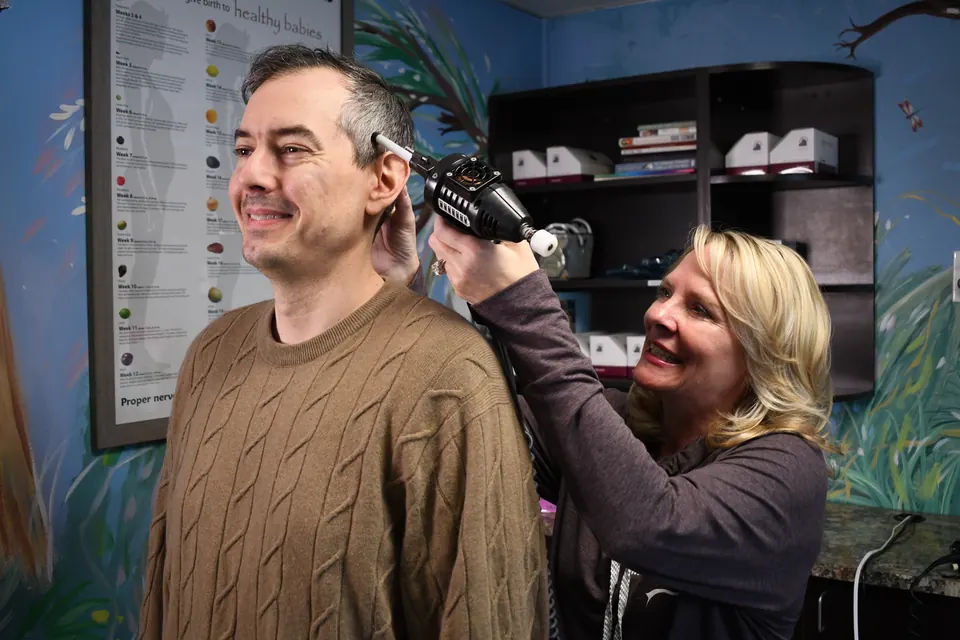
Gentle Care for Sharp, Burning Pain at the Base of the Skull
It starts at the base of the skull. Sharp. Burning. Sometimes electric. It wraps up and over the scalp, and on the worst days it feels like your whole head is under siege. You have tried the muscle relaxers, the nerve blocks, and the ice packs. Some of it helped, for a while, then came right back.
Our doctors have helped many patients find lasting relief from occipital neuralgia without relying on medication, using gentle upper cervical care that addresses where the nerve irritation actually starts instead of just chasing the pain across the scalp.
Occipital neuralgia rarely feels like an ordinary headache. Most people describe a sharp, stabbing, or electric jolt that starts at the base of the skull and shoots up over the scalp, sometimes reaching behind one eye. Between flares, the area often stays tender to the touch, tender enough that resting your head on a pillow or wearing a hat becomes uncomfortable. Some people feel it on just one side, others on both, and a flare can be triggered by something as simple as turning the head, brushing the hair, or sitting at a desk too long. Because the occipital nerves sit so close to the pathways involved in migraine, light sensitivity and a throbbing ache behind the eyes often ride along with the sharper nerve pain.
The occipital nerves travel straight through the muscles and joints at the very top of the neck, so no amount of treating the scalp will quiet a nerve that is being irritated somewhere else.
Occipital neuralgia comes from irritation of the greater and lesser occipital nerves, which run from the top of the neck up through the scalp, passing directly through the muscles and joints at the base of the skull, an area especially sensitive to tension in the C1 and C2 vertebrae. Whiplash, poor posture from long hours looking down at a phone or screen, and chronic muscle tension in the upper neck can all irritate these nerves right where they exit the spine.
When the upper cervical area stays under chronic tension, the nerves stay irritated no matter how many times the scalp itself gets treated. That is the pattern we see most: relief that lasts a few days, then the same shooting, burning pain returns because the source at the base of the skull was never addressed.
We start with a detailed history, when the pain started, what triggers a flare, what you have already tried, then run an INSiGHT scan, thermal, heart rate variability, and muscle (sEMG) readings, focused on the upper cervical spine to see exactly where your nervous system is under stress.
Using Koren Specific Technique (KST) and Talsky Tonal Chiropractic (TTC), our doctors make precise corrections at the base of the skull and upper neck, gentle, nervous-system focused contact with no cracking or twisting, adjusted seated or standing in whatever position keeps your neck comfortable.
Many patients notice flares starting to ease within the first several visits, as the tension driving the nerve irritation begins to resolve. Because our contact is gentle, there is no added pain stacked on top of what you are already dealing with. Long-standing cases can take longer to settle, but it is rarely too late to address the underlying tension at the base of the skull.
When the scalp and neck are already tender, precision matters more than force. Because our contact is so light, patients who cannot tolerate a traditional neck adjustment often find this is the first hands-on care that does not make the pain worse just to try to fix it.
Patients typically notice flare-ups growing less frequent and less intense, with longer stretches of time between episodes and less scalp tenderness day to day. Many also notice fewer bouts of light sensitivity, since occipital neuralgia and migraine often overlap.
Take the First Step If sharp, burning pain at the base of your skull keeps returning, let us look at the source. Our doctors see patients on Saturdays in Royal Oak.
Book OnlineThe greater and lesser occipital nerves run from the top of the neck through the scalp, passing directly through the muscles and joints at the base of the skull. Whiplash, poor posture from long hours looking down at a screen, and chronic tension or misalignment in the C1 and C2 vertebrae can all irritate these nerves right where they exit the spine, producing the sharp, burning pain that radiates over the scalp.
Most approaches to occipital neuralgia focus on the scalp or the nerve endings directly, which can bring short term relief but rarely lasts. Our doctors focus on the upper cervical spine, where the occipital nerves actually originate, so we are addressing the source of the irritation instead of chasing the pain after it has already traveled up and over the scalp.
Yes. Our doctors use light, nervous system focused contacts with no cracking, twisting, or forceful manipulation, so care stays comfortable even on days when your scalp is tender to the touch. We adjust you seated or standing, in whatever position keeps your neck comfortable.
Many of our patients come to us after nerve blocks, muscle relaxers, or ice packs gave them only temporary relief. Those approaches can quiet the nerve for a while, but if the irritation at the base of the skull is never addressed, the pain typically returns. Our doctors focus on that source, using INSiGHT scanning to see exactly where your upper cervical spine is under stress.
Every case is different, and how long you have been dealing with occipital neuralgia matters. Many patients notice flares becoming less frequent and less intense within the first several visits. Long-standing cases can take longer to settle, but it is rarely too late to address the underlying tension at the base of the skull.
No, though the two often overlap. Occipital neuralgia comes from irritation of the occipital nerves at the base of the skull, while migraine involves a different neurological process. Because the two can trigger each other, many patients with occipital neuralgia also notice fewer migraine-like symptoms, such as light sensitivity, once the nerve irritation at the base of the skull settles down.
Occipital neuralgia is usually treated as a nerve problem. There is a tension structure attached to your skull that most approaches never evaluate, and it may be the real driver.
See what Royal Oak families say in our Google reviews and patient stories, or browse everything we offer.
Our doctors put together a full article on occipital neuralgia that explains what's really behind it and what lasting relief looks like. Get instant access below.