

What Tiptoe Walking Might Be Telling You
Your toddler is well past two and still walks almost entirely on their toes. It is worth understanding what that pattern often means before assuming it is just a phase.
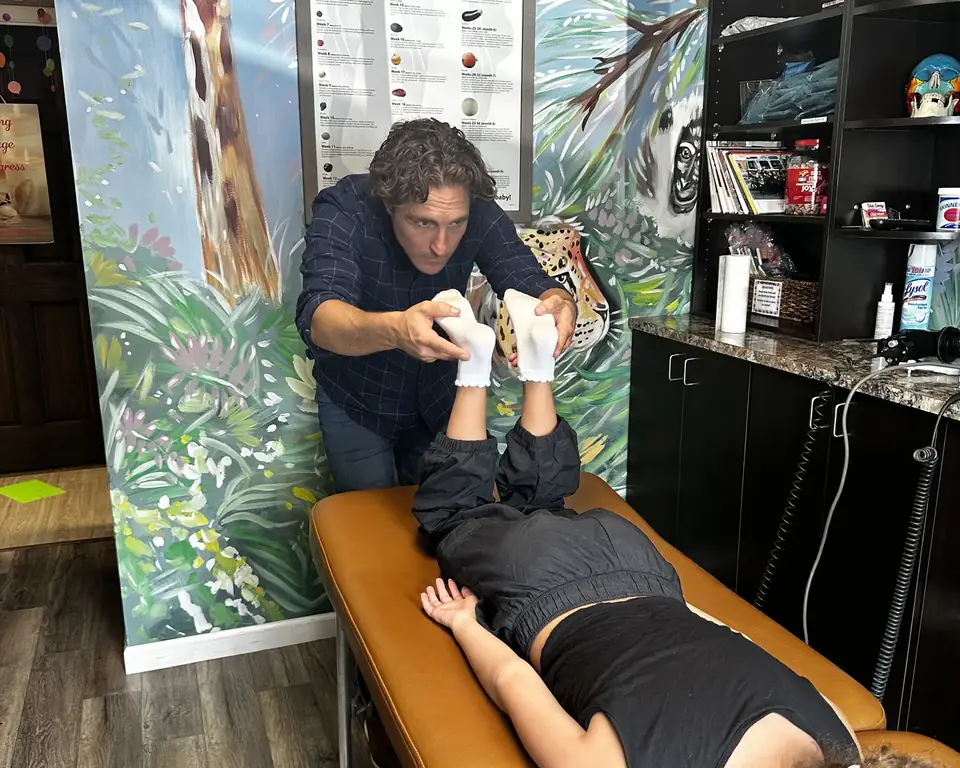
Supporting the Nervous System Pattern Behind a Tiptoe Gait
You've watched it for a while now. Up on the balls of the feet, heels barely touching the floor, that bouncy little tiptoe gait that was cute at first and has quietly stuck around. You've reminded your child to put their heels down, shown them how, and within a few steps they drift right back up onto their toes.
What we see in our Royal Oak office is that persistent toe walking is rarely a habit a child is choosing. It's most often a pattern the nervous system is running. The muscles are simply doing what the nervous system tells them to do, and when the system that governs balance and body awareness is dysregulated, a tiptoe gait is what shows up on the surface. Our doctors use gentle assessment along with Koren Specific Technique (KST) and Talsky Tonal Chiropractic (TTC) to support that system directly.
Weight concentrated on the toes and balls of the feet, with the heel rarely making contact with the ground. You remind them, they put their heels down for a few steps, and then fold right back up onto their toes, a return that suggests the gait is being held by a pattern rather than a choice.
When toe walking persists, the calf muscles and Achilles tendon can gradually shorten, and it often travels with clumsiness, poor coordination, or gross motor delays. Many children who toe walk are also teeth grinders or jaw clenchers, tension-based habits that tend to cluster together with a generally wound-up, hard-to-settle state.
Toe walking is not a foot or calf muscle problem on its own. It's a pattern the muscles are carrying out because of what the nervous system is telling them.
A young nervous system is still developing the way it coordinates balance and movement. Research on some children with idiopathic toe walking finds real differences in balance testing, sensory processing, and vibration sensitivity, though the pattern isn't identical from child to child. What's consistent across the research is that the gait sits downstream of how the nervous system is regulating input, not upstream of it.
Our INSiGHT neurological scans, thermal, HRV, and sEMG, give us objective data about the upper cervical and nervous system tension so often tied to balance and tone, rather than guessing from the gait alone. The longer a compensation pattern runs uninterrupted, the more the calf muscles and Achilles tendon shorten and tighten around it, which is part of why paying attention to it early matters.
Persistent toe walking sometimes needs a medical workup, so we encourage every family to have their pediatrician rule out other causes, such as a tight Achilles tendon or a neurological condition. Our doctors work alongside your child's medical, physical therapy, or occupational therapy care, never in place of it, using Koren Specific Technique (KST) and Talsky Tonal Chiropractic (TTC), light, nervous-system focused contacts with no cracking, popping, or twisting.
Care is calibrated to your child's age and comfort, and we follow their cues carefully throughout every visit.
Every child settles into a new gait pattern at a different pace, and our doctors build the plan around what your child's nervous system needs rather than a fixed timeline. Because the care is gentle, there's no added stress layered on top of what your child is already managing, and we rescan over time to track how the pattern is shifting.
Many parents notice their child beginning to put their heels down more on their own, without the constant reminding. Balance and coordination often steady as well, and the clumsiness that traveled with the toe walking tends to ease.
Tension-based habits that often cluster with toe walking, like teeth grinding or jaw clenching, frequently soften as the nervous system settles. Families often report that a grandparent, teacher, or therapist notices the change in gait before they fully register it at home.
Take the First Step If reminders alone haven't changed your child's gait, come talk with our doctors in Royal Oak about what gentle nervous system care could look like, alongside your pediatrician's evaluation.
Book OnlineSome children do transition to a typical gait naturally, especially when there's no Achilles tightness yet and they can still place their feet flat on the ground. When toe walking persists well past age 3, waiting it out can allow the calf muscles and Achilles tendon to shorten and tighten around the pattern over time, which is part of why early attention tends to be more responsive.
Yes, and we always encourage that. Persistent toe walking sometimes needs a medical workup to rule out a tight Achilles tendon, a neurological condition, or other causes. Our role is to support the nervous system alongside whatever medical, physical therapy, or occupational therapy care your child receives.
For some children, yes. Research shows real differences in balance and sensory testing in a meaningful share of kids who toe walk, though not every child shows the same pattern. Supporting the underlying balance and body-awareness systems is the focus of our care.
Yes. For younger children, the contact during care is particularly light and we follow the child's cues carefully. No cracking, no twisting, no forcing. Both Koren Specific Technique (KST) and Talsky Tonal Chiropractic (TTC) are calibrated to your child's age and comfort.
Stretching addresses the tight muscles and shortened tendon that develop around the gait pattern, but it doesn't change the nervous system signal driving the tiptoe position. When the pattern is stored in the nervous system, treating the muscles alone tends to let it snap back once the stretching stops.
Your toddler is well past two and still walks almost entirely on their toes. It is worth understanding what that pattern often means before assuming it is just a phase.
See what Royal Oak families say in our Google reviews and patient stories, or browse everything we offer.
Our doctors put together a full article on toe walking that explains what's really behind it and what lasting relief looks like. Get instant access below.
Van Every Family Chiropractic Center Royal Oak, Michigan
Free on-demand webinar for parents
Looking for answers for your child?
Focus struggles. Big emotions. Restless nights. Tummy troubles. Join our doctors for a free parent webinar exploring the nervous system connection and ways to support your child.
Explore the free webinarFree · About an hour · Watch anytime