Fall Sports Soreness: A Kids Sports Chiropractor in Royal Oak
Fall sports can take kids from a relaxed summer to hours of repetitive activity almost overnight. Here is what we told Royal Oak families to watch for.
Why your child's headaches keep coming back, what the nervous system has to do with it, and why screens, backpacks, and tension all play a part
Your child keeps coming home with another headache. You give them something for it, they rest in a dark room, and it eases for a while. Then it is back, sometimes the next day. They are missing class, sitting out at recess, or asking to come home early, and no one has explained why this keeps happening.
Here is what many families have not been told: a headache is usually a signal, not the problem itself. The upper part of your child's neck sits directly next to the brainstem, where nerve pathways and stress regulation come together. When tension builds up at that level, often from hours hunched over screens, a heavy backpack, or a nervous system that rarely gets to switch off, those stress signals can travel upward and show up as head pain.
When a child's nervous system is stuck in a constant state of alertness, the body stays wound up and rarely shifts into recovery mode. That ongoing tension is not something a child simply grows out of. It is a nervous system pattern that may benefit from support.
When tension locks in at the upper neck and the nervous system stays in overdrive, you can get exactly what you are seeing: recurring headaches, sensitivity to light or sound, and headaches that flare with screens, stress, or a long school day. The signal needs a chance to settle.
Headaches that show up most often during the school week, especially in the afternoon, frequently reflect a nervous system carrying the load of long hours of focus, screens, and posture.
Pain concentrated at the upper neck and base of the skull often points to tension building at the upper cervical level, where the neck and the headache pathway connect.
Headaches that worsen after tablets, phones, gaming, or online schoolwork often reflect the combined load of screen posture and sustained nervous system focus on a young, still-developing system.
When headaches come with sensitivity to light, sound, or nausea, it can reflect a nervous system that has become more reactive to everyday input rather than a structural problem.
When a child's headaches reliably worsen during stressful periods, before tests, with a packed schedule, or during family stress, it suggests the nervous system is part of the pattern.
Learn moreWhen headaches pull a child out of class, sports, or play often enough that it has become a pattern, it is worth looking past the symptom to what may be driving it.
Many parents report a meaningful reduction in how often headaches show up as tension at the upper cervical level begins to release and the nervous system settles.
When the nervous system is less reactive, headaches that do occur are often less severe and pass more quickly, so a headache no longer takes over a whole day.
Upper cervical tension often affects sleep and concentration. Many families notice their child rests better and seems more focused at school as the pattern shifts.
Better hydration, screen limits, and sleep routines often sit more easily with a child once the nervous system is no longer stuck working against them. Families frequently notice mood and energy improving alongside the headaches.
Our approach focuses on the upper cervical nervous system that feeds directly into the headache pathway, paying particular attention to the area just below the skull where tension most commonly builds in children carrying screen, posture, and schedule load.
INSiGHT neurological scans give us objective data about how your child's nervous system is functioning, particularly at the upper cervical region and how the autonomic system is responding to daily stress and screen load. For children who have already had uncomfortable evaluations, the complete non-invasiveness of our assessment is often a welcome relief.
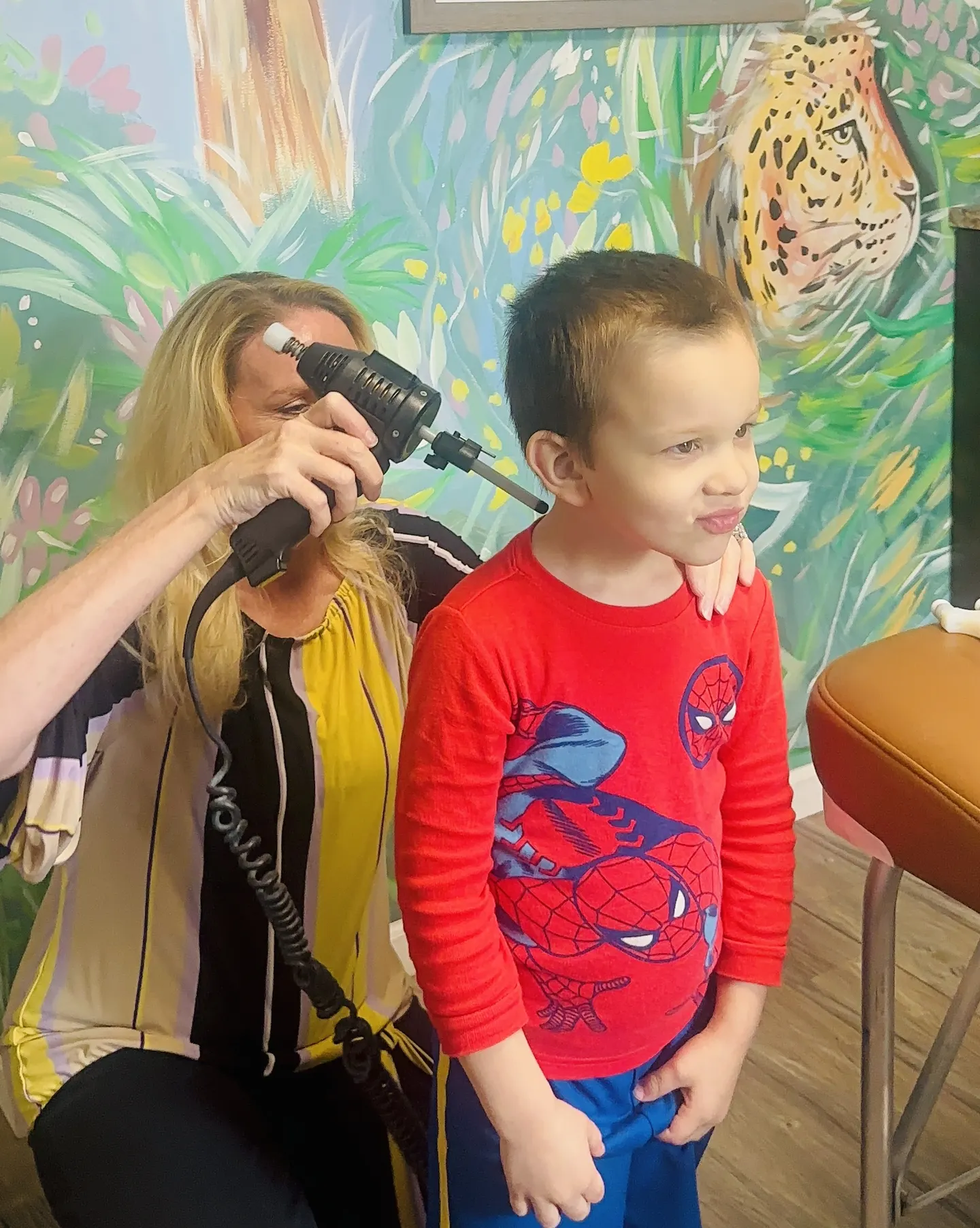
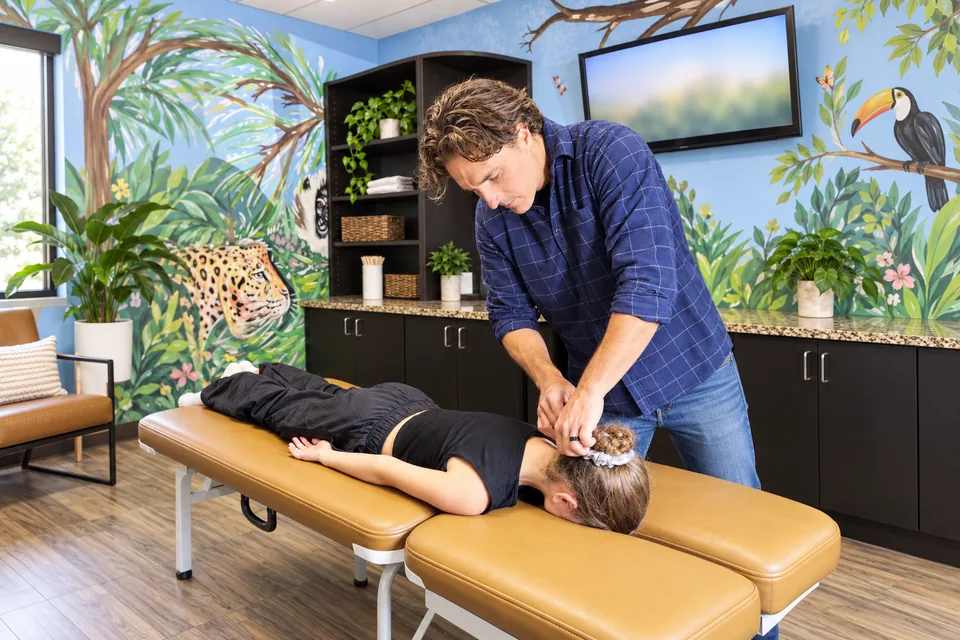
Using Koren Specific Technique (KST) and Talsky Tonal Chiropractic (TTC), we pay particular attention to the upper cervical region where tension most commonly disrupts the brain-body communication that can show up as recurring head pain in children. Both techniques are light, nervous-system focused contacts, with no cracking, no twisting, nothing that could aggravate a sensitive area.
Headaches in children are rarely isolated. We look at the whole nervous system pattern, including the screen, posture, and schedule load driving the tension, rather than focusing on the headache alone. When the nervous system settles, the everyday changes families have already made often start sitting more easily with their child.
Families often tell us they notice changes in:
Want to Understand What's Behind Your Child's Headaches? Learn how the nervous system and upper neck tension can drive recurring headaches in children, and why these headaches are often more than just growing pains.
Book OnlineWhen the medical workup comes back clear, that is actually useful information. It often means the issue is not structural. It points instead toward how the nervous system is functioning. The upper neck sits directly next to the brainstem, and when tension builds there from screens, posture, and a nervous system stuck in overdrive, those stress signals travel upward and show up as recurring head pain. That is the layer we look at.
When a child spends hours looking down at a tablet or phone, the head drifts forward and the muscles at the base of the skull work overtime to hold it up. A heavy or poorly fitted backpack adds to the same load. None of these are the whole story on their own, but together they keep adding tension to the very region that feeds into the headache pathway. Over time, a nervous system carrying that load can become more reactive, so things that would not have triggered a headache before now do.
Yes. Our techniques are particularly gentle for children in an active headache pattern. Talsky Tonal Chiropractic uses light fingertip contact, and Koren Specific Technique uses a gentle tap from the ArthroStim instrument. Neither involves any cracking, twisting, or sudden movements. We calibrate to the child's comfort and cues throughout the session.
Some children with recurring headaches do experience migraines, especially when headaches come with sensitivity to light, sound, or nausea. Pediatric migraine is increasingly understood as involving autonomic nervous system dysfunction, the same pattern we address with neurologically focused care. If migraines are suspected, we always work alongside your pediatrician's evaluation and management.
Please continue following your pediatrician's guidance on medication. We work alongside your child's medical care, not in place of it. As the nervous system settles and headaches become less frequent or less severe, families often find they rely on pain relievers less frequently on their own.
Fall sports can take kids from a relaxed summer to hours of repetitive activity almost overnight. Here is what we told Royal Oak families to watch for.
Your child doubles over with stomach pain, is nauseous and pale, and every test comes back normal. This pattern may be an abdominal migraine, a gut-brain condition rather than a digestive one.
You've tracked the food, the screen time, the sleep. The triggers keep shifting. Here is why triggers alone rarely explain a child's migraine pattern.
See what Royal Oak families say in our Google reviews and patient stories, or browse everything we offer.
Our doctors put together a full article on headaches in kids that explains what's really behind it and what lasting relief looks like. Get instant access below.

Van Every Family Chiropractic Center Royal Oak, Michigan
Free on-demand webinar for parents
Looking for answers for your child?
Focus struggles. Big emotions. Restless nights. Tummy troubles. Join our doctors for a free parent webinar exploring the nervous system connection and ways to support your child.
Explore the free webinarFree · About an hour · Watch anytime