Teaching is not a desk job, even though the world sometimes treats it like one. You are on your feet for hours, projecting your voice across a room, bending down to a student's eye level and back up again, and staying regulated while managing twenty-five other nervous systems at the same time. By Friday afternoon, the tank is empty in a way the weekend doesn't fully refill.
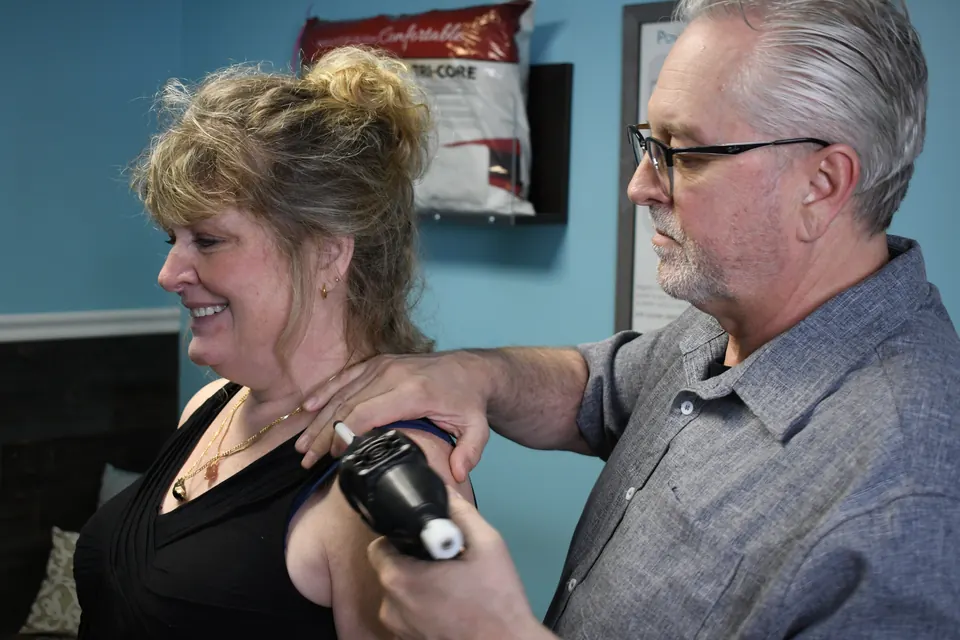
That combination, hours standing, repetitive bending and reaching, constant vocal strain, and the mental load of running a classroom, adds up in the body as much as it does in energy. At Van Every Family Chiropractic Center, our doctors use Koren Specific Technique (KST) and Talsky Tonal Chiropractic (TTC): gentle, nervous system focused adjustments with no cracking or twisting, aimed at supporting the spine and nervous system carrying that daily load.
We know a teacher's schedule rarely has room for a midday appointment. That's why we offer flexible scheduling and are open the first and third Saturday of every month. As a whole family practice, the same visit that gets you back on your feet is often what gets your own kids into gentle care too.

How a School Day Shows Up in Your Body
Teaching shows up in the body in a handful of predictable ways. Many teachers feel it first in the low back, hips, or feet, an ache that builds after hours of standing and moving across hard classroom floors with barely a chance to sit down. Others notice it in the neck and shoulders, a tightness that comes from hunching over student desks, grading papers late into the evening, and writing on the board day after day.
The voice often gives some warning too, hoarse or worn out by the end of the day from projecting over classroom noise. And by Friday, many teachers describe a depleted, foggy feeling that a normal weekend never quite resolves, the kind of fatigue that comes from a nervous system running in overdrive for five straight days.
The Visit
We run a gentle INSiGHT scan, thermal, heart rate variability, and muscle (sEMG) readings, that shows us where your nervous system is under stress from standing, vocal strain, and classroom demands. You get a report of findings, real data behind how depleted you feel by Friday, not just a guess.
From there, adjustments are quick and precise, and our doctors look at how standing, posture, and vocal strain are affecting you together, not just the one spot that hurts most.
A Schedule Built Around the School Day
Flexible weekday scheduling and hours on the first and third Saturday of the month mean you're not choosing between an appointment and your prep period. We adjust care frequency for busier stretches like conferences and testing season.
Many teachers bring their own kids in once they see how approachable the care is. As a whole family practice, one visit often turns into the whole household getting care.
What Changes
Patients report less low back and foot pain from standing, and steadier energy through Friday afternoons. Neck and shoulder tension by the end of the week tends to ease too.
Many also notice their voice holds up better through a full day of teaching, along with better sleep during the school year.
Take the First Step
If the school year is wearing on your body faster than weekends can fix it, come talk with our doctors in Royal Oak.
Common Questions
Why does teaching wear on the body so much more than a typical desk job?
How quickly will I notice a difference?
Is this safe if I am already dealing with significant pain or fatigue?
Can I actually fit appointments around my teaching schedule?
Do you see kids too?
What if this has been building for years, not just this school year?
Related: Back & Neck Pain · Posture & Tech Neck · Headaches & Migraines · Chronic Fatigue · Sleep Disorders