How your nervous system adapts throughout pregnancy, and why that adaptation is worth understanding with more than a number on an app.
If you're tracking your HRV during pregnancy on an Oura ring or Whoop and watching it drop, you're probably wondering whether something is wrong. The short answer: a first-trimester HRV dip is expected. Your body is redirecting enormous resources to build a human being, and your nervous system is working overtime to keep up. That's adaptation, not alarm.
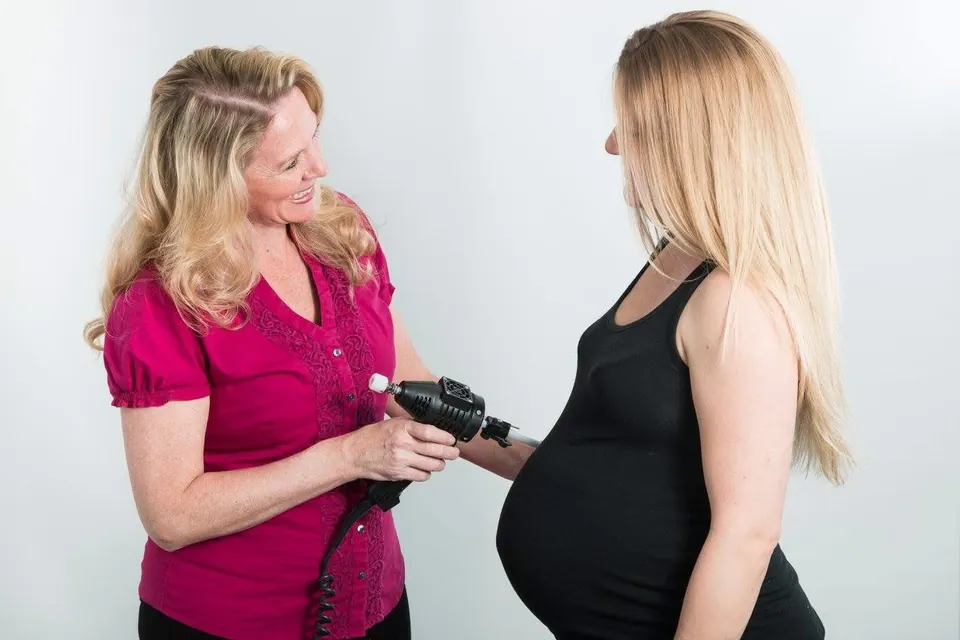
At Van Every Family Chiropractic Center, our doctors use INSiGHT neurological scanning to measure heart rate variability alongside other objective markers of nervous system function, so we can see how your nervous system is actually adapting through each trimester. Paired with gentle, tonal adjustments, this gives you a clearer picture of what's happening in your body than a wearable can offer on its own.

Patterns Worth a Closer Look
A wearable showing a steady HRV decline through the first trimester is common, a normal sign of your body redirecting resources toward your baby. Feeling wired even when you're running on empty is another, a sign the nervous system is working overtime.
Restless or fragmented sleep, even on nights when nothing in particular kept you up. Workouts, stress, or busy days that used to bounce back quickly now taking longer to recover from.
Recurring tightness in the neck, shoulders, or low back that tracks with how stressed or tired you feel, and a general sense of wanting real data instead of just watching a number move on a screen.
How Nervous System Care Helps
Gentle adjustments are aimed at helping your nervous system shift more easily between activity and rest. INSiGHT neurological scanning measures HRV alongside other markers of nervous system function, giving our doctors a fuller picture than a ring or watch alone.
Using Koren Specific Technique (KST) and Talsky Tonal Chiropractic (TTC), care is light and nervous system focused, no cracking or twisting, and comfortable at any stage of pregnancy. As tension eases, many patients find their body recovers more easily from the physical demands of pregnancy, workout to workout and week to week.
Our Approach
We start with INSiGHT scanning to measure your current HRV and nervous system function, a baseline specific to you rather than a population average. From there, KST and TTC adjustments work to ease nervous system tension.
We re-scan periodically through your pregnancy to track how your nervous system is adapting trimester by trimester, and your care plan grows with you from early pregnancy through your third trimester and into recovery.
What Patients Notice
A better understanding of what their HRV trends actually mean, instead of just watching a number climb or drop with no context.
A calmer, more regulated nervous system through pregnancy, improved sleep and daily recovery, and reduced tension through the neck, shoulders, and low back, tracked with objective data trimester by trimester.
Take the First Step
Move beyond wearable data with objective nervous system scanning and gentle, pregnancy safe care, in Royal Oak.
Common Questions
Why does my HRV drop during pregnancy?
Should I be worried about what my wearable is showing me?
What is INSiGHT scanning?
Is chiropractic care safe throughout pregnancy?
How often will I be scanned and adjusted?
When is the right time to start care?
Related: Prenatal Care · Trimester by Trimester · Pregnancy Anxiety · Vagus Nerve · Postpartum Recovery