

What Decades of Heart Rate Variability Decline Actually Means for You
Your ability to shift between stress and recovery declines measurably with age. That decline is not the whole story, and it is not something you simply have to accept as is.
Gentle Chiropractic Care for Active, Independent Living
Aging doesn't have to mean chronic pain, declining mobility, or a slow loss of independence. What does it take to keep driving, gardening, and playing with your grandchildren well into your 70s and 80s? For a lot of our senior patients, it starts with a spine and nervous system that still work the way they are supposed to.
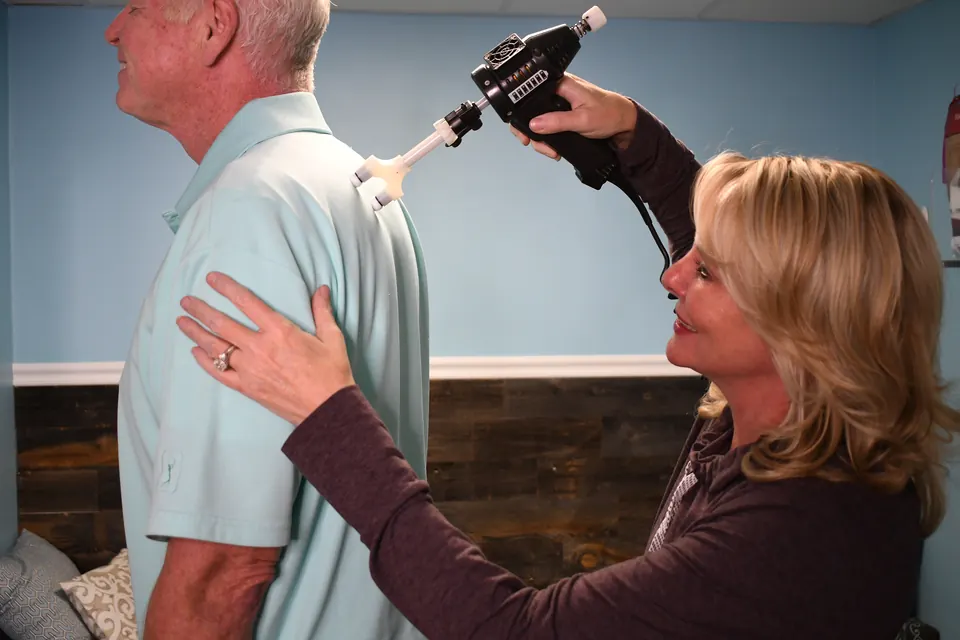
We regularly care for patients well into their 80s and beyond, using a light-touch, neurologically focused approach that is well suited to seniors, including those managing osteoporosis or other bone density concerns. You are never too old to start.
Using Koren Specific Technique (KST) and Talsky Tonal Chiropractic (TTC), our doctors adjust with controlled, gentle pressure and no cracking, twisting, or forceful manipulation, in whatever position is most comfortable for you that day.
Joint pain and stiffness from osteoarthritis can limit how much you want to do in a day, and low back pain built up over years of accumulated stress and degenerative change often makes the first few steps out of a chair the hardest part of getting moving. Range of motion narrows a little at a time, until turning to check a blind spot or reaching for a top shelf takes real effort.
Balance that feels less steady than it used to raises fall risk, a real concern for seniors, and sleep that gets interrupted by pain or discomfort more nights than not leaves less energy the next day than the day before. Many seniors also notice their thinking feels less sharp than it used to, a change that often eases as the nervous system settles down.
Falls are the leading cause of injury in older adults, and better balance often starts with clearer communication between the spine and the brain.
A lot of what gets written off as "just getting older" traces back to stress patterns that have been building in the spine and nervous system for decades: tension from old injuries, repetitive strain, or years of everyday wear the body never fully released. That buildup interferes with the signals your spine sends to your brain about where your body is in space and how it should be moving, which is part of why pain, balance, and mobility tend to shift together as we age rather than one at a time.
The spine holds a dense network of sensors, called proprioceptors, that tell your brain where your body is in space from moment to moment. When spinal function improves, that information gets clearer, and balance tends to follow.
Many seniors also find they need less pain medication over time as chronic aches from arthritis and old injuries ease, without adding anything new to manage.
We take time to understand your health background, your concerns, and what matters most to you, whether that's staying independent, driving comfortably, or simply moving without pain. A gentle INSiGHT scan, thermal, heart rate variability, and muscle (sEMG) readings, gives us a report of findings behind how your nervous system is actually functioning, not just where you feel pain.
From there, care stays gradual and progressive, with maintenance visits built in to protect the gains you make over time. You can be adjusted in whatever position is most comfortable, sitting in a chair, standing, or lying down, and we work around any mobility limitations.
Patients often report less arthritis pain, steadier balance, and an easier time with daily tasks like driving or getting up from a chair. Many also notice better sleep, more energy during the day, and less reliance on pain medication than before.
It also tends to get easier to keep doing the things you actually enjoy, whether that's gardening, hobbies, or time with family, without the day being planned around pain.
Take the First Step If aging has started to feel like a trade-off between staying active and staying comfortable, come talk with our doctors in Royal Oak.
Book OnlineYes. Our doctors use Koren Specific Technique (KST) and Talsky Tonal Chiropractic (TTC), both light, nervous system focused approaches with controlled, gentle pressure and no rotation, twisting, or high-velocity manipulation. Care is adapted specifically to your bone density and comfort level.
Absolutely. Many of our senior patients have osteoarthritis. Better spinal alignment and nervous system function often reduce the pain and stiffness arthritis causes and improve mobility, so you can keep doing more of what you enjoy day to day.
Chiropractic care supports proprioception, your body's awareness of its own position in space. The spine contains a dense network of sensors that send balance information to the brain, and when spinal function improves, that information gets clearer, which tends to mean steadier balance and lower fall risk.
We work with Medicare and most insurance plans, and our staff is experienced in helping seniors navigate their coverage. Give our Royal Oak office a call and we will help you understand your specific options.
No problem. Our techniques let us adjust you in whatever position is most comfortable, sitting in a chair, standing, or lying down. We work around any mobility limitations and never ask you to do anything that causes discomfort.
Every patient is different, and changes the body has held onto for years take a little patience to unwind. Many seniors notice improvements in comfort and ease of movement within the first several weeks of care, with balance and energy often following as the nervous system settles into a new pattern. We track your progress at each visit so you can see it for yourself.
Your ability to shift between stress and recovery declines measurably with age. That decline is not the whole story, and it is not something you simply have to accept as is.
See what Royal Oak families say in our Google reviews and patient stories, or browse everything we offer.
Our doctors put together a full article on senior care & healthy aging that explains what's really behind it and what lasting relief looks like. Get instant access below.