

The Part of a Disc Herniation Your MRI Can't Show You
A herniated disc diagnosis can feel like a countdown to surgery. Here is what the research says about the body's own capacity to recover.
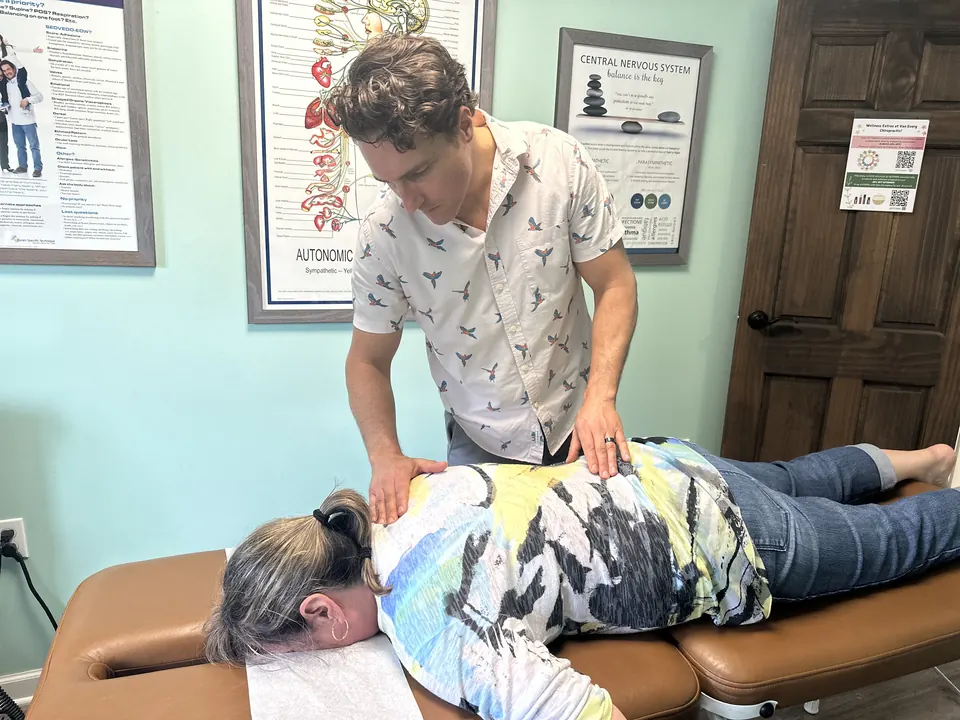
Conservative Chiropractic Care for Disc Problems
Disc herniations and degenerative disc disease are among the most common causes of back pain, neck pain, and pain that radiates down an arm or leg. At Van Every Family Chiropractic Center, our doctors help patients with disc problems find relief and improve function using gentle, conservative care that skips the risks of surgery and the cycle of pain medication.
Spinal discs act as shock absorbers between your vertebrae. A herniation happens when the soft inner material pushes through the outer wall, sometimes pressing on a nearby nerve. Degenerative disc disease is the gradual breakdown of that same disc structure over time. Both respond well to gentle, neurologically focused care that reduces pressure on the disc and the nerve without forceful manipulation.
Disc problems rarely look the same from one patient to the next. A herniated disc in the low back can send pain, tingling, or numbness shooting down one leg by pressing on the sciatic nerve, while a disc herniation in the neck sends similar symptoms into the shoulder and arm. Many people also feel a localized ache right at the site of the disc, worse with sitting, bending, or a cough.
When nerve compression becomes significant, a leg or arm can start to feel weaker than it should, a sign worth paying attention to. Degenerative disc disease tends to show up differently: stiffness that is worst first thing in the morning and eases as you move through the day.
The body can reabsorb herniated disc material on its own; taking pressure off the area is often what lets that process finish the job.
A bulging disc has expanded past its normal boundary but the outer wall is still intact. A herniation means the inner material has pushed through a tear in that wall. Both can press on a nerve and cause the pain, tingling, or weakness described above.
Degenerative disc disease is a natural part of how discs age, not a sign that something has gone permanently wrong. Discs are more resilient, and more able to heal, than most people are told.
We start with a thorough exam, including orthopedic and neurological testing and INSiGHT scanning (thermal, HRV, sEMG) to objectively measure how your nervous system is functioning, plus a review of any imaging you already have (MRI or X-ray), so we understand exactly where the disc is under stress before we touch your spine.
Using Koren Specific Technique (KST) and Talsky Tonal Chiropractic (TTC), our doctors make precise, light, nervous system focused corrections with no cracking, popping, or twisting, adjusted seated, standing, or in whatever position keeps you comfortable. That precision matters with a disc problem, since a forceful adjustment can add stress exactly where you cannot afford it.
Research consistently shows that most disc herniations improve with conservative care, and only a small percentage ultimately need surgery. Our gentle approach is aimed at reducing disc pressure and nerve irritation so your body has room to heal on its own. We will always give you an honest assessment, and refer you for a surgical consultation if your case calls for it.
Patients typically notice the radiating arm or leg pain easing before the local back or neck pain fully resolves, followed by better range of motion, less morning stiffness, and better sleep. Many return to normal activity and reduce their reliance on pain medication without ever scheduling surgery.
Take the First Step If a disc problem has you weighing surgery, a conservative evaluation is worth having first. Our doctors see patients on Saturdays in Royal Oak.
Book OnlineYes. Our approach is specifically suited to disc conditions. Rather than forceful manipulation, our doctors use light, nervous system focused contacts that reduce disc pressure without adding risk of worsening the herniation. We always complete a thorough exam before beginning care.
Often, yes. Research shows that most disc herniations improve with conservative care. The body can naturally reabsorb herniated disc material over time, and gentle chiropractic care supports that process by reducing pressure on the disc and improving spinal mechanics.
A bulging disc has expanded beyond its normal boundary, but the outer wall is still intact. A herniation is when the inner material pushes through a tear in that wall. Both can cause symptoms if they press on a nerve, and both respond well to our gentle approach.
Disc degeneration itself is a natural part of aging and cannot be fully reversed. The symptoms it causes, including pain, stiffness, and nerve irritation, can often be significantly improved. Restoring proper spinal alignment and movement helps manage the condition and slow further progression.
Disc conditions vary widely in severity, so we do not give a specific timeline until we have completed a thorough history, consultation, and INSiGHT scans. That evaluation lets our doctors understand the full scope of your disc condition and build a realistic, personalized care plan, and we track your progress at regular intervals as you improve.
Yes. Our doctors use light, nervous system focused contacts, with no cracking, twisting, or sudden movements, so care is appropriate even during a painful flare up. We adapt every visit to your comfort and can adjust you in whatever position is easiest on the disc.
A herniated disc diagnosis can feel like a countdown to surgery. Here is what the research says about the body's own capacity to recover.
Stiff and achy out of bed, better by mid morning, a little stiff again by evening. That pattern often means degenerative disc disease, and the diagnosis sounds far worse than the outlook actually is.
See what Royal Oak families say in our Google reviews and patient stories, or browse everything we offer.
Our doctors put together a full article on disc herniation & degenerative disc disease that explains what's really behind it and what lasting relief looks like. Get instant access below.
