Whiplash & Auto Injury

Whiplash & Auto Injury

Gentle Recovery After a Car Accident, Whether It Was Last Week or Years Ago

Person holding their neck after a car accident

A car accident can change your life in seconds. Even a low-speed collision can injure the spine, muscles, and nervous system, and symptoms often do not show up until days or weeks later. And for many people the story does not end when the paperwork does: the headaches, stiffness, and fog linger for months or even years after everyone else has moved on.

Whiplash happens when the head is thrown suddenly forward and back, or side to side, straining the delicate structures of the cervical spine. That rapid motion can misalign vertebrae, strain ligaments and muscles, irritate nerves, and create inflammation that shows up as pain, stiffness, headaches, and a host of other symptoms. Our doctors at Van Every Family Chiropractic Center address the injury at its source with gentle, nervous system focused care, without adding more stress to a body that has already been through enough.

How Whiplash Shows Up

Whiplash rarely looks the same twice. The hallmark is neck pain and stiffness that makes it hard to turn your head, but many people also develop headaches that seem to start at the base of the skull, or aching pain that radiates between the shoulder blades and into the upper back. Others notice tingling or numbness running down an arm from nerve irritation in the cervical spine, dizziness or blurred vision, or a jaw that suddenly clicks and aches from the force of impact. Sleep gets disrupted by pain and muscle spasm, and it is common to feel a mental fog, trouble concentrating, and a fatigue that will not lift, all traceable back to the same neurological trauma.

Whiplash symptoms can wait 24 to 72 hours to show up, which is exactly why feeling fine at the scene is not the same as being fine.

Do Not Wait for Symptoms

Many whiplash symptoms do not appear for 24 to 72 hours, sometimes not for weeks, so feeling okay right after a crash does not rule out an injury. Research shows injuries can occur at collision speeds as low as 5 mph, especially if your head was turned at the moment of impact, so a minor fender-bender is still worth getting checked. Early evaluation gives the best shot at preventing an acute injury from turning into a chronic one.

When the Accident Was Months or Years Ago

Plenty of the people we help were never fully checked after their crash, or finished a round of treatment and were told this was as good as it gets. The case closed, life moved on, and the neck never quite did. Old whiplash tends to settle in as a pattern: a nervous system still braced for impact, muscles that guard instead of relax, and headaches or stiffness that flare with stress and long days.

That pattern is not permanent. Stored tension and nerve interference from an old injury can still be found and addressed, and the body is remarkably willing to finish healing once the interference is cleared. It is rarely too late to get to the root of persistent post-accident symptoms.

Our Approach

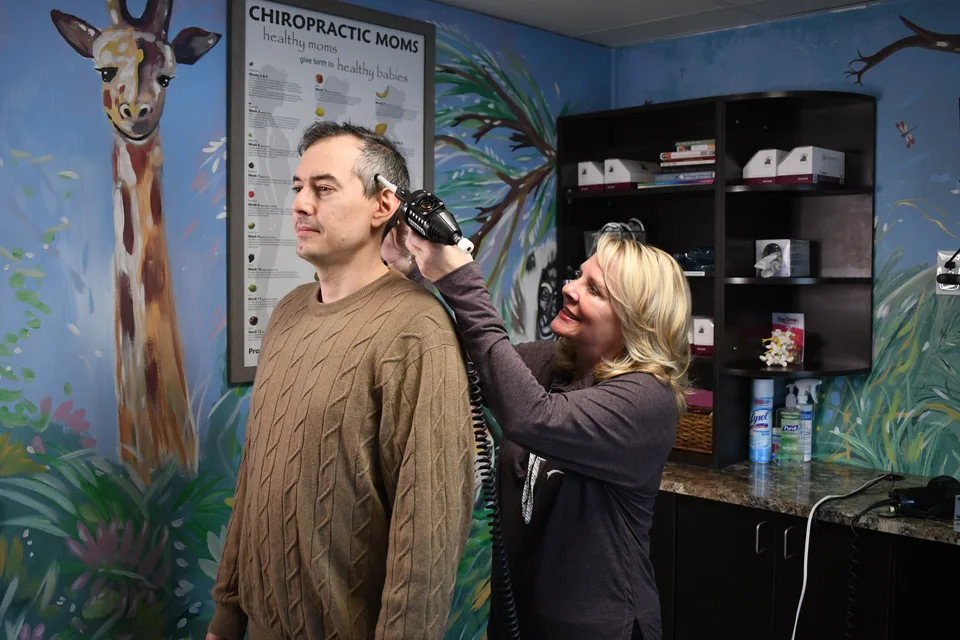
We start with a thorough evaluation, including INSiGHT neurological scanning (thermal, HRV, sEMG) to objectively measure how your nervous system is responding to the trauma, along with range of motion testing, a neurological exam, and a spinal assessment. We look at every area of injury rather than just where it hurts, since referred pain can point you toward the wrong spot.

Using Koren Specific Technique (KST) and Talsky Tonal Chiropractic (TTC), our doctors correct spinal misalignments and nerve interference with gentle, nervous system focused adjustments, no cracking, popping, or forceful manipulation, adapting care at each visit based on how your body is responding.

What Patients Notice

Patients typically notice the neck pain and stiffness easing first, followed by resolving headaches, a fuller range of motion in the neck and shoulders, and better sleep as the nervous system settles. Many recover completely and return to their normal activities without ever needing drugs or surgery, including patients whose accident was years behind them.

Take the First Step

Whether your accident was last week or years ago, getting your nervous system checked matters. Our doctors see patients on Saturdays in Royal Oak.

Book Your Consultation

Common Questions

How soon after an accident should I come in?
As soon as possible. Many whiplash symptoms are delayed, and early evaluation gives you the best shot at preventing an acute injury from becoming a chronic one. Ideally, get checked within the first week after an accident, even if you feel fine.
I was only in a minor fender-bender. Do I still need to get checked?
Yes. Research shows injuries can occur at collision speeds as low as 5 mph, especially if your head was turned at the moment of impact. A low-speed impact can still strain the cervical spine even when the car itself has barely a scratch.
My accident was years ago. Can you still help?
Yes. Even if your accident was months or years ago, our doctors can still find and address the lingering nerve interference and tension patterns left behind. Many of our whiplash patients come in long after their crash, having tried everything else, and it is rarely too late to get to the root of persistent post-accident symptoms.
Is your approach safe right after an accident?
Yes. Our doctors use light, nervous system focused contacts with no cracking, twisting, or forceful manipulation, so care is well suited to a body that is already recovering from trauma. Every visit is adapted to how you are responding that day.
How long does recovery from whiplash take?
It varies with the severity of the injury, how quickly you begin care, and your overall health. Some patients feel significant relief within a few weeks, while more involved or long-standing cases can take a few months. Our doctors will give you an honest assessment after your evaluation and track your progress throughout care.

Related: Back & Neck Pain · Headaches & Migraines · TMJ & Jaw Pain · Concussion & Post-Concussion Syndrome · Vertigo & Dizziness

Free Article

Why You Still Hurt Months After Your Car Accident

Our doctors put together a full article on whiplash & auto injury that explains what's really behind it and what lasting relief looks like. Get instant access below.