

Your Teen Is Not Lazy, Their Nervous System Is Running on Empty
School, sports, friends, and screens all piling on at once. If your teen has gone from busy to burned out, the exhaustion may trace back further than this school year.
Your teenager is sleeping ten hours and waking up just as exhausted. They are missing school, canceling plans with friends, struggling to get through a single school day without crashing. The pediatrician ran the blood work. The thyroid panel came back normal. The iron was fine. Maybe a sleep study. All of it normal. And yet your child cannot function the way they used to.
Here is what most families have not been told: energy, recovery, and sleep quality are not just about blood counts and hormone levels. They are primarily regulated by the autonomic nervous system. When a teenager's nervous system has been locked in fight-or-flight long enough, it loses the ability to shift into the parasympathetic state where genuine restoration happens. Normal labs are not the end of the story. They are the beginning of a different question.
Standard bloodwork measures chemistry, not nervous system regulation. The autonomic nervous system controls energy production, sleep quality, immune response, and recovery capacity. When it cannot shift out of survival mode, exhaustion becomes the baseline, and no amount of rest will fix a system that cannot receive the signal to restore.
Sleeping ten or twelve hours and waking up feeling no better is the defining feature of autonomic fatigue in teens. When the nervous system cannot shift into genuine parasympathetic recovery during sleep, more hours in bed do not solve a nervous system regulation problem.
A half day of school, a short walk, a social event, and then two days of wipeout. Post-exertional malaise is the hallmark sign that the body's recovery system is offline. A nervous system stuck in sympathetic dominance cannot handle normal demands because it has no reserves left to draw on.
Trouble concentrating, forgetting words mid-sentence, unable to follow along in class, reading the same paragraph repeatedly. Brain fog in teens with fatigue reflects reduced blood flow and autonomic dysregulation affecting the brain directly.
Every panel comes back fine. Thyroid, iron, B12, mono screen, inflammatory markers. The doctors say there is nothing wrong. But standard labs do not measure autonomic nervous system function or HRV, and that is exactly what the problem often is.
Bright lights feel overwhelming. Noise is too much. Social situations drain the battery completely. Heightened sensory sensitivity alongside fatigue reflects a nervous system in hypervigilance, spending resources on threat detection that should be going toward recovery.
Many teens and parents can point to a specific illness where things shifted. A bout of a bad respiratory infection, mono, or the flu. The illness resolved but the fatigue never did. Post-viral autonomic dysregulation is increasingly recognized as a real and distinct pattern in adolescents.
Many parents describe a gradual return of energy in their teenager, not from stimulation, but from the body beginning to restore the way it is designed to. The shift is often described as incremental but as the kind of change that actually holds rather than a temporary boost that fades.
As autonomic regulation improves, sleep begins to provide genuine restoration. Teens who have been waking up exhausted for months start reporting that they feel at least somewhat rested. That is a meaningful signal that the recovery system is coming back online.
Post-exertional crashes often become less severe and less frequent. Teens who could not get through a half day of school begin managing full days, then activities. The autonomic system starts handling normal demands without going into depletion.
Because the autonomic nervous system is involved in energy, mood, digestion, and cognition, families often notice changes across all of these areas as regulation improves. The brain fog clears alongside the energy shift. Mood stabilizes. Digestion normalizes.
Our approach starts with measuring what standard labs miss: the autonomic nervous system state that determines whether your teenager's body can shift into genuine recovery mode.
INSiGHT neurological scans give us objective data about how the autonomic nervous system is functioning, specifically HRV, which reflects the capacity to shift between the stress state and the recovery state. For teens with fatigue and normal labs, this scan is often the first time anything objective shows up that matches what the family has been experiencing.
We look at the patterns that reflect chronic sympathetic dominance and suppressed parasympathetic function. Teens whose nervous systems have been in survival mode, whether from post-viral load, accumulated stress, or an early nervous system that never fully regulated, show these patterns clearly on scan.
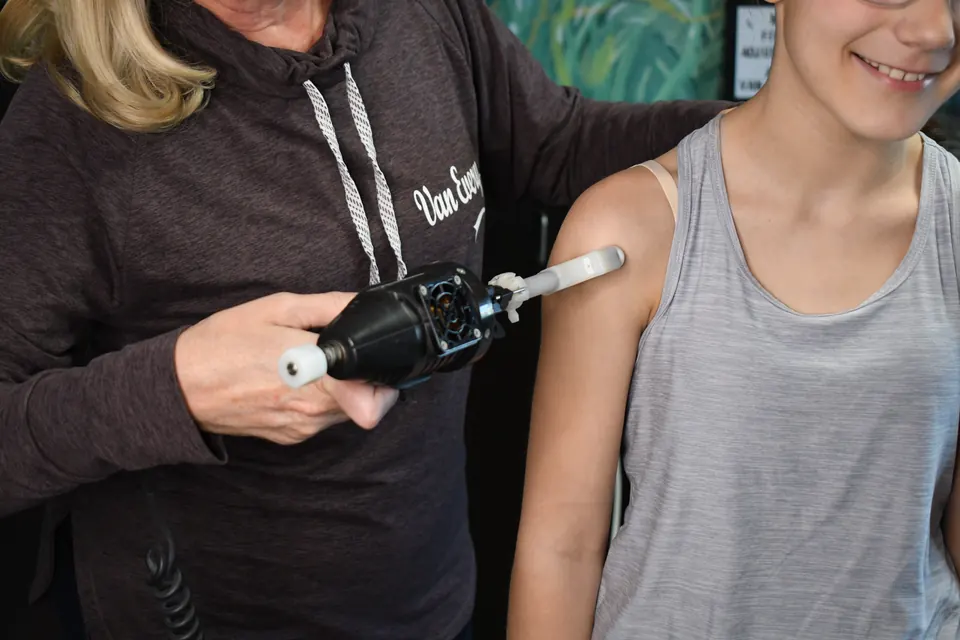
A depleted, sensitized system needs precision and gentleness, not more stimulation. Using Koren Specific Technique (KST) and Talsky Tonal Chiropractic (TTC), both completely gentle with no cracking, no twisting, no force, we address the nervous system regulation layer that standard workups do not measure. This care works alongside your teenager's medical team, never as a replacement.
Families often tell us they notice changes in:
Want to Understand What May Be Behind Your Teen's Exhaustion? Learn how the autonomic nervous system drives the fatigue that sleep does not restore, and why normal labs do not rule out a nervous system piece.
Book OnlineStandard bloodwork measures chemistry: thyroid levels, iron, B12, inflammatory markers. It does not measure autonomic nervous system function or heart rate variability, which are the primary indicators of whether the body can shift into recovery mode. Your teenager's labs can be perfectly normal while their autonomic system is significantly dysregulated. Both things can be true at the same time.
Post-viral autonomic dysregulation is increasingly recognized in adolescents, particularly following mono and other significant respiratory illnesses. The illness itself resolves but it triggers a nervous system pattern that does not reset on its own. The fatigue that follows is physiological, and it has a measurable nervous system signature on assessment.
No. We do not recommend pushing through exhaustion, but we also do not recommend complete rest, which can in some cases reinforce the pattern. We work with the nervous system to gradually improve recovery capacity so your teenager can tolerate more activity over time. The care plan is built around what the scans show.
Yes. A depleted, sensitized system needs precision and gentleness, not more stimulation. Both Koren Specific Technique (KST) and Talsky Tonal Chiropractic (TTC) are completely gentle with no cracking, twisting, or force. Many teens find sessions surprisingly calming. We will never overwhelm a nervous system that is already running on empty.
Many families notice the first changes in sleep quality or reduced crash severity within the first few weeks, with broader energy improvements building from there. We track changes in HRV alongside your observations so progress is visible rather than just subjective. Because the pattern took time to develop, meaningful resolution typically builds over weeks to months of consistent care.
School, sports, friends, and screens all piling on at once. If your teen has gone from busy to burned out, the exhaustion may trace back further than this school year.
See what Royal Oak families say in our Google reviews and patient stories, or browse everything we offer.
Our doctors put together a full article on teen chronic fatigue that explains what's really behind it and what lasting relief looks like. Get instant access below.
Van Every Family Chiropractic Center Royal Oak, Michigan
Free on-demand webinar for parents
Looking for answers for your child?
Focus struggles. Big emotions. Restless nights. Tummy troubles. Join our doctors for a free parent webinar exploring the nervous system connection and ways to support your child.
Explore the free webinarFree · About an hour · Watch anytime