

What the Timing of Your Neck Pain Can Actually Tell You
Morning stiffness, end-of-day tightness, or pain that shows up only at your desk each point toward a different source. The pattern is worth paying attention to before your next visit.
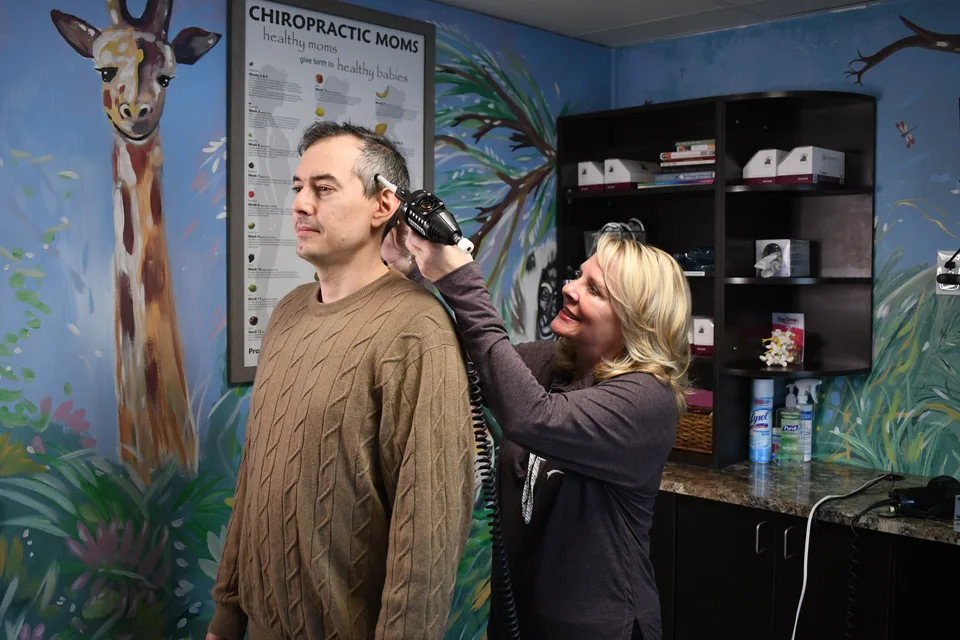
Neck pain is the second most common reason people see a chiropractor, right behind low back pain. It shows up as stiffness after a long day at a screen, a knot between the shoulder blades, or a neck that will not turn all the way to check a blind spot.
Whatever brought it on, tech neck, an old whiplash, arthritis, or a disc that is not cooperating, the nerves running through your cervical spine connect to far more than just your neck muscles. Our gentle, neurologically focused approach is built to find what is actually driving the pain instead of just working the sore spot.
Neck pain rarely looks the same from one patient to the next. Some people feel a dull, constant tightness that sits between the shoulder blades and creeps up into the base of the skull. Others notice a sharp catch when they turn to check a blind spot, a grinding or popping with movement, or headaches that seem to start right at the top of the neck. Tingling or numbness running down into the arm and hand is common too, along with shoulders that stay tense no matter how much they are stretched. For many patients, it is worst first thing in the morning or after hours spent hunched over a desk or a phone.
A stiff neck rarely stays a neck problem for long; the same nerves that supply your neck muscles also reach into your shoulders, jaw, and the base of your skull.
Neck pain has plenty of possible sources: tech neck from hours spent looking down at a phone or screen, an old whiplash injury that never fully resolved, tension held in the shoulders and jaw, a disc that is bulging or degenerating, or plain arthritis in the cervical joints. Even something as simple as sleeping on the wrong pillow can be enough to keep a mild strain from ever fully calming down.
We start with a detailed history and a spinal exam, including range of motion testing and an INSiGHT scan, thermal, heart rate variability, and muscle (sEMG) readings, so we understand what your nervous system is doing before we touch your neck.
Using Koren Specific Technique (KST) and Talsky Tonal Chiropractic (TTC), our doctors deliver precise, gentle adjustments with no cracking, popping, or forceful manipulation, adjusted seated, standing, or in the exact position that provokes your pain. Even patients who are nervous about chiropractic tend to find these nervous system focused techniques relaxing.
Restoring proper motion and nervous system communication in the cervical spine often changes more than the pain. Patients who came in for a stiff neck frequently mention sleeping better, fewer headaches, or having more energy, since the nerves running through the neck reach well past the muscles that are sore.
Most patients notice better range of motion first, the ability to turn the head fully without a catch, followed by fewer flare-ups and less reliance on over-the-counter pain relievers. Posture tends to improve along with it, since a neck that moves freely is easier to hold upright.
Take the First Step A stiff, aching neck does not have to be your normal. Our doctors see patients on Saturdays in Royal Oak.
Book OnlineThe most common causes include tech neck from hours spent looking down at a phone or screen, an old whiplash injury that never fully healed, tension held in the shoulders and jaw, a bulging or degenerating disc, and arthritis in the cervical joints. Even a poor sleeping position can keep a mild strain from settling down on its own.
No. Our doctors use Koren Specific Technique (KST) and Talsky Tonal Chiropractic (TTC), light, nervous system focused contacts with no cracking, popping, or forceful manipulation. Many patients who feel nervous about chiropractic in general find these techniques calming rather than jarring, and we can adjust you seated, standing, or in whatever position is easiest on your neck that day.
Yes. Because our adjustments are gentle and precisely targeted, care can be adapted to a neck that is dealing with disc issues, arthritis, or a past injury. Our doctors complete a thorough exam and INSiGHT scan first, so your care plan reflects what is actually happening in your neck, and we will refer you elsewhere when that is the right step.
Often, yes. Whiplash can leave the cervical spine out of its normal alignment long after the initial pain fades, and that lingering restriction is a common source of neck pain years later. Restoring proper motion in that area is exactly what our approach is built to address.
Every neck is different. Many patients notice more range of motion and less stiffness within the first several visits, while longer standing cases built up over years may take more time to unwind. Our doctors will give you a clearer picture once your exam and INSiGHT scan results are in.
It often does. The nerves running through the cervical spine reach into the shoulders, jaw, and base of the skull, so patients who come in for a stiff neck frequently notice fewer headaches, better sleep, or more energy once that area is moving and communicating properly again.
Morning stiffness, end-of-day tightness, or pain that shows up only at your desk each point toward a different source. The pattern is worth paying attention to before your next visit.
See what Royal Oak families say in our Google reviews and patient stories, or browse everything we offer.
Our doctors put together a full article on neck pain that explains what's really behind it and what lasting relief looks like. Get instant access below.