

Is It Anxiety, Depression, or Both in Your Teen?
A large share of teens now report ongoing sadness or hopelessness. Anxiety and depression overlap so often in teens that the line between them can be genuinely hard to see.
You remember who they used to be. The teenager who had interests, who talked at dinner, who got up for the things they cared about. Somewhere along the way, that person went quiet. Now they are exhausted no matter how much they sleep. The motivation has faded. They are pulling back from friends, from family, from the things that used to light them up.
Here is what often gets missed: this kind of exhaustion and withdrawal frequently shows up first in the body, as a nervous system that has been running in overdrive for so long that it has finally run out of gas. What looks like low effort or attitude can be genuine depletion, a system that no longer has the reserve to engage, to care, to come out of its room. The withdrawal is not a choice your teen is making against you. It is often the visible output of a nervous system running on empty.
This page is about that physical, neurological piece of what your teen is carrying: the state of their nervous system, what it might be telling you, and how supporting its capacity to regulate and recover can help your teen come back to themselves.
When a nervous system spends years stuck in overdrive, it eventually runs out of fuel and settles into a depleted, flat baseline. In that state, the energy a teen needs to feel motivated, social, and engaged simply is not there yet. Supporting the nervous system's capacity to recover is often the piece that lets everything else start to move.
Your teen sleeps long hours, or seems tired all the time, yet never appears rested. When a nervous system has burned through its reserves after years of running in overdrive, the depletion shows up as a fatigue that rest alone does not seem to touch.
Things they used to care about no longer move them. Schoolwork, activities, even hobbies they once loved feel like too much. This kind of drive loss can reflect a nervous system so drained it does not have the energy reserve to stay engaged.
More time alone, the door closed, less talking, fading out of social life. Connection is largely governed by the body's rest-and-recover side, and when that side has been suppressed for a long time, reaching out can feel genuinely out of reach.
Often it is a kind of dimming, where your teen seems to be moving through the day without much charge in any direction. This flatter presentation is one of the ways an exhausted, dysregulated nervous system can show up in a teenager.
Difficulty concentrating, slower processing, a sense that their thinking has gotten foggy or sluggish. When the nervous system is depleted, the cognitive energy and clarity a teen needs are in short supply.
Small things set them off, or they swing toward shutting down entirely. A dysregulated nervous system has a harder time staying balanced under everyday stress, so a teen can flip between being easily overwhelmed and going numb.
As nervous system regulation improves, many families notice their teen's energy becoming steadier and less crushed, less of a single burst that fades by afternoon.
A little more conversation at dinner, picking something back up, a flicker of interest where there had been none. These small returns often build gradually rather than all at once.
When the rest-and-recover side of the nervous system comes more online, sleep becomes more genuinely restorative and settling comes a little easier at night.
A teen whose nervous system has a bit more reserve and regulation often has more capacity to show up for school, friends, and the rest of their day.
Our approach focuses on supporting your teen's nervous system to build back the reserve it needs to rest, engage, and recover, always at your teen's own pace.
INSiGHT neurological scans give us objective, non-invasive data about the state of your teen's nervous system, including how depleted or dysregulated it has become. This gives families a clear, measurable baseline for what their teen has been carrying.
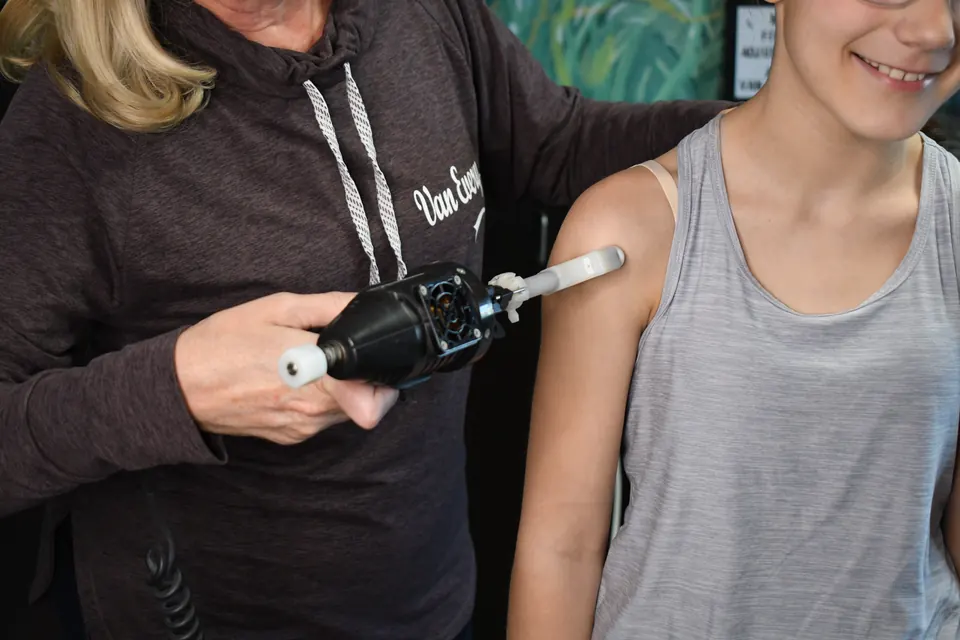
Using Koren Specific Technique (KST) and Talsky Tonal Chiropractic (TTC), our care is calibrated to your teen and their comfort and autonomy. We explain everything, we go at their pace, and we follow their cues. No cracking, no twisting, no forcing.
We rescan over time so your family can see the nervous system regulating, not just hope it is happening, alongside what you are noticing at home.
Families often tell us they notice changes in:
Want to Understand What's Happening in Your Teen's Nervous System? Learn how a depleted nervous system can show up as exhaustion, flatness, and withdrawal in a teenager, and how gentle, nervous system focused care can support your teen's path back to steadier ground.
Book OnlineWhen a nervous system spends years running in overdrive, it eventually depletes and settles into a flat, exhausted baseline. That state shows up as low energy, low motivation, and pulling away from people, and it is a physical pattern the nervous system carries, not a character trait.
INSiGHT neurological scans, including heart rate variability, give us an objective, non-invasive picture of the nervous system's state. A depleted teen often shows patterns consistent with a system that has little reserve left to draw on. Seeing it on a scan can change how parents understand what their teen has been carrying.
We work with teens on their own terms. We explain everything, move at their pace, and follow their cues. For an exhausted, guarded teen, the gentle, non-threatening nature of the care often matters, and we never force anything.
Rebuilding a deeply depleted nervous system is patient work. A system that took years to run down does not refill overnight. Care plans for this kind of exhaustion often span several months, and we rescan over time so families can see how the nervous system is actually shifting.
That is exactly the kind of full picture we want to be part of. Supporting your teen's nervous system regulation works well alongside the rest of their team and their care, and many families find it helps the rest of that support land more effectively.
A large share of teens now report ongoing sadness or hopelessness. Anxiety and depression overlap so often in teens that the line between them can be genuinely hard to see.
The ADHD that showed up as fidgeting in elementary school often looks completely different by high school: missed deadlines, risk taking, and a teen running on empty.
School, sports, friends, and screens all piling on at once. If your teen has gone from busy to burned out, the exhaustion may trace back further than this school year.
See what Royal Oak families say in our Google reviews and patient stories, or browse everything we offer.
Our doctors put together a full article on teen exhaustion & low mood that explains what's really behind it and what lasting relief looks like. Get instant access below.
Van Every Family Chiropractic Center Royal Oak, Michigan
Free on-demand webinar for parents
Looking for answers for your child?
Focus struggles. Big emotions. Restless nights. Tummy troubles. Join our doctors for a free parent webinar exploring the nervous system connection and ways to support your child.
Explore the free webinarFree · About an hour · Watch anytime

