You have the routine down cold by now. The fragrance-free everything, the oatmeal baths, the cream that goes on right after the bath while the skin is still damp. Some nights it works well enough that everyone sleeps. Other nights your child is up at 2am scratching at the same red patches you thought were finally calming down, and you are standing in the bathroom again, rotating through the same three products and wondering what you are missing.
Maybe it is your own skin instead of a child's, patches you have carried since you were young, that flare on a schedule you can never quite predict. You have tried the prescription steroid creams, cut out the obvious foods, swapped detergents. Something helps for a while. Then the itch is back.
Here is a different way to think about it. Skin is a reflection of what is happening underneath it, particularly in the gut, and the gut answers to the nervous system. Creams work on what you can see. They do not reach the conversation happening below the surface.
What Eczema Looks Like, and Why It Rarely Stays Just Skin Deep
Eczema shows up as dry, itchy, red, sometimes scaly patches, often on the elbows, behind the knees, on the cheeks of an infant, or wherever a particular child's skin tends to break down first. It is fundamentally an immune and inflammation pattern, not simply a surface irritation, which is part of why lotion alone rarely settles it for good. Families frequently notice eczema showing up alongside other things: reflux, constipation, food sensitivities, restless sleep, or a child who just seems more irritable during a flare. Those are not separate problems sitting next to each other. They tend to travel together because they share a source.
The Nervous System's Role in a Skin Condition
It can sound strange that chiropractic care would have anything to do with a skin condition. Here is the connection. The vagus nerve, which runs through the neck, is the main communication line between the brain and the gut. It helps regulate digestion, calm inflammation, and keep the immune system responding proportionately rather than overreacting.
When stress is stored in the spine and nervous system, that communication line gets noisy. Digestion suffers, the immune system's signals get scrambled, and it starts treating ordinary things, certain foods, fabrics, even weather, as bigger threats than they are. The skin, being the most visible organ in the body, is often where that overreaction shows itself first. Think of the rash less as a malfunction and more as a report. It is telling you something is irritated further upstream, and it will keep reporting until that irritation gets addressed.
Why the Creams Keep Renting Relief Instead of Settling Things
Moisturizers, steroid creams, and oatmeal baths are not wrong to use, and we are not suggesting you stop. They work on the surface, though, while the pattern producing the flare-ups keeps running underneath. That is often why a cream calms a patch for a few days and the same spot, or a new one nearby, flares again a week later. The output changed. The signal driving it did not.
How We Work With Eczema at Van Every
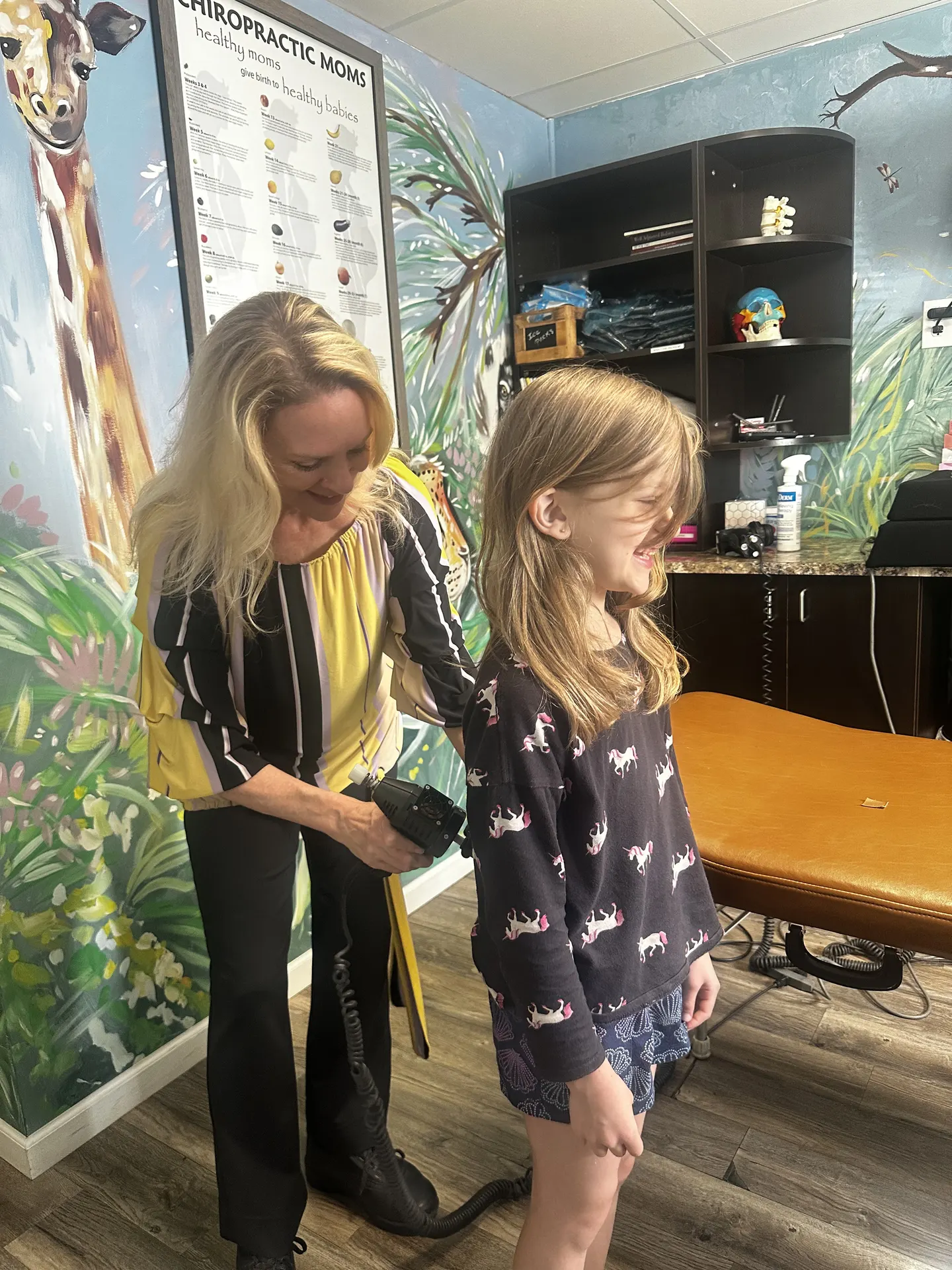
Our approach starts with a gentle INSiGHT scan, thermal, heart rate variability, and muscle (sEMG) readings, to get an objective picture of how much stress your child's or your own nervous system is carrying. From there, our doctors use Koren Specific Technique (KST) and Talsky Tonal Chiropractic (TTC), gentle, nervous system-focused care with no cracking or twisting, light enough for a days-old infant and appropriate for adults who have lived with eczema for decades.
KST also lets our doctors check and gently work with the gut itself, the intestines and valves, from the outside. How your body responds during that check often points toward specific food sensitivities that may be feeding a flare-up, which means families can start removing a cause instead of just managing what shows up on the skin.
A Story Worth Telling
Clara's parents saw it happen fast: rough patches on her elbows and feet spreading across her whole body by two months old, with a diaper rash that nothing seemed to touch. Her dad had his own history with eczema and hives and worried she was headed the same way. She started care at three months old, and within a week her skin was noticeably better. By three weeks it was back to the smooth skin she was born with. During her KST assessments, her responses also pointed our doctors toward the specific foods behind her flare-ups, so her parents had something concrete to remove, not just patches to manage.
What Parents and Patients Often Notice
Every child and every adult responds on their own timeline, and we never promise a specific result. That said, many families tell us flare-ups become smaller, shorter, and less frequent as care continues, and some describe their child's skin clearing almost completely. Because the nervous system runs the whole show, not just the gut-skin connection, parents often notice sleep improving too, since an itch that is not running the night lets everyone rest. Digestion tends to settle alongside the skin, and many describe a generally happier, more comfortable kid.
Supporting Your Child's Skin at Home
A few things tend to help alongside care:
- Keep a simple flare log, noting new foods, stress, sleep, or weather changes, to help spot patterns over a few weeks.
- Stick with fragrance-free, dye-free products for laundry and skin care, since fewer variables makes patterns easier to see.
- Apply moisturizer right after a bath while the skin is still damp, which tends to lock in more hydration.
- Keep fingernails short to limit the damage from scratching during a flare.
- Bring your flare log to your first visit so our doctors can factor it into your care plan.
Why the Immune Angle Matters More Than the Skin
It helps to remember that eczema is not a defect in the skin itself. The skin is simply where an immune and inflammation pattern happening elsewhere in the body becomes visible. That reframing matters, because it changes where you look for lasting change. Instead of asking which cream will calm this particular patch, the more useful question becomes what is keeping the gut and immune system on such high alert in the first place, and whether that alert level can come down.
Next Steps
If your family has been cycling through the same creams and hoping for a different outcome, our eczema care page goes deeper into how we assess and work with the gut-immune-nervous system connection. You can also grab our free guide on eczema and nervous system function to read before your visit. When you are ready to bring your child, or yourself, in, you can book online or call our Royal Oak office at (248) 616-0900. Clear skin usually starts with settling what is happening underneath it, not with the next cream on the shelf.