
You've got the good cream, the free and clear detergent, maybe even a humidifier running quietly in your child's room every single night. It helps, for a few days, and then the flare comes right back like nothing changed. If you feel like you're managing eczema instead of actually getting anywhere with it, there's a reason the cream aisle keeps letting you down.
Eczema Is Rarely Just a Skin Problem
Eczema is a whole body pattern that happens to show up on the skin. It involves a compromised skin barrier, an overactive immune response, and a gut environment that's often out of balance, all connected through what's sometimes called the gut skin axis. Most approaches to eczema stop at two layers: the skin itself and, if you're lucky, the gut through diet changes. There's a third layer that rarely gets mentioned, the nervous system that's actually directing both of the other two.
Why the Skin Becomes the Backup Plan
The vagus nerve, run by the autonomic nervous system, oversees digestion including how well the body clears out what it doesn't need. When a child's nervous system spends too much time in an alert, guarded state, that clearing process slows down. The body still has to get rid of waste somehow, and the skin, as the body's largest organ, often ends up doing some of that work as a backup route. That backup process shows up as inflammation, which is a lot of what an eczema flare actually is.
Why Flares Follow Predictable Patterns
A lot of parents notice their child's eczema gets worse during stressful weeks, big routine changes, or after a rough stretch of sleep. That's not a coincidence. Those are all situations that put extra load on a nervous system that's already working harder than it should, and the skin often reflects that load before anything else does.
Conditions That Often Travel Together
- Chronic constipation or unpredictable bowel movements
- Trouble focusing or sitting still
- Anxiety or a general sense of being easily overwhelmed
- Sleep that's light, restless, or hard to settle into
- Sensory sensitivities around textures, sounds, or clothing tags
- Frequent colds or a slower recovery from ordinary illness
These aren't separate issues showing up by coincidence. They frequently share the same root, a nervous system that hasn't fully settled into a calm, regulated pattern.
How We Approach Eczema
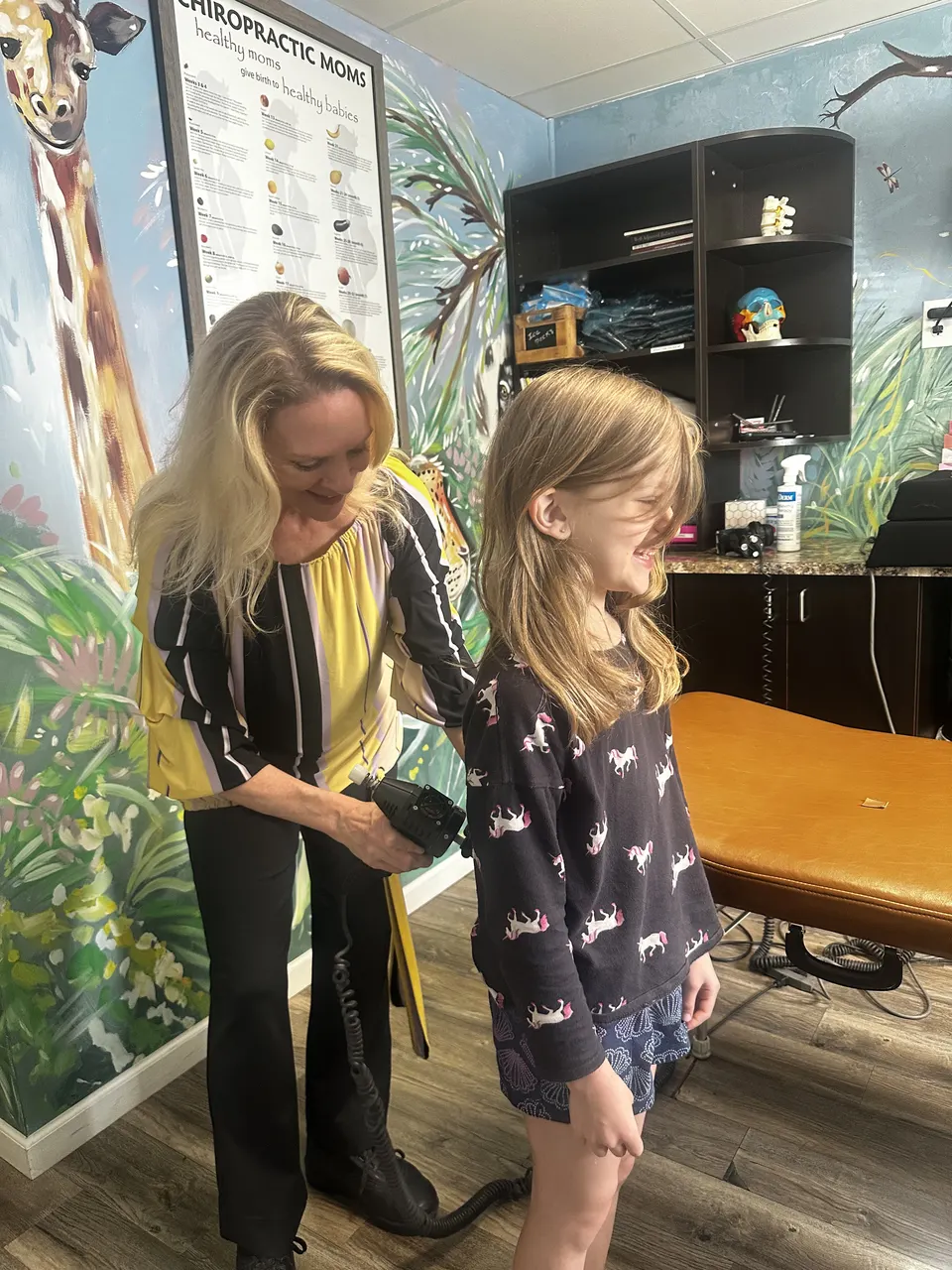
We start with your child's history: when the flares started, what makes them worse, and everything you've already tried. From there, a gentle exam and INSiGHT neurological scanning help us see how your child's nervous system is functioning. Using Koren Specific Technique and Talsky Tonal Chiropractic, our doctors use light, nervous system focused contacts with no cracking or twisting, appropriate at any age including infancy, working alongside whatever skin and dietary care your family already has in place.
What This Looks Like in Practice
A first visit starts with a real conversation about your child's history, when the flares started, whether there's a pattern to when they show up, and what triggers you've already noticed. From there, our doctors do a gentle hands on exam and, when appropriate for your child's age, INSiGHT scanning to see how the nervous system is functioning rather than guessing from the skin alone. Adjustments themselves are quick, comfortable, and often something babies and toddlers barely notice, sometimes falling asleep during a session.
Working Alongside Your Family's Existing Routine
If you've already found a skin routine, detergent, or moisturizer that helps somewhat, keep using it exactly as you have been. Nervous system focused care isn't meant to replace what's working, it's meant to address the layer underneath that keeps making those tools necessary in the first place. The same goes for any dietary changes a pediatrician, allergist, or dietitian has recommended. Our doctors are glad to coordinate with those providers so your child's care stays consistent across the board.
Why Timing Patterns Matter
Pay attention to when your child's eczema flares get noticeably worse. A flare that consistently follows a poor night of sleep, a stressful transition like a new childcare routine, or a stretch of illness in the household is telling you something about the nervous system connection, even if it's easy to miss in the moment. Keeping a loose mental note, or a quick log on your phone, of what precedes the worst flares often reveals a pattern that's more consistent than it first appears.
What Parents Sometimes Notice First
Before the skin itself shows much visible change, a lot of parents notice their child sleeping more soundly, scratching less at night specifically, or seeming generally more comfortable in their own skin, a subtle shift that's hard to put into words but easy to recognize once it happens. Visible flare improvement tends to follow at its own pace, and how quickly that happens depends a great deal on how long the pattern has been established and how consistently a family can make it to visits.
Where to Go From Here
If your child's eczema keeps returning no matter what's in the medicine cabinet, it may be worth looking further upstream, at the nervous system directing the whole pattern. Learn more about our approach to eczema care, or grab our free guide for a deeper look at the nervous system side of skin flares. When you're ready, book online with our doctors in Royal Oak, or call (248) 616-0900.

