
You did what every concussion protocol tells you to do. Dark room, limited screens, no exercise, plenty of sleep. And weeks later the fatigue is still there, a heavy, low-grade tiredness that a full night of sleep does not touch. Bright light still feels like too much. Sound in a crowded room still feels like an assault. You are following the instructions exactly and the recovery everyone promised has not fully arrived.
It can be discouraging to be told the answer is simply more rest when rest is the one thing you have been doing faithfully. The truth is that rest addresses part of concussion recovery, but not all of it. For a meaningful number of people, the piece that rest alone cannot reach is the autonomic nervous system, the part of the brain and body that regulates sleep, energy, and how sensitive you are to light and sound in the first place.
What the Autonomic Nervous System Actually Does
Your autonomic nervous system runs almost everything you do not consciously control, heart rate, digestion, sleep cycles, and how your brain filters and manages incoming sensory information like light and sound. It operates on two settings, a stress response geared toward alertness, and a calmer, restorative state that supports genuine recovery. After a concussion, that regulation can be disrupted, and a system that is not regulating well spends a disproportionate amount of its resources simply managing the ongoing stress response, resources that would otherwise go toward the deeper recovery work rest is supposed to support.
This is part of why fatigue after a concussion can feel different from ordinary tiredness. Ordinary tiredness responds to sleep. Autonomic fatigue often does not, because the system driving it is stuck in a heightened state that sleep alone does not resolve.
Why Light and Sound Start to Feel Like Too Much
Sensitivity to light and sound after a concussion is frequently described as an overreaction, but it usually reflects a nervous system that is genuinely in a high alert state, amplifying sensory input rather than filtering it the way it normally would. A brain that is working overtime to manage a stress response has less bandwidth left to calmly process a bright room or a loud restaurant, so ordinary input starts to register as overwhelming. That is a real neurological pattern, not a matter of willpower or low tolerance.
The Cervical Spine Piece Behind Autonomic Disruption
Any force strong enough to cause a concussion is also strong enough to affect the upper cervical spine underneath it. That area sits close to the brainstem, which plays a central role in regulating the autonomic nervous system, including sleep onset, blood flow, and how sensory information is processed. When tension builds in the upper neck after a head injury, it can interfere with that regulation, which helps explain why fatigue, sleep disruption, and sensory sensitivity so often travel together after a concussion rather than showing up in isolation.
Where Our Care Fits
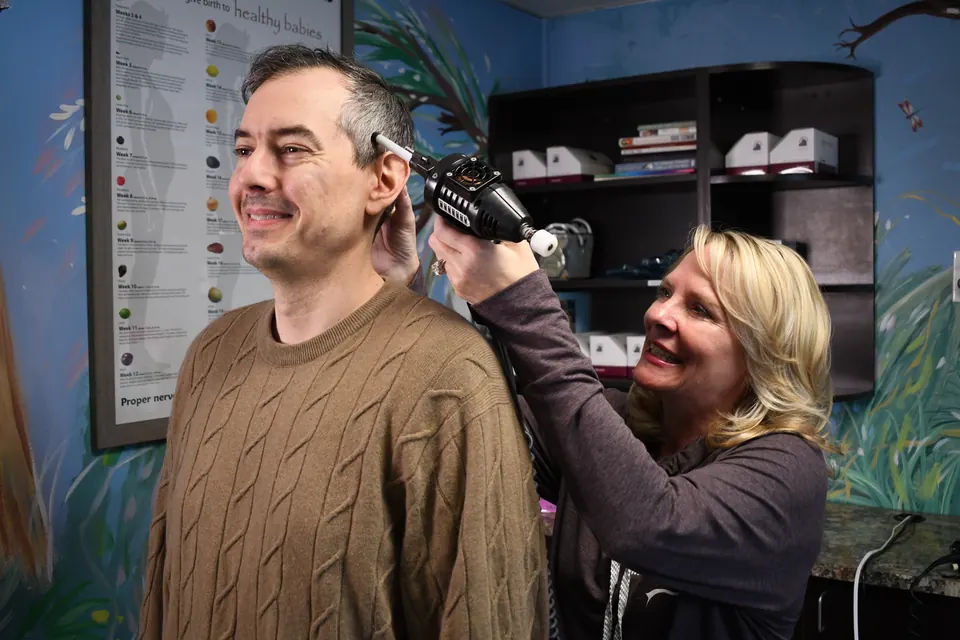
Our doctors always work alongside your physician or neurologist as the primary manager of your concussion recovery. Our role is specifically the cervical spine and nervous system component that most recovery protocols do not directly address. We start with a full evaluation, including INSiGHT scanning of thermal, heart rate variability, and sEMG patterns, alongside upper cervical alignment and balance testing, so we understand objectively how your autonomic nervous system is regulating rather than guessing from symptoms alone.
Using Koren Specific Technique and Talsky Tonal Chiropractic, care stays extremely light and precise, with no cracking or sudden movements, matched to what a post-concussion nervous system can actually handle that day. Because this population is often especially sensitive, we go slowly and let your own responses guide the pace, rather than pushing toward a fixed timeline.
What People Often Notice As Regulation Improves
Progress after a concussion tends to be gradual, and everyone's timeline looks a little different. Still, a few patterns show up often enough in our office to be worth mentioning:
- Sleep that starts to feel restorative rather than fragmented and shallow
- Less reactivity to bright light or busy, noisy spaces
- Fatigue that begins to lift instead of holding steady no matter how much rest you get
- Steadier balance and less dizziness as upper cervical input to the brainstem improves
- A general sense of the nervous system settling, described by patients as finally feeling calmer
If Recovery Has Stalled
A meaningful share of concussions turn into post-concussion syndrome, symptoms that outlast the typical recovery window, in some patients for months or longer. If your fatigue, light sensitivity, or sleep problems have plateaued despite doing everything asked of you, it may be worth having the cervical spine and autonomic piece evaluated directly rather than waiting for more rest to resolve it on its own. That cervical piece is often the part nobody thought to check, simply because most recovery plans stop at rest and a gradual return to activity.
Learn more about how we support concussion and post-concussion recovery, or get our free guide on the cervical spine and nervous system piece of recovery. You can book online with our doctors in Royal Oak, or call us at (248) 616-0900 to talk through where your recovery currently stands.

