
A child recovering from a serious brain injury suddenly becomes rigid, hot, and drenched in sweat, heart pounding, muscles locked tight, for no reason anyone in the room can see. The episode passes after a while and the child is left exhausted. Then it happens again. This pattern has a name, neurostorming, and it is never something to wait out at home. It always calls for prompt evaluation by your child's medical team, and once it has a name, it becomes something a family can actually understand and plan around.
What Neurostorming Actually Is
Neurostorming is the parent friendly name for a state doctors call Paroxysmal Sympathetic Hyperactivity, or PSH. It describes a nervous system whose fight or flight response has spiked and will not settle back down, usually in the wake of a serious brain injury. It shows up most in children recovering from traumatic brain injury, oxygen deprivation around birth, or another significant brain injury, and it is genuinely distressing to witness as a parent. A group of international specialists agreed on formal diagnostic criteria for it back in 2014, and a pediatric care guideline followed in the years after to give hospitals a more consistent playbook for managing it.
The Signs to Recognize
An episode of neurostorming typically involves several of the following happening together, and it can last anywhere from a few minutes to a few hours:
- A rapid heart rate
- A high fever without any sign of infection
- Elevated blood pressure
- Fast, labored breathing
- Heavy sweating
- Rigid, arched posturing with increased muscle tone
These signs show up together because neurostorming is fundamentally a whole body problem. It comes from the autonomic nervous system, the same system that runs heart rate, temperature, breathing, and muscle tone all at once, losing its ability to regulate any of them. Afterward, a child is often visibly wiped out.
Why This Happens After a Brain Injury
Parents often describe the hardest part as the unpredictability. A calm afternoon can turn into an episode with no obvious trigger at all, which makes it feel less like an event to plan around and more like something to brace for constantly. Understanding the mechanism behind it, rather than only the symptoms, tends to ease at least some of that uncertainty.
Think of the nervous system as running on two switches. One is the alarm switch, the sympathetic side, meant to flip on briefly during real danger and then flip back off. The other is the calm-down switch, run largely through the vagus nerve, meant to bring the body back down to a steady baseline once a threat has passed. A significant brain injury can disrupt the connection between the brain's thinking, regulating centers and the lower brainstem structures that normally flip that calm-down switch. Researchers call this the disconnection theory. With that switch effectively offline, the alarm stays stuck on, and something as minor as shifting position, an unexpected noise, or a simple touch can be enough to trigger the next episode.
In children, this most often follows a traumatic brain injury from a fall, a car accident, or a sports collision, or oxygen deprivation during a difficult delivery. Birth trauma itself, forceps or vacuum assistance, a prolonged labor, or a cord complication, can place similar stress on the brainstem and upper neck. Less commonly, stroke, infection, or a tumor can be involved. Why one child ends up with a full storming pattern after a brain injury while another with a similar injury does not is a question researchers are still working through, though the disconnection theory remains the leading explanation on offer.
How This Fits Into a Fuller Care Picture
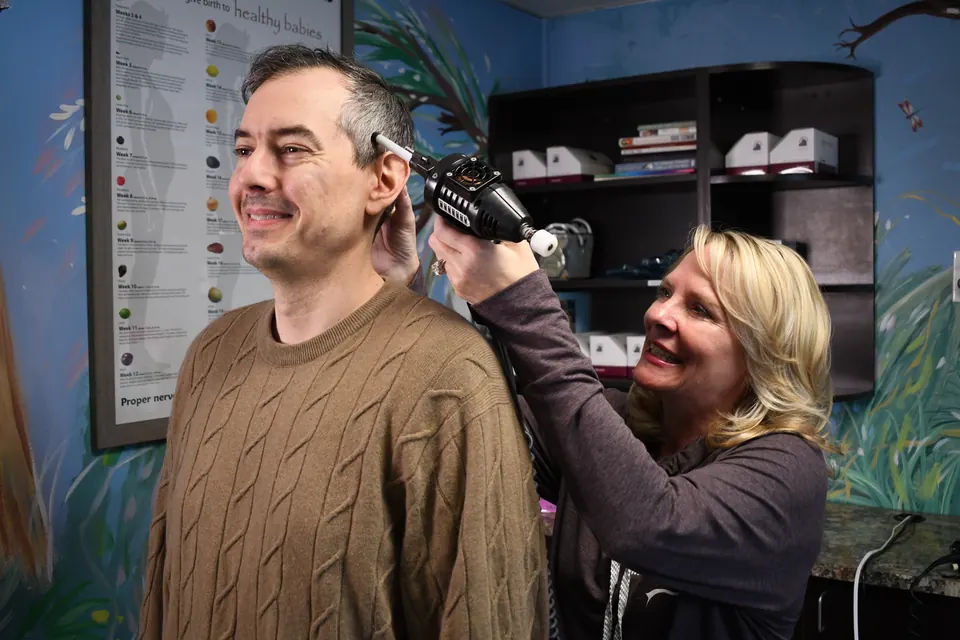
Because neurostorming follows a real, identified brain injury, it belongs first and always in the hands of your child's medical team, who manage the acute episodes and the underlying injury directly. Alongside that medical management, our doctors focus on a narrower, complementary piece: identifying and gently working with tension in the upper cervical spine and skull base, the same region tied to brainstem and vagus nerve function, using a hands on exam and INSiGHT neurological scanning to see where a child's nervous system regulation stands. Using Koren Specific Technique and Talsky Tonal Chiropractic, our doctors apply light, nervous system focused adjustments, never the forceful twisting some people associate with chiropractic care, and always at whatever pace a medically complex child needs.
Families who add this kind of nervous system focused care to their child's broader medical team sometimes report fewer or less intense storming episodes over time, along with better sleep, steadier digestion, and gradual gains in motor development. Progress is tracked through repeat scans rather than guesswork, so the plan can shift if something is not working.
A Related Pattern Worth Knowing
Neurostorming and a seizure can look similar from across the room, but they are different things. A seizure comes from abnormal electrical activity in the brain, something an EEG can pick up directly. Neurostorming is a different mechanism entirely, an overactive autonomic response without that electrical signature, though a single child can absolutely experience both. If your family is also navigating seizure activity alongside a brain injury, that connection is worth raising directly with both your child's neurologist and our doctors.
Where to Go From Here
If your child has been through a serious brain injury and you are seeing episodes like these, keep your medical team closely involved in every step. Learn more about how we support recovery after a brain injury or concussion, or get our free guide on the nervous system side of recovery. When you are ready to talk through where nervous system care might fit alongside your child's medical care, book online with our doctors in Royal Oak, or call us at (248) 616-0900.


