
You got the all clear. The scan looked fine, or there was never a scan at all because the doctor said you didn't need one. You were told to rest, so you rested, cut the screen time, skipped the workouts, gave it the weeks everyone said it would take. And the headaches are still there. The fog hasn't lifted. Some mornings your balance feels a step behind where it should be.
That gap between what you were told to expect and what you're actually living with is exhausting, and it's easy to start wondering if you're just being impatient. You're not. Most concussion recovery plans focus, appropriately, on the brain: rest, a gradual return to activity, cognitive monitoring. What almost none of them ask about is the neck.
At Van Every Family Chiropractic Center in Royal Oak, we see this piece often enough that we build our whole approach to concussion and post-concussion syndrome around it. Any force strong enough to cause a concussion is also strong enough to leave lasting tension in the upper cervical spine underneath it, and until that's addressed, full recovery can stay just out of reach.
What Lingers After a Concussion
Concussions and post-concussion syndrome rarely show up identically from one person to the next, but a familiar cluster tends to show up together. Headaches that won't quit. Dizziness or balance problems that make an ordinary day feel unsteady underfoot. Brain fog, trouble concentrating, a step slower than you used to be. Sleep that turns fitful or won't come at all. Neck pain and stiffness that often gets waved off as unrelated, along with fatigue, mood changes, and a new sensitivity to light or sound. About 3.8 million concussions happen in the United States every year, and up to 30 percent of people who have one go on to develop post-concussion syndrome, symptoms that outlast the typical recovery window by months or longer.
The Cervical Spine's Role in Recovery
The upper cervical spine, the area where C1 and C2 meet the base of the skull, sits right where the brainstem lives and where the vagus nerve passes through on its way to the rest of the body. That's not a coincidental location. The brainstem regulates heart rate, blood pressure, sleep, and cognitive alertness, and the vagus nerve is the body's primary route for calming back down after a stress response. When chronic tension sits at C1 and C2 after an impact, it can interfere with that regulation, keeping the nervous system locked in a stress response long after the brain itself has started to heal. A systematic review of concussion studies found measurable autonomic dysfunction in the large majority of cases examined, which fits with what we see clinically. Autonomic dysregulation after a concussion isn't the exception. It's closer to the rule.
Why Rest Alone Sometimes Isn't Enough
Rest, gradual return to activity, and cognitive monitoring matter and we're not suggesting otherwise. But the brain resting doesn't mean the neck resets on its own. Sleep aids address the insomnia but not the underlying nervous system dysregulation driving it. Vestibular therapy addresses the dizziness but not the disrupted signals coming from a tense upper cervical spine. Pain medication addresses the headache but not the nerve irritation sustaining it. None of that is a failure of those approaches. It's an incomplete picture, and the cervical piece is often what separates a recovery that stalls from one that actually completes.
Gentle, Coordinated Care
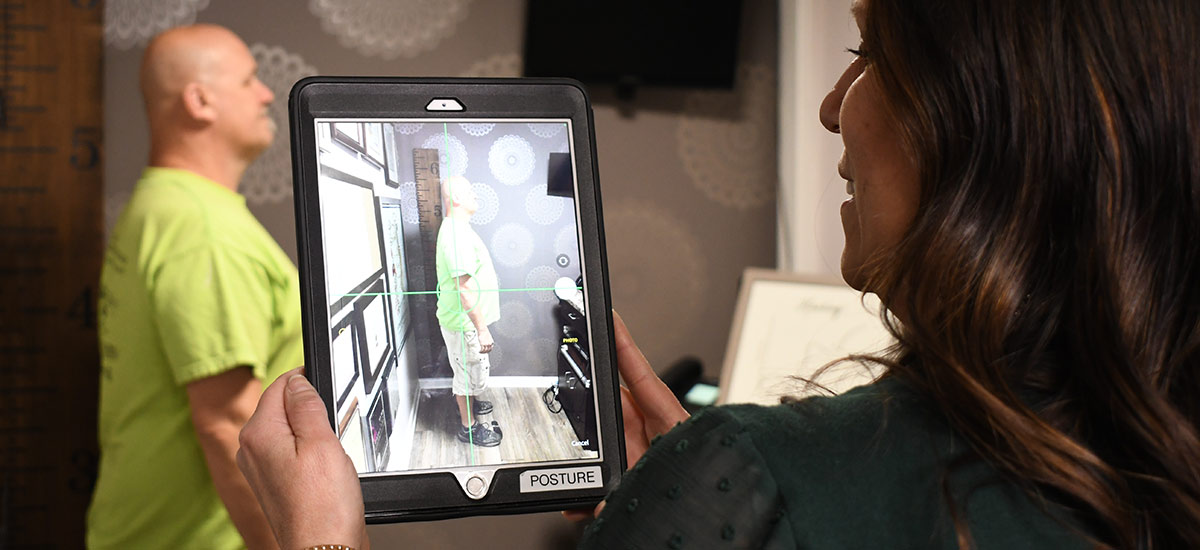
Before we ever touch your spine, our doctors complete a full evaluation, including INSiGHT scans that measure thermal patterns, heart rate variability, and muscle tension, along with upper cervical alignment, balance, and autonomic testing. This gives us an objective picture of where your nervous system is still holding tension from the injury, not a guess.
From there we use Koren Specific Technique (KST) and Talsky Tonal Chiropractic (TTC), both gentle, nervous system-focused approaches chosen specifically for their safety with a nervous system that's already under stress. There's no cracking, no forceful manipulation, and no sudden movements, which matters most when your system is already working hard to regulate itself. If you're recovering from a sports concussion, we coordinate with your athletic trainer and physician on a safe return to play. Throughout, we stay in touch with your neurologist or primary care physician so your care stays connected rather than siloed.
What Patients Often Notice
Recovery from post-concussion syndrome is rarely a straight line, and we're upfront about that from your first visit. That said, many patients tell us their headaches ease first, often within the first few weeks, followed by steadier balance and less dizziness as proprioceptive input from the neck normalizes. Mental clarity tends to return next for many people, alongside better sleep and less sensitivity to light and noise. Patients whose concussions happened months or even years earlier sometimes still see meaningful improvement once the cervical piece is finally addressed, since that gap in care doesn't close on its own with time.
Supporting Recovery at Home
A few habits tend to make a real difference alongside cervical care, especially in the weeks after an injury:
- Keep a simple symptom log, headache intensity, sleep quality, dizziness episodes, so patterns and progress are easier to see and share with your care team
- Pace screen time and cognitive load gradually rather than all at once, since pushing too far too fast tends to set off a flare of symptoms
- Protect sleep as much as you can, a consistent bedtime and a dark, quiet room support the nervous system's ability to shift out of high alert
- Introduce light activity slowly and only as tolerated, following guidance from your physician or athletic trainer on timing
- Limit alcohol and caffeine in the early weeks, since both can amplify the sensitivity many people feel after a concussion
Taking the Next Step
If concussion symptoms are still hanging on, whether the injury was recent or years ago, our doctors in Royal Oak would like to check the piece most recovery plans miss. You can learn more on our concussion recovery page, download our free guide on the cervical spine and post-concussion recovery, or book online. You're also welcome to call us at (248) 616-0900 with questions before you come in.
