
Somewhere between 10 and 25 percent of people who have carpal tunnel surgery are still dealing with numbness, tingling, or weakness afterward. That number surprises most people, because carpal tunnel release is considered a fairly reliable procedure, and the wrist is where the symptoms live, so relief is supposed to follow from there. Most of the time it does. When it does not, the explanation usually has nothing to do with the surgeon and everything to do with where the compression was actually happening.
The median nerve, the one responsible for numbness in the thumb, index, and middle fingers, does not begin at the wrist. It begins in the cervical spine, then travels through the shoulder, down the arm, past the elbow, and finally into the tunnel of bone and ligament where surgery releases the pressure. If the nerve was also being compressed somewhere earlier along that path, releasing the wrist alone leaves part of the problem untouched.
How This Shows Up
The classic pattern is numbness or a pins and needles tingling in the thumb, index, and middle fingers, often bad enough to wake someone at night. As it progresses, grip strength tends to fade, a jar lid or a coffee mug slips more easily than it used to, and small objects get dropped without meaning to. What often gets missed is a second layer: aching that runs up into the forearm, occasional symptoms in the shoulder, or a hand that feels worse after gripping a steering wheel for a long drive. When symptoms show up at more than one point along the arm, that is usually a signal that more than one area deserves a look.
Double Crush: When One Point of Compression Is Not the Whole Story
There is a recognized pattern called double crush syndrome, where a nerve is compressed at two points along its path at the same time. A little tension at the neck on its own might not cause noticeable symptoms. A little tension at the elbow, where the nerve passes through the pronator teres muscle, might not either. Put both together, even mild, and the nerve has less room to tolerate either irritation, and hand symptoms show up that look identical to carpal tunnel syndrome on their own.
A nerve under pressure in two places is more sensitive than the sum of those two pressures added separately, which is exactly why releasing only the most obvious pressure point sometimes is not enough. This is also why wrist bracing, cortisone injections, or ergonomic changes at the desk sometimes bring partial relief and then plateau. They are addressing the loudest point of compression, not necessarily every point along the pathway.
What We Check
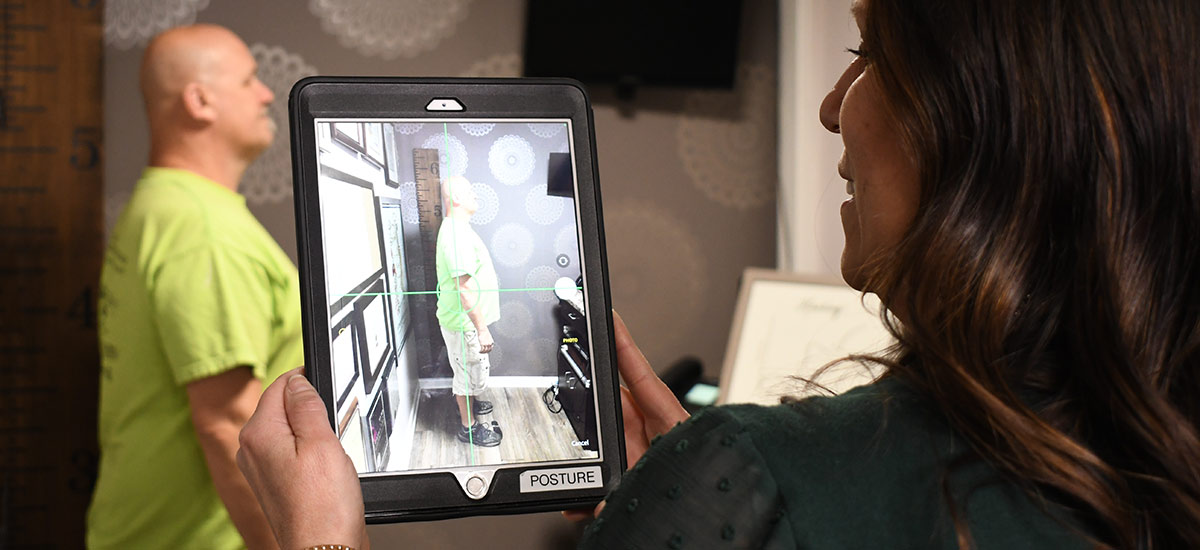
Our evaluation looks at the entire route the median nerve travels, not only the wrist. That means the cervical spine for nerve root involvement, the shoulder and thoracic outlet, the elbow and the pronator teres muscle specifically, and the wrist itself. We use INSiGHT scanning, thermal, heart rate variability, and sEMG readings, to see objectively where your nervous system is under the most stress along that pathway, since more than one of these areas is frequently involved at once, even when only the hand feels symptomatic.
Our Approach
Using Koren Specific Technique (KST) and Talsky Tonal Chiropractic (TTC), our doctors adjust the neck, shoulder, elbow, and wrist with gentle, nervous system focused contact, no cracking or twisting, aimed at loosening compression along the full route rather than one isolated point. If wrist involvement is significant, we may also recommend a brace to support the area while the rest of the pathway settles. None of this replaces a conversation with your surgeon if surgery is already part of your plan. It is meant to make sure the full picture gets evaluated either before that decision or alongside recovery from it.
Habits That Matter Between Visits
A meaningful part of lasting relief happens outside the visit. Sleep position matters more than most people expect, since a bent wrist tucked under a pillow all night can undo a week of progress. Workstation setup matters too, particularly keyboard height and where the elbow rests, since a desk that keeps the elbow bent tightly for hours puts steady pressure right on the pronator teres.
- Keep wrists straight and elbows only lightly bent while sleeping, using a brace at night if that position is hard to maintain
- Set up your keyboard and mouse so your elbows sit close to your body at roughly a right angle, not reaching forward or out to the side
- Take short breaks from repetitive gripping or typing every hour rather than pushing through discomfort
- Notice whether symptoms travel, into the forearm, the elbow, or the shoulder, and mention that pattern at your visit
- If you have already had wrist surgery and symptoms returned, bring your surgical notes so we can see exactly what was addressed
What Patients Notice
Patients often tell us the numbness and tingling ease first, followed by steadier grip strength and fewer nights interrupted by a hand that has gone to sleep. Some patients come to us before ever considering surgery and find that addressing the full pathway is enough on its own. Others come to us after surgery, when part of the story was never fully told, and find the remaining symptoms respond once the neck or elbow contribution finally gets addressed.
Where to Go From Here
If carpal tunnel symptoms came back after surgery, or a brace and ergonomic changes only got you partway there, it may be worth having the full nerve pathway evaluated rather than just the wrist. Learn more on our carpal tunnel page, or download our free guide on the nerve pathway and double crush syndrome. When you are ready, book online with our doctors in Royal Oak, or call us at (248) 616-0900 with any questions first.
