

Carpal Tunnel Symptoms Often Start in Your Neck
You've tried the brace, the ergonomic mouse, maybe even surgery. If the numbness keeps coming back, the real compression point may be in your neck, not your wrist.
In roughly nine out of ten cases we see, carpal tunnel pain does not start in the carpal tunnel. It starts somewhere along the nerve's path through the neck, shoulder, elbow, or forearm, and treating the wrist alone misses the real problem.
The median nerve that supplies your thumb and first three fingers begins in your cervical spine, then threads through your shoulder, down your arm, past your elbow, and finally into the tunnel of bone and ligament at your wrist. Compression at any point along that path, and sometimes at more than one point at once, a pattern often called double crush syndrome, can produce the same numbness, tingling, and weakness people call carpal tunnel syndrome, which is exactly why wrist-only treatment, including surgery, sometimes does not hold.
Carpal tunnel syndrome rarely announces itself the same way twice. Most people notice numbness or a pins-and-needles tingling in the thumb, index, and middle fingers first, often enough to wake them at night. As it progresses, grip strength starts to fade: a jar lid or a coffee mug slips more easily than it used to, and small objects get dropped without meaning to. Aching or sharp pain in the wrist can radiate up into the forearm, and for many people the whole hand feels worse after a day spent typing, gripping a steering wheel, or scrolling a phone.
A wrist brace can quiet the symptom, but if the compression started in your neck, the numbness comes right back the moment you take it off.
We regularly see patients who had carpal tunnel surgery, felt better for a while, and then watched the numbness return. If the surgeon addressed the wrist but the true compression was in the neck or shoulder, the operation could not fix what it never touched. That is why we recommend ruling out the rest of the pathway before surgery becomes the plan.
Our evaluation checks the cervical spine for nerve root compression, the shoulder and thoracic outlet, the elbow (including the pronator teres muscle, another common compression point), and the wrist itself, since more than one of these areas is often involved at the same time.
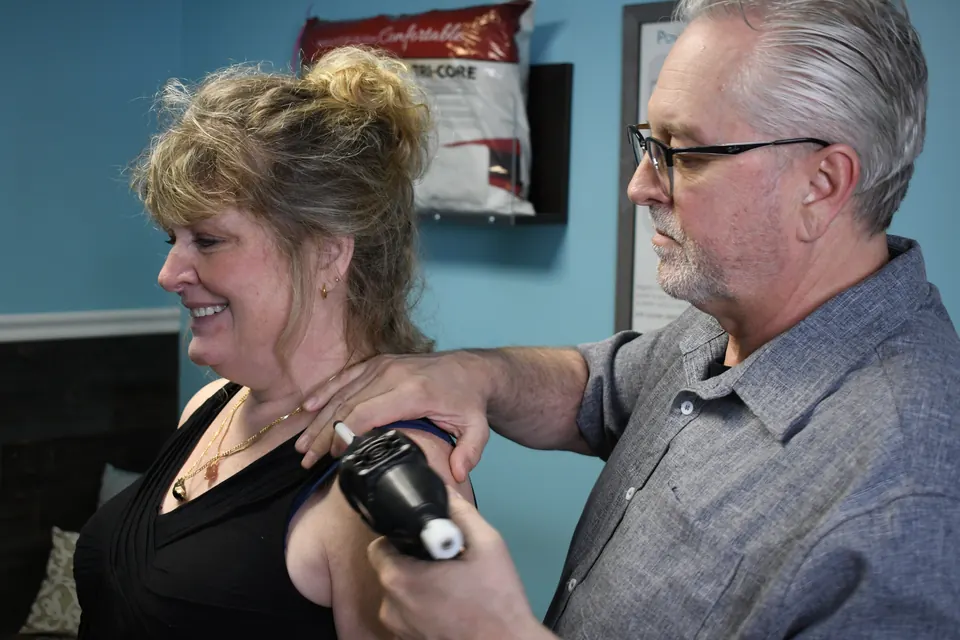
Care usually starts with an INSiGHT scan, thermal, heart rate variability, and muscle (sEMG) readings, that shows us where your nervous system is under stress along the arm and neck, followed by a report of findings we walk through with you.
Using Koren Specific Technique (KST) and Talsky Tonal Chiropractic (TTC), our doctors adjust the neck, shoulder, and wrist with gentle, nervous-system focused contact, no cracking or twisting, to loosen the areas compressing the nerve along its full route. If the carpal tunnel itself is involved, we will also send you home with a brace to stabilize the wrist while it settles down.
A big part of lasting relief happens outside the visit. We will talk through your sleep position, pillow, and mattress, since a bent wrist or a tucked shoulder held all night can undo a week of progress, and we will walk through your workstation setup, including keyboard height and mouse position, so the same strain does not rebuild itself every day at your desk. We often add simple stretching and strengthening exercises for the wrist and forearm to support what the adjustments are doing between visits.
Patients often tell us the numbness and tingling ease first, followed by steadier grip strength and fewer nights woken by a hand that has gone to sleep. Many avoid surgery entirely once the true source of the compression is addressed, and most are relieved to learn a stubborn wrist problem was never just about the wrist. Typing at a computer, gripping a steering wheel, and getting back to hobbies that need a steady hand all tend to get easier as care progresses.
Take the First Step If numbness or tingling in your hand has not let up, let us find out where the compression really starts. We see patients on Saturdays in Royal Oak.
Book OnlineYes. By addressing nerve compression along the entire median nerve pathway, from your neck to your wrist, chiropractic care often provides real relief. Many carpal tunnel cases involve compression at more than one point along that path, a pattern sometimes called double crush syndrome, and treating the wrist alone misses the bigger picture.
The median nerve that causes carpal tunnel symptoms begins in your cervical spine. Tension or compression in the neck can irritate the nerve roots there, making the whole nerve more sensitive to irritation further down the arm. Addressing the neck alongside the wrist is often what produces lasting improvement in hand symptoms.
In most cases, yes. Conservative care is worth trying before surgery becomes the plan, and many of our patients find complete relief without ever needing an operation. If your case does call for a surgical consultation, our doctors will refer you when that is the right step.
Yes. We regularly see patients whose surgery addressed the wrist but not the rest of the pathway. If the nerve is still compressed in the neck, shoulder, or elbow, symptoms can persist even after a successful operation at the wrist. We can evaluate the remaining points of compression and go from there.
Yes. Our doctors use light, nervous system focused contacts, no cracking or twisting, so care is appropriate even when your hand or wrist is in significant pain. We adjust the pace and pressure of every visit to what you can comfortably handle.
That depends on how many points along the pathway are involved and how long you have been dealing with symptoms. We do not give a visit count until we have completed a full history, consultation, and INSiGHT scan, so your care plan reflects your actual findings rather than a guess. We track your progress closely and adjust as needed.
You've tried the brace, the ergonomic mouse, maybe even surgery. If the numbness keeps coming back, the real compression point may be in your neck, not your wrist.
A meaningful share of people who have carpal tunnel surgery still deal with symptoms afterward. That is not about a surgeon making a mistake. It usually means the wrist was never the only compression point.
See what Royal Oak families say in our Google reviews and patient stories, or browse everything we offer.
Our doctors put together a full article on carpal tunnel syndrome that explains what's really behind it and what lasting relief looks like. Get instant access below.
