
The ADHD you managed in elementary school and the ADHD showing up now that your child is a teenager can look like two different conditions entirely. The hyperactivity may have quieted down. In its place: missed assignments, forgotten commitments, a harder time reading social situations, and decisions that leave you wondering what your teen was thinking. Roughly one in seven adolescents carries an ADHD diagnosis, and adolescence tends to be the stretch where it gets genuinely harder to manage, not easier.
What Changes About ADHD in the Teen Years
Academic demands jump considerably in middle and high school, right as teens are expected to manage their own time, organization, and long term assignments with far less oversight than before. For a teen whose attention and planning skills are still catching up, that shift alone can turn a manageable challenge into a source of constant frustration. Layer on complex social dynamics, more emotional intensity, and a brain still finishing its own development, and it is easy to see why grades slip, friendships get harder to maintain, and family conflict tends to rise during these years. Research also links ADHD in adolescence to a higher likelihood of impulsive, risky decisions, which makes this stretch worth taking seriously rather than assuming it will simply sort itself out.
A Different Way to Think About the ADHD Brain
It helps to separate the wiring from the difficulty managing it. Picture a sports car engine paired with brakes built for a much smaller vehicle. The engine itself, the drive, the creativity, the ability to hyperfocus on something genuinely interesting, is not the problem. The problem is that the braking and handling system has not caught up to the power underneath it. The goal is not to slow the engine down. It is to build out the braking and handling so your teen can actually use everything that engine has to offer.
Where the Real Difficulty Starts
ADHD is not simply a chemical imbalance that a single mechanism explains. At its core, it reflects a nervous system stuck leaning too far toward its stress response, unable to fully access the calmer, more regulated state that focus and emotional control both depend on. Picture the nervous system running on a gas pedal, the sympathetic side, and a brake pedal, the parasympathetic side driven largely by the vagus nerve. In ADHD, the gas pedal tends to stay pressed while the brake struggles to engage, making it genuinely difficult to sit still, sustain attention, or regulate big emotions, no matter how much a teen wants to.
For a lot of teens, this pattern traces back further than the diagnosis itself, often to physical stress during birth that left tension in the brainstem and upper neck, right where the vagus nerve begins its path through the body. That early tension can set the nervous system on a path toward this gas pedal, brake pedal imbalance well before ADHD ever becomes the label attached to it.
Looking back, many families notice the same nervous system pattern was visible years earlier in a different form: a colicky infancy, frequent ear infections, digestive struggles, or a toddler who never quite settled into naps easily. The diagnosis changes with age. The underlying nervous system pattern driving it often does not.
That continuity matters, because it means a teen's nervous system has usually had years to build compensating habits and coping strategies around this pattern. Unwinding it at fifteen understandably takes a different kind of patience than it would have at five, even though the underlying goal, a nervous system with better access to its own brake pedal, stays exactly the same.
How Our Doctors Approach ADHD in Teens
We start with a full history, including pregnancy, birth, and how symptoms have shifted over time. From there, INSiGHT neurological scanning, sEMG, thermal imaging, and heart rate variability, gives us objective data on how your teen's nervous system is regulating. Heart rate variability in particular tends to run low in teens with ADHD, a sign that the nervous system is stuck in one gear rather than shifting smoothly between alert and calm.
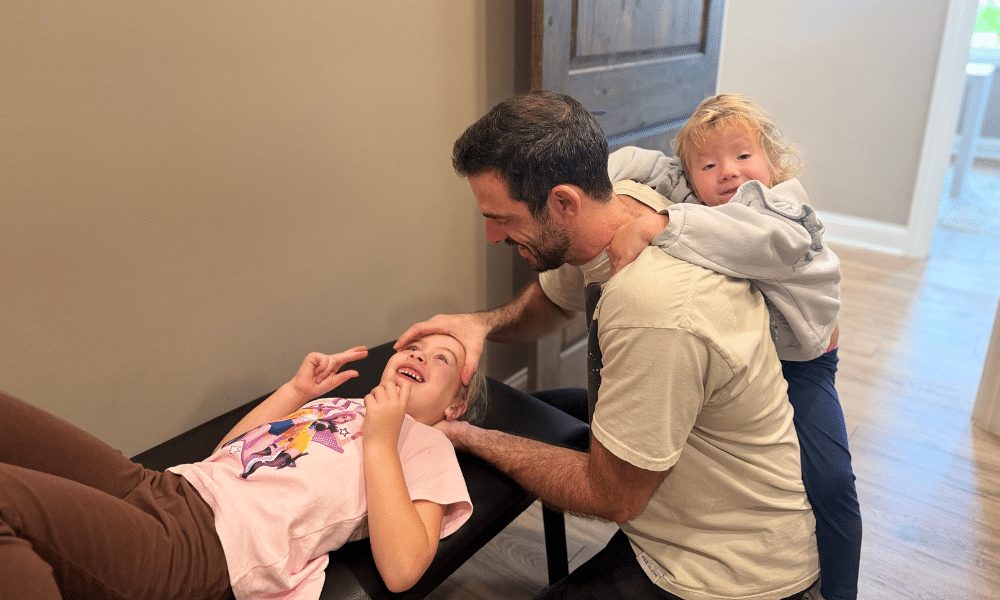
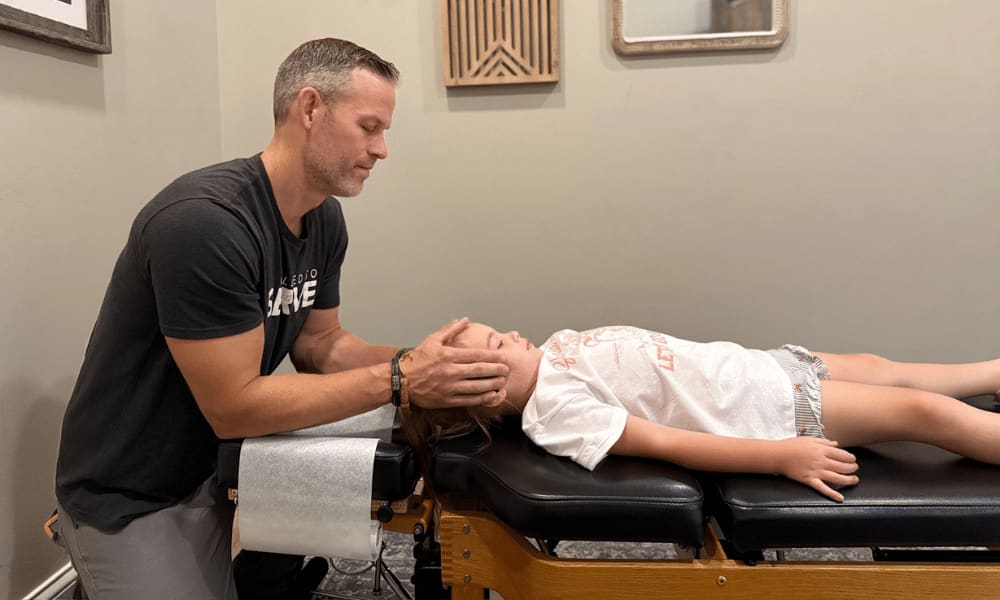
Using Koren Specific Technique and Talsky Tonal Chiropractic, our doctors work with light, nervous system focused adjustments through the upper cervical spine and vagus nerve pathway, aimed at easing that stuck sympathetic pattern and giving the parasympathetic brake room to engage. As regulation improves, many families notice steadier sleep, calmer emotional swings, and more consistent follow through on daily responsibilities, the practical skills a teen needs most heading into more independence.
This tends to be steady, gradual work rather than an overnight change, particularly by the teen years when a pattern has had a long time to settle in. Our doctors track your teen's response closely through repeat scanning and adjust the plan as things shift, since every teen's nervous system responds on its own timeline.
Supporting Your Teen at Home
- Break long assignments into smaller steps with a visible tracking system, since executive function catches up gradually
- Protect a consistent sleep schedule even on weekends, since sleep debt makes regulation noticeably harder the next day
- Build in regular physical activity, which channels excess energy and supports nervous system regulation directly
- Watch for signs of low mood or exhaustion layered on top of ADHD, since the two often travel together in teens
- Keep communication open and specific rather than general, since teens with ADHD respond better to clear, concrete expectations
None of these strategies replace the nervous system work happening in care. They tend to work best as a pair, since a teen with a bit more regulation on board also has an easier time actually using the organizational systems and routines you are helping build at home.
Where to Go From Here
If your teen's ADHD has shifted into something harder to manage than it used to be, it is worth looking at the nervous system pattern underneath it. Learn more about our approach to ADHD and focus issues, and read about the overlap with teen depression and exhaustion, since the two often show up together. We also have a free guide that goes deeper into this approach. When you are ready, book a consultation with our doctors in Royal Oak, or call us at (248) 616-0900.