
You brace before you bend down to tie your shoes. You take the elevator instead of the stairs, not because the stairs are hard exactly, but because you are not sure what today's back will do. You have quietly stopped doing the things that might set it off, the garden bed, the family hike, picking up a grandchild without thinking twice first. None of that feels dramatic in the moment. It just feels like being careful.
Here is the part that surprises a lot of our patients: that careful bracing, the thing that feels protective, can end up being part of what keeps chronic pain running. Not because you are doing anything wrong, but because of how a nervous system that has been in pain for a long time tends to respond to movement itself.
What Guarding Actually Looks Like
Guarding rarely announces itself as a decision. It shows up as small, automatic habits: holding your breath before you lift something, tensing your shoulders before you reach overhead, taking a wider stance to avoid twisting through your spine. Some people notice they have started moving more slowly in general, not because slow feels better, but because fast feels risky. Others describe a kind of mental scanning that happens before almost any physical task, a quick check for whether this particular movement is safe. Family members sometimes notice it before the person in pain does, the wince before the reach, the hesitation before the stairs.
Why a Nervous System Learns to Guard
Pain that has lasted months or years is not just a signal about tissue anymore. It is also something your nervous system has learned from. If a certain movement hurt badly once, or hurt badly several times, the nervous system reasonably concludes that the movement itself is dangerous and starts bracing against it before pain even shows up, as a kind of insurance policy. That response made sense the first few times. The trouble is that a nervous system stuck in a protective, high-alert state does not always update the memo once the tissue has actually settled. The guarding can keep running long after the original reason for it has resolved, which means the body ends up protecting against a threat that is not really there anymore.
How the Pattern Feeds Itself
Muscles that stay braced for long stretches of time get tight, and tight muscles restrict blood flow and compress the very joints and nerves they are meant to protect. That compression can generate its own discomfort, which the nervous system reads as further proof that movement is dangerous, which leads to more guarding. Meanwhile, avoided movements are never given the chance to prove themselves safe again. A shoulder that has not been reached overhead in a year stays stiff and unpracticed, which makes the eventual attempt feel worse than it needed to, which reinforces the avoidance. What began as one sore week can quietly become a year of smaller and smaller movement.
Why Rest Alone Rarely Breaks the Cycle
Rest has real value after an acute injury, and nobody is suggesting you push through sharp, new pain. But once pain has settled into a chronic pattern, more rest and more avoidance generally do not calm an overprotective nervous system. If anything, prolonged stillness can make a nervous system more sensitive to normal sensation over time, not less, since it never gets the steady, low-level input that tells it movement is safe. The goal with chronic pain is rarely complete rest. It is finding a nervous system state calm enough that movement can happen without triggering the alarm.
Our Approach at Van Every
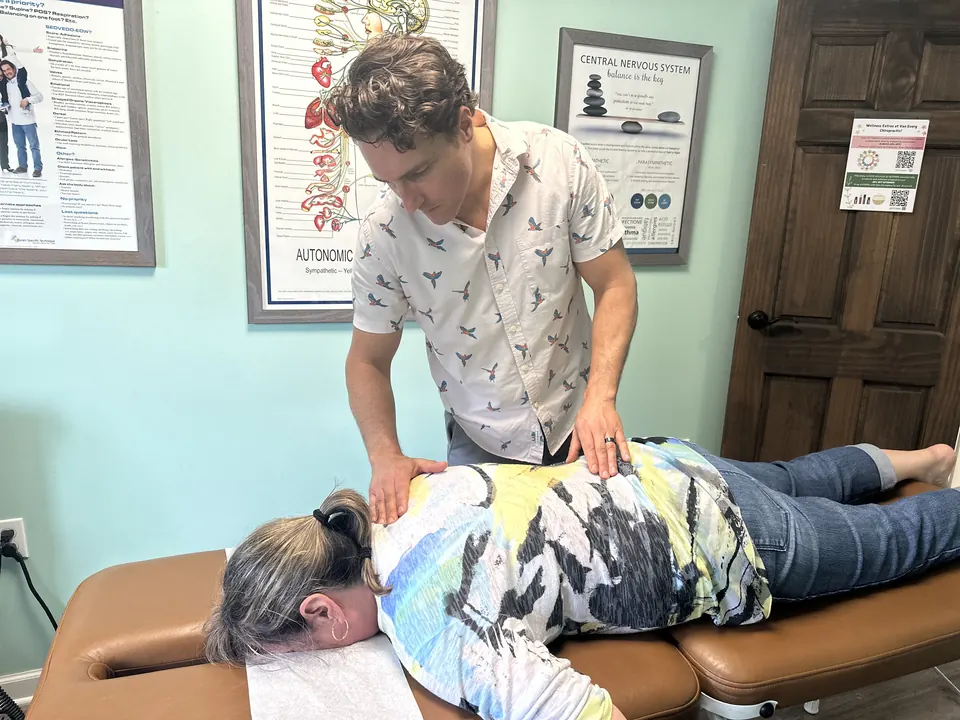
We start with your full history: every treatment you have tried, when the pain started, and which specific movements you have quietly stopped doing. From there, we run painless INSiGHT scans, thermal, heart rate variability, and sEMG, that show us where your nervous system is holding tension, not just where it hurts. Using Koren Specific Technique (KST) and Talsky Tonal Chiropractic (TTC), our doctors apply light, nervous system-focused contacts aimed at helping your body come out of that protective, braced state, with no cracking or twisting. Because the adjustment can be delivered seated, standing, or lying down, whatever position actually works for you that day, patients who have been guarding for a long time often find this a comfortable way back into movement.
What Patients Often Notice
A lot of patients tell us the guarding eases before the pain fully does, an easier reach overhead, less bracing before they stand up from a chair, a shoulder check that used to happen automatically before certain movements that quietly stops. Sleep tends to improve as the nervous system spends less energy staying on alert. Many describe slowly reclaiming small things first, carrying the groceries in one trip, playing on the floor with a grandchild, before larger activities follow. Progress with pain that has built up over months or years tends to arrive gradually, and we track your INSiGHT scans across visits to confirm the plan is actually calming your nervous system rather than repeating something that already stopped moving the needle.
Rebuilding Trust in Movement, Gradually
A few things tend to help alongside care:
- Pick one avoided movement and practice it in a small, low-stakes way, a partial reach rather than a full one, to start
- Notice when you are holding your breath or tensing before a task, and try exhaling through it instead
- Keep a simple log of what you avoided this week and whether it still feels necessary
- Move a little every day rather than saving activity for the days you feel best
- Celebrate the return of small, ordinary movements rather than waiting for everything to feel normal at once
Taking the Next Step
If chronic pain has quietly shrunk what you are willing to do, our doctors in Royal Oak would be glad to talk through what you have been avoiding and why. Learn more on our chronic pain page, download our free guide on the nervous system side of chronic pain, or book online with our doctors. You are also welcome to call us at (248) 616-0900 with any questions before you come in.
