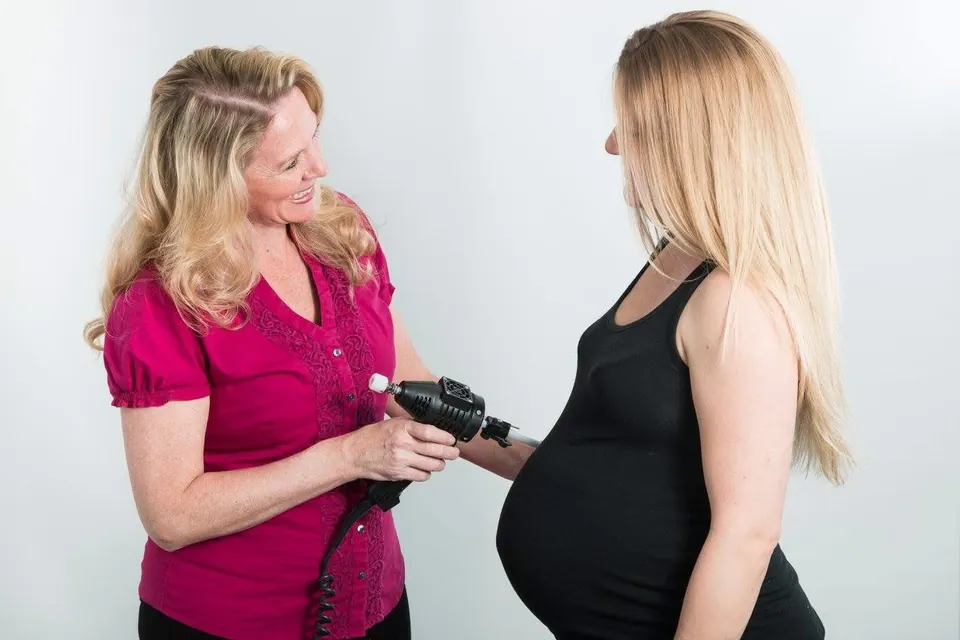
Somewhere between the two a.m. feeding and the load of laundry that's been sitting in the dryer since yesterday, your own body became an afterthought. That's not a failure on your part. Everything genuinely does shift to the baby after birth, and it should, at least for a while. But weeks in, the back pain hasn't let up, your thumb aches every time you pick up the car seat, and the exhaustion goes deeper than what a nap could fix. You keep waiting to feel like yourself again, and it hasn't quite happened yet.
Your recovery matters too, not instead of the baby's, alongside it. Whether your delivery was vaginal or cesarean, your body just did something enormous, and the physical demands of the fourth trimester are real even when nobody's asking how you're holding up.
What Your Body Just Went Through
During pregnancy, your nervous system ran at full capacity for months, managing postural changes, hormonal shifts, and the work of growing and carrying a baby. After delivery, the demands don't drop, they shift. Estrogen and progesterone, which peaked at the end of pregnancy, fall within days, while cortisol stays elevated and prolactin rises to support nursing. Relaxin, the hormone that let your pelvis expand for birth, keeps loosening ligaments for months afterward, long after any swelling has gone down. If you had a cesarean birth, add real abdominal surgery and a recovering incision to everything else your body is managing at once.
Where It Tends to Show Up
Back, neck, and shoulder pain are common from the combination of pregnancy changes, birth recovery, and the physical demands of caring for a newborn. Hours of nursing and looking down while feeding create real tension through the neck and upper back, and the repetitive lifting and holding involved in caring for a baby often brings on De Quervain's tenosynovitis, commonly called mom thumb, pain through the wrist and thumb that flares with every diaper change. A pelvis that expanded for birth needs time and support to stabilize properly, and sleep deprivation on top of all of it taxes your whole nervous system, not just your muscles.
Why Rest Doesn't Always Restore
Your nervous system runs on a go setting and a settle setting, similar to a gas pedal and a brake pedal. Labor and delivery ask a lot of the go setting, and afterward, the brake pedal is supposed to take back over so your body can actually recover. When that shift doesn't fully happen, rest stops restoring the way it should, even in the windows when rest is technically available. That's part of why the fatigue can feel bigger than sleep deprivation alone would explain, and why the back pain, the mood swings, and the exhaustion often show up together rather than as separate problems.
The Part Nobody Mentions
A newborn's nervous system is still developing, and in those early months, your baby often reads your own nervous system state as a signal for whether things are calm or not. When you're able to access some genuine calm, your baby tends to find it more easily too. That's not a performance standard to hit, and it's not one more thing on your list. Caring for your own nervous system is a practical move for your family, not an indulgent one.
What Care Looks Like at Van Every
We start by evaluating your spine, pelvis, and nervous system function, including INSiGHT scanning (thermal, heart rate variability, and surface EMG) to see objectively where stress from pregnancy, birth, and new motherhood is sitting in your body, not only where you happen to feel pain. Using Koren Specific Technique (KST) and Talsky Tonal Chiropractic (TTC), our doctors deliver light, nervous system-focused contacts with no lying face down required and no cracking or twisting, adapted for a body that's still recovering, including after a cesarean. Webster certified care is available when pelvic work is part of what you need. You're welcome to bring your baby to your visit, and we're happy to take a look at them too.
What Moms Often Notice
Many moms notice meaningful relief in back, neck, and pelvic pain within the first few weeks of care, as tension patterns from pregnancy and birth start to release. Sleep in the windows you do get often starts to feel more restorative, rather than just less bad. Energy and emotional steadiness tend to improve alongside the physical changes, and a fair number of moms tell us their baby seems to settle a little more easily too, which tracks with how closely the two nervous systems are linked in those first months.
Recovery here is rarely a straight line. Some weeks feel like real progress, and others feel like you slid backward for no clear reason, and both of those are a normal part of the process rather than a sign that something is wrong. There is also no deadline on any of this. Whether you are a few weeks out from delivery or a few years into motherhood and still not feeling fully like yourself, your nervous system can still shift toward better balance with the right support.
A Few Things That Help During This Stretch
- Switch nursing sides and holding arms through the day so the strain doesn't build in one spot
- Bring baby up to chest height with a pillow rather than hunching down to them
- Take a short walk when you can, even five or ten minutes, rather than waiting for a longer window that may not come
- Let rest when baby rests be an occasional win rather than a daily requirement you're failing to meet
- Give yourself the same patience for a gradual recovery that you'd give a friend in your exact situation
Next Steps
If any of this sounds like where you are right now, our postpartum recovery page covers how we support new moms in more detail, and our free guide goes deeper into the nervous system side of the fourth trimester. You can book online with our doctors in Royal Oak, or call (248) 616-0900 with questions. You spent nine months taking care of someone else's body. This is your turn.