
You catch your reflection in a shop window or a photo someone else took, and there it is: a rounding at the base of your neck that wasn't there a few years ago. Maybe you've asked, quietly, whether it will keep getting worse. Maybe you've been told it's just aging, just posture, just something to cover up with a scarf or a looser collar.
You've probably tried sitting up straighter. Maybe a posture corrector that helped right up until you took it off, or a round of stretches you did faithfully for a few weeks before life got in the way. The hump is still there, and if you're honest, it's often the first thing you notice in photos now.
Here's the part most people never get told: that hump usually isn't a fixed feature of your spine. It's a pattern, a group of vertebrae and ribs that have shifted position and are being held there by a nervous system that's stuck bracing. Patterns can shift, and that matters for a lot more than how you look in photos.
What the Hump Actually Is
The classic dowager's hump follows bone changes in the upper spine later in life, often related to compression fractures. That's real, but it's also less common than most people assume. One review found that fewer than a third of people with a pronounced hump actually have vertebral fractures behind it. The far more common version is the upper thoracic hump, where the vertebrae at the base of the neck gradually shift forward and the ribs attached to them follow, building that rounded mound over time. It isn't hereditary. Prolonged sitting, looking down at phones and laptops, old injuries, and years of accumulated stress all play a role, which is why we see this pattern in patients in their twenties just as often as patients in their seventies.
Signs That Often Get Missed
The earliest sign is usually upper shoulders that stay tight no matter how much you stretch them. From there the pattern can bring pain into the neck, mid back, lower back, or hips, and sometimes numbness or tingling into the arms and hands as nerves come under more pressure. Two signs surprise people the most. The first is tenderness at the front of the chest, right where the upper ribs meet the breastbone. The second is breathing that has quietly gotten shallower over time, because a rounded upper back limits how freely the rib cage can move.
The Nervous System's Role in Holding the Pattern
It helps to think of your nervous system as having a gas pedal and a brake. The gas pedal side handles your stress response. The brake side handles rest, recovery, and repair. When your system has been under sustained pressure, whether from an old injury, years at a desk, or ordinary life stress, the gas pedal tends to stay pressed down, and the muscles across your upper back and chest stay braced even when you're not doing anything at all. Over time, spinal segments and ribs get locked into that forward, rounded position, and your body starts holding the hump shape at rest, not just when you slouch. The upper back is also closely tied, neurologically, to the heart, lungs, and thyroid, which is part of why a 2004 study in the Journal of the American Geriatrics Society linked a more pronounced upper back curve to a 44 percent higher mortality rate, likely through its effects on breathing and cardiovascular function.
Why Posture Reminders and Braces Rarely Hold
None of what you've tried was pointless. A posture corrector worked while it was on. The stretching probably felt good in the moment. But those approaches try to overpower the pattern from the outside while your nervous system is still holding the segments in place from the inside. A brace can't free a stuck rib, and willpower can't release a vertebra that's been bracing for a decade. For the smaller share of people whose hump follows compression fractures, standard medical care can include bone medication or a procedure that injects cement into the fractured vertebra. Research published in the American Journal of Neuroradiology found that procedure appears to raise the risk of new fractures in the neighboring vertebrae, which is worth knowing as you weigh your options with your physician.
What Care Looks Like at Van Every
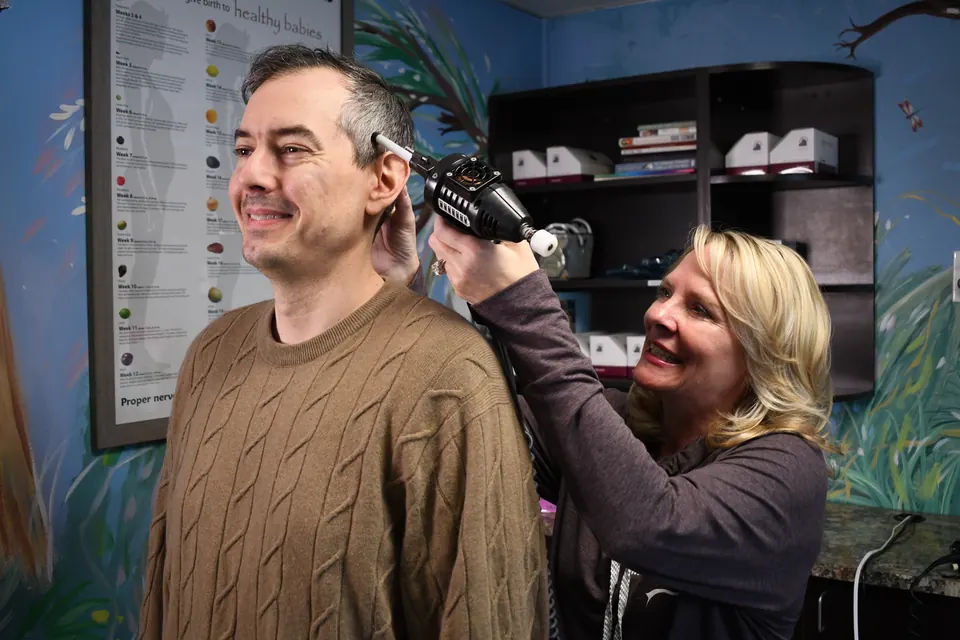
Helping the hump comes down to specificity, knowing exactly which segments have shifted and in which direction, rather than guessing. We begin with INSiGHT scans and a thorough history so your plan reflects what's actually happening in your spine. From there, our doctors use Koren Specific Technique (KST) and Talsky Tonal Chiropractic (TTC) to address each piece of the pattern with light, nervous system focused contacts, no cracking, popping, or twisting. Because each correction is specific to what your scans show, adjustments tend to hold, and each visit builds on the last. We often pair this with massage therapy to help release the muscle tension that's built up around the hump.
What Patients Often Notice
Many patients are surprised by how much more freely they can breathe once the upper ribs begin moving again. Posture and balance often improve without having to think about them constantly, and the shoulders that always felt tight tend to soften. Where the hump follows compression fractures, the shape itself may never fully reverse, but people in that situation still often notice real gains in comfort, breathing, and daily function once the surrounding pattern is addressed.
Daily Habits That Support Your Care
- Raise your screens to eye level instead of looking down at a laptop or phone for hours at a time.
- Take a short movement break every fifteen to twenty minutes if you sit for work.
- Try gentle stretching after a warm shower, when your muscles are already more relaxed.
- Notice your breathing throughout the day. Shallow, upper chest breathing is worth mentioning at your next visit.
- Pair any home habits with specific care rather than expecting them to release segments on their own.
Where to Go From Here
You don't have to keep watching this in the mirror and wondering. Our doctors would like to take a careful look at what your upper back is actually doing. You can read more about our approach to dowager's hump care, or get our free guide on the pattern behind the hump. When you're ready, you can book online, or call us at (248) 616-0900.
