
You are doing everything your Lyme-literate doctor has asked of you. The antibiotics or the herbal protocol, the supplements on their schedule, the rest days when your body demands them. Some of it is genuinely working. The joint pain has eased from where it was, your energy is inching up on the better days. And yet 3 a.m. keeps finding you wide awake, exhausted and wired at the same time, staring at the ceiling wondering why the one thing your body needs most, real sleep, is still not happening.
You are not doing anything wrong. Sleep is often one of the slowest pieces of Lyme recovery to shift, and understanding why can make the waiting a little easier, and point toward what might actually help.
How Sleep Disruption Shows Up With Lyme
It rarely looks like simple insomnia. A lot of patients describe falling asleep without much trouble and then waking in the middle of the night, wired, unable to settle back down for an hour or more. Others sleep for a full eight hours and wake up feeling like they barely slept at all, still foggy, still heavy. Night sweats and chills that do not match the room temperature often disrupt sleep further, along with restless legs, muscle twitching, or joint pain that flares specifically at night. Vivid dreams or a racing mind right at bedtime, just when the body should be winding down, round out a pattern that a lot of Lyme patients recognize immediately.
Why Sleep Lags Behind Other Progress
Deep, restorative sleep depends heavily on your parasympathetic nervous system, the side responsible for rest, digestion, and recovery, being able to take over from the sympathetic side, the stress response, once the day winds down. Lyme and its common co-infections have a documented pull toward nerve tissue, and the vagus nerve, the body's main parasympathetic driver, often takes a particularly direct hit. When vagal tone is reduced, the nervous system has a harder time fully shifting out of alert mode at night, even while your body is doing genuinely good work fighting the infection elsewhere. That mismatch, real progress against the infection alongside a nervous system still stuck partly in gas pedal mode, is exactly why sleep can lag well behind other symptoms instead of improving in step with them.
Why This Cycle Is Hard to Break on Its Own
Poor sleep and Lyme symptoms tend to reinforce each other. A body that is not sleeping well has less capacity to regulate inflammation and support the recovery your protocol is working toward, which can make joint pain, brain fog, and fatigue feel worse the next day. A harder day, in turn, often means a harder night, since pain and fatigue both make it more difficult for the nervous system to settle. Supplements aimed specifically at sleep can help take the edge off, and we would never suggest dropping something that is genuinely working, but they do not always reach the underlying vagal tone issue driving the disruption in the first place.
Our Approach at Van Every
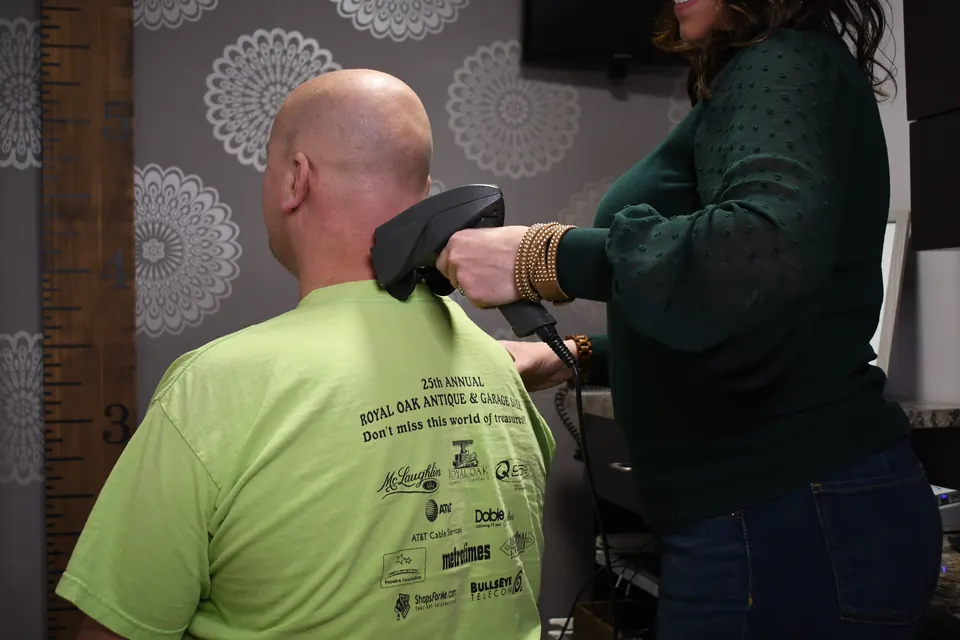
Using the INSiGHT scans, thermal, heart rate variability, and sEMG, we get an objective picture of where your nervous system is under stress, tension patterns from chronic infection, inflammation, or the demands of your protocol your body has not released yet. That data guides our approach instead of relying on your symptom list alone. Using Koren Specific Technique (KST) and Talsky Tonal Chiropractic (TTC), adjustments stay ultra gentle, seated, standing, or lying down, whichever position feels best that day, with no cracking or twisting. We pace care to your treatment cycles rather than a set schedule and adjust intensity based on how sensitive your system is feeling at each visit. Our doctors are glad to communicate directly with your Lyme-literate physician and work within the plan you have already built together, timing our care around whatever phase you are in, active protocols, a Herxheimer reaction, or the slower rebuilding stretch that follows.
What Patients Often Notice
A lot of patients tell us sleep is one of the changes they notice most clearly, falling asleep a little easier, fewer middle of the night wake-ups, or waking up feeling like the night actually counted for something. Reduced joint and muscle pain, clearer thinking, and steadier energy often come up too, alongside fewer night sweats and less restlessness. Progress with Lyme rarely moves in a straight line, so we track your INSiGHT scans over time rather than promising a set timeline, and we stay in close communication about what is and is not shifting. Even on the weeks sleep feels stuck, the scan data often shows the nervous system moving in the right direction before that shift is obvious in how a night feels.
A Few Ways to Support Sleep Between Visits
- Keep a simple log of your sleep alongside your Herx patterns, and share both with your Lyme-literate doctor and our doctors
- Protect a consistent bedtime and wake time as much as your body allows, since irregularity itself keeps the nervous system on alert
- Rest without guilt on flare days rather than pushing through on principle
- Keep the bedroom cool and dark, since both support the parasympathetic shift sleep requires
- Note which days sleep is hardest and bring that pattern to your next visit, since it often tells us something useful
Where to Go From Here
If sleep has stayed broken even while other parts of your Lyme recovery move forward, our doctors in Royal Oak would like to be part of your care team. You can read more about our approach to Lyme disease support, or get our free guide on the nervous system layer underneath Lyme recovery. When you are ready, you can book online, or call us at (248) 616-0900.
