
Every month, roughly the same week, you can feel it coming. Cramps that plan themselves around your schedule. Bloating that makes your favorite jeans a bad idea. Breast tenderness, a breakout right on your chin, and a short fuse that makes you apologize to people who didn't do anything wrong. You've probably tried ibuprofen before it even starts, maybe a heating pad, maybe the pill specifically to smooth this out. And still, the week arrives the same way it always does.
It's tempting to treat this as just part of having a cycle, something to grit through until it passes. But a body that reacts this predictably every month, on the same schedule, with the same symptoms, is telling you something worth listening to.
What PMS Actually Involves
PMS is really a cluster of symptoms that tends to show up together in the days before your period: cramping, bloating, tender breasts, headaches, breakouts, and mood swings that can range from irritability to genuine sadness. Some women notice food cravings or trouble sleeping in that same window. What makes PMS frustrating isn't any single symptom, it's how reliably the whole pattern repeats, month after month, often getting a little louder over the years rather than settling down on its own.
It also rarely stays neatly contained to a few days. For a lot of women, the week before the period bleeds into the days after it starts, so what looks like "a bad week" on the calendar is really closer to ten days out of every cycle spent managing something. Add that up over a year and it's a significant chunk of life spent bracing for a pattern that medicine has mostly treated as background noise rather than something worth understanding.
Why Your Labs Keep Coming Back Normal
A lot of women get PMS worked up through bloodwork, and the labs come back within normal range. That's confusing, because normal labs don't match how the week actually feels. Here's what those numbers don't capture: hormones don't manage themselves. They follow orders from the brain's own command centers, largely the hypothalamus and pituitary, which decide what gets released and when based on information coming up from the rest of the body. Lab ranges measure amounts at a single moment. They don't measure the coordination and timing that make those amounts actually work together. That coordination is a nervous system job, and it's a layer standard hormone testing was never built to see.
Why Painkillers and the Pill Only Go So Far
Ibuprofen and other anti-inflammatories manage pain after it starts. Hormonal birth control can smooth out the swings by overriding your natural cycle rather than working with it. Both have their place, and we're not suggesting you stop what's helping. But neither one addresses why your body is producing this pattern in the first place. When the underlying coordination doesn't change, the pattern doesn't change either, it just gets managed for another month.
The Pelvis and Tailbone Connection
The nerves that control your reproductive organs exit the spine through the lower back, pelvis, and tailbone. When there's tension or restriction in that area, those nerves can become irritated, which can make cramping sharper, bloating worse, and the premenstrual mood swings harder to ride out. This is one reason PMS can feel worse after a stressful stretch, a poor sleep run, or an old injury that flares back up: the physical tension and the hormonal pattern are more connected than they seem.
How We Support Calmer Cycles at Van Every
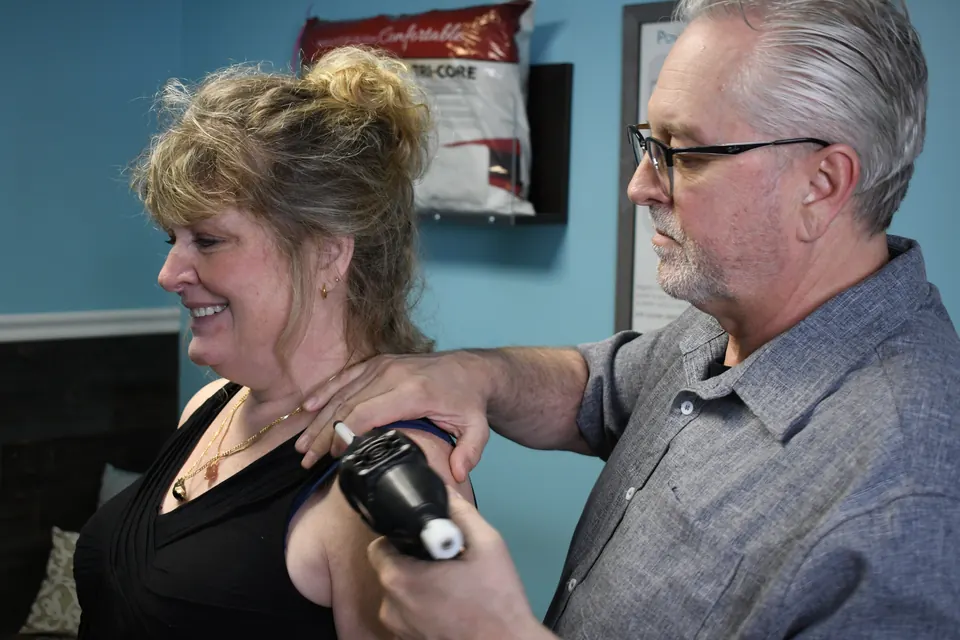
We start with a thorough history and an INSiGHT scan, which reads thermal patterns, heart rate variability, and muscle tension along your spine, so we have an objective picture of where your nervous system is carrying stress rather than a guess. From there, our doctors use Koren Specific Technique (KST) and Talsky Tonal Chiropractic (TTC), light, nervous system-focused contacts with no cracking or twisting, working especially with the pelvis, tailbone, and lower spine. Because PMS moves in a monthly rhythm, we track your cycles across two or three months rather than judging progress off a single visit, and we adjust your care plan based on what those cycles show us.
What Patients Often Notice
Many women tell us their cramps ease up within the first couple of cycles, and that the premenstrual week stops swallowing quite so much of the month. Moods often feel steadier, bloating tends to be less severe, and some women notice their cycles becoming more predictable overall. A number of patients also mention that energy holds up better through that week instead of crashing the way it used to. Every woman's pattern is different, so we watch your specific cycles rather than promising a set timeline.
For some women, PMS turns out to be one voice in a wider conversation about hormone regulation, irregular cycles, energy that dips hard in the afternoon, sleep that stays light no matter how tired you are, or the early edges of perimenopause. When that's the case, we look at the fuller picture with you rather than treating each symptom as its own separate issue.
A Few Things That Help Between Visits
- Regular exercise, even just brisk walking, which releases endorphins that ease both pain and mood
- Cutting back on salt, sugar, and caffeine in the days leading up to your period to reduce bloating and irritability
- Prioritizing sleep in the week before your period, when your nervous system has less margin to spare
- Tracking your symptoms alongside your cycle so patterns become visible over a few months instead of guesswork
If Your Month Deserves to Feel Different
If PMS has been running your calendar, our PMS support page covers more of how we approach care, and our free guide on hormones and the nervous system goes deeper into the bigger picture, especially if PMS feels like one part of a wider pattern with your energy or sleep. You can book online or call our office at (248) 616-0900 whenever you're ready to talk it through.
