
There is a particular kind of tired that comes from standing in the cold and flu aisle at nine at night, again, trying to decide between the dye free option and the stronger stuff, knowing you will be calling the pediatrician again first thing in the morning. If you have been there, you know it is not just physically tiring. It is the tiredness of feeling like you are only ever managing the surface of a problem that keeps coming back.
A lot of families end up asking some version of the same question after enough of those nights: is there something else out there that actually gets underneath this, instead of just handling the current flare up? For many, the answer they eventually find is chiropractic care, and specifically, a kind of chiropractic care most people have never heard described this way.
Not the Chiropractic You Are Picturing
Ask most people what a chiropractor does and you will hear about back pain, neck pain, maybe a sports injury. That is a real and useful part of the profession, but it is not the whole picture. A smaller group of chiropractors focus specifically on the nervous system, working with infants, children, and families rather than adults with joint complaints.
The idea driving that focus is straightforward. The nervous system is the body's command and communication network, directing everything from digestion to immune response to sleep. When there is stress or tension interfering with that communication, commonly called subluxation, it does not just affect the spine. It can show up as digestive trouble, immune struggles, sleep issues, or difficulty with focus and emotional regulation, because all of those systems take their signals from the same network.
Where That Interference Often Starts
One of the most overlooked sources of this kind of nervous system stress is the birth process itself. Even births that look completely uneventful from the outside can put real physical strain on a baby's upper neck and spine. Long labors, induction, vacuum or forceps assistance, and C-sections all add extra force to an area that is directly connected to a baby's ability to regulate digestion, immune response, and calm.
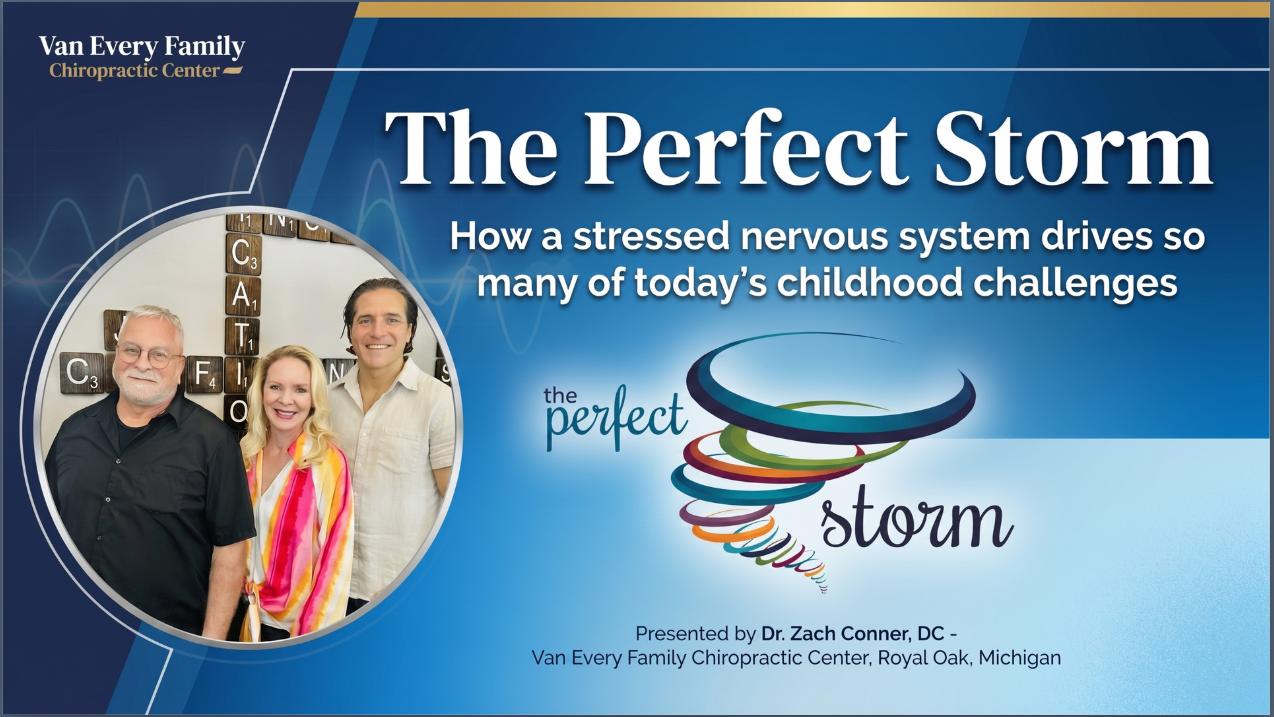
Add in the accumulated stress of ordinary childhood, illnesses, falls, medications, screen time, and a full schedule, and it becomes easier to see how a child can end up in a repeating cycle of sickness and struggle that never quite gets addressed at its root. Our practice has a name for that stacking of stressors: the Perfect Storm.
How This Kind of Care Actually Works
A neurologically focused family chiropractor works differently than the typical specialist model, which addresses one symptom at a time. Instead of a different doctor for the stomach, a different one for sleep, and another for behavior, this approach looks at the nervous system as the shared thread running underneath all of it.
To do that well, INSiGHT neurological scanning gives an objective, measurable look at where stress and tension are showing up in a child's nervous system, rather than relying on guesswork. From there, using Koren Specific Technique and Talsky Tonal Chiropractic, our doctors work with light, nervous system focused adjustments, no cracking, popping, or twisting, aimed at easing that interference so the nervous system can do its job with less resistance.
What Families Often Notice
Because the nervous system touches so much, families often see improvement across more than one area at once, not just the symptom that brought them in the door in the first place. Commonly reported changes include:
- Better, more consistent sleep for the whole household
- More regular digestion and fewer stomach complaints
- Calmer responses to transitions and less frequent, less intense meltdowns
- Steadier focus and follow through with schoolwork and routines
- Fewer repeat illnesses and faster recovery when something does come through
None of this happens because chiropractic care is targeting each symptom directly. It happens because a nervous system that is communicating clearly is simply better equipped to run every system underneath it.
What the First Visit Actually Involves
For most families, the first appointment looks nothing like a typical fifteen minute pediatrician visit. Our doctors spend real time on your child's story, the pregnancy, the birth, feeding and sleep patterns, any falls or illnesses, and whatever symptoms brought you in. That history matters, because it usually points toward where nervous system stress first took hold. From there, the scanning and exam give a clear starting picture, and a care plan gets built around your specific child rather than a generic protocol applied to everyone who walks through the door.
A Different Starting Question
Instead of asking which symptom to chase first, a lot of families find it more useful to ask a different question entirely: is my child's nervous system carrying stress that is getting in the way of them functioning at their best? That single shift in framing is often what opens the door to a completely different kind of care, one that looks at the whole child rather than one complaint at a time.
It also changes what a parent measures as progress. Instead of only counting sick days or tracking one symptom, families following this approach start noticing smaller, earlier shifts, an easier bedtime, a calmer car ride, a stretch of a few days without a meltdown, that suggest the nervous system underneath everything is settling down even before every symptom has fully resolved.
Where to Go From Here
If your family has spent more nights than you would like standing in that same aisle, it might be worth looking at the bigger picture instead. Learn more about what makes our approach to care different, or read about our family wellness care. When you are ready, you can book online with our doctors in Royal Oak, or call us at (248) 616-0900 with any questions before your first visit.