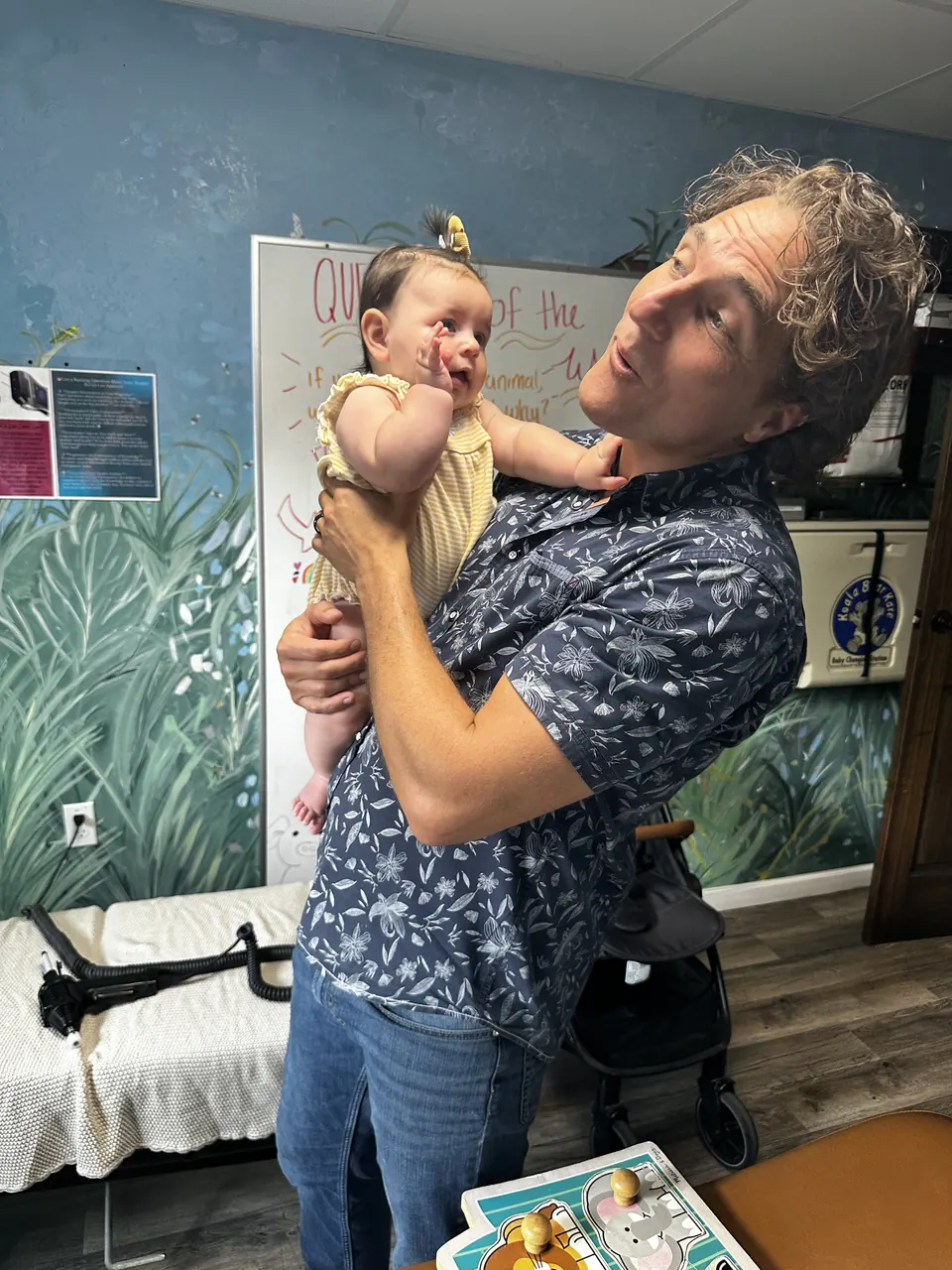
A torticollis-focused visit in Royal Oak looks at more than the direction of a baby's head tilt. At Van Every Family Chiropractic Center, our doctors ask about pregnancy, birth, feeding, sleep, positioning, and movement before completing a gentle, age-appropriate examination. Parents see the findings and hear the plan before deciding about care.
What details should parents share first?
Tell the doctor when you first noticed the tilt or side preference and where it shows up most clearly. A baby may look one way in the car seat, turn more easily during feeding, resist one side during tummy time, or settle differently depending on which arm holds them. Photos taken naturally at home can help show a pattern that is less obvious in the office.
The doctor will also ask about labor and delivery, time spent in one position, feeding, sleep, and any stretches or other care already underway. The purpose is to build a timeline, not to reduce the baby's experience to one tight muscle.
How does the doctor observe the head tilt?
The examination begins with comfortable observation. The doctor may watch how the baby rests in a parent's arms, tracks a face or toy, turns from the middle toward each side, and responds to supported tummy time. Head shape, shoulder position, and the way the baby uses both sides of the body can add context.
Next, the doctor may gently check the neck and spine while keeping the baby's age and tolerance in mind. There is no need to force the head through a range of motion. The visit can pause for feeding, holding, or a change of position whenever the baby needs it.
Are scans used with babies?
INSiGHT nervous-system scans can be used when appropriate for the baby's age and situation. Thermal scanning, surface electromyography, and heart rate variability add objective information about nervous-system function and muscle activity. The doctor interprets the scans together with the history and examination rather than relying on one number or image.
The family can see what was measured and ask how it relates to the observed side preference. That baseline also gives the doctor something objective to compare when findings are reassessed.
Does the first visit include an adjustment?
No. Van Every's first visit is for gathering the history, completing the examination, and obtaining scans. The doctor then reviews the full set of findings.
At visit two, the Report of Findings explains what the doctor noticed and what an individualized care plan would involve when appropriate. Parents can ask questions before choosing to continue. Visit two includes the opportunity for the first adjustment. The new patient center provides a complete walkthrough.
What does a gentle adjustment look like for a baby?
A baby's adjustment uses light, specific contact and a comfortable position. Our doctors use Koren Specific Technique and Talsky Tonal Chiropractic without forceful cracking, popping, or twisting. A baby can rest on the table, stay close to a parent, or use another supported position based on the examination and the baby's cues.
KST can use an ArthroStim instrument for quick, precise impulses. Talsky Tonal Chiropractic is hands-on and looks at the NeuroSpinal system as a connected whole. The doctor can show the parent what is planned and explain why a particular contact or position was selected.
How does this fit with other support?
Parents often arrive with exercises, positioning ideas, or support from another provider already in place. Bring that information. It helps the doctor understand what the baby is doing comfortably, what remains difficult, and how the family is approaching the head tilt at home.
The chiropractic plan stays focused on the examination and nervous-system findings. Clear communication makes it easier for parents to understand how each part of the baby's support fits together.
What should parents watch between visits?
Watch everyday function rather than trying to grade the baby. A short note about feeding sides, comfortable head turning, tummy time, sleep position, and how easily the baby settles can reveal useful changes. Photos taken from the same angle can also help parents notice whether the resting preference is changing.
- Which direction does the baby choose when relaxed?
- Does feeding feel different from one side to the other?
- Can the baby comfortably look toward both caregivers?
- How does the baby respond to tummy time and supported play?
- Which questions came up after the last appointment?
How can I prepare for the first appointment?
Choose comfortable clothing and bring the feeding or soothing supplies you normally use. If the baby tends to be most alert or calm at a certain time, mention that when scheduling. Plan enough room around the appointment that feeding or settling does not feel rushed.
Bring any home photos that clearly show the resting tilt or side preference, along with a short list of questions. Tell the doctor which positions your baby enjoys and which ones lead to frustration. Those details help the examination begin from familiar, comfortable movement.
How are findings explained to parents?
The doctor connects the history, observation, hands-on examination, and scan information in plain language. Parents can ask which findings are most important, why a particular technique is being considered, and what will be rechecked. The recommendation should make sense in relation to the baby in front of the doctor.
Where can Royal Oak parents learn more?
The torticollis page explains the office's full approach to infant head tilt. The pediatric chiropractic page describes gentle care for babies and children across different ages and comfort needs.
To have your baby's individual pattern evaluated by our Royal Oak doctors, book online. To ask about the two-visit process first, call or text us at (248) 616-0900.