
You wake up and your hands don't work right away. Maybe it's ten minutes before your fingers loosen up enough to make coffee without dropping the mug, or an hour before your knees feel like they belong to you again. You've learned the small workarounds: the jar opener kept by the sink, the stairs taken one at a time holding the rail, the good glove for gardening because the cold makes everything worse.
Most people who come to our office with arthritis have already tried the standard playbook. Anti-inflammatories, maybe a cortisone shot, glucosamine from the pharmacy, physical therapy, an anti-inflammatory diet they read about online. Some of it helped, for a while. Then the stiffness crept back and the flare-ups kept showing up on their own schedule, not yours.
If you've been told that this is just what getting older feels like, and the only real answer is to manage it and adjust your expectations, we want to offer a different piece of the picture. It doesn't replace what a joint has been through structurally. But it explains why some days feel so much worse than others, and why that gap between the two is worth paying attention to.
How Arthritis Actually Shows Up
Arthritis rarely looks the same from one person to the next, or even one week to the next in the same person. The common thread is joint pain that tends to worsen with activity, or with a shift in the weather, paired with stiffness that's at its worst first thing in the morning or after sitting still too long. Swelling, warmth, and tenderness around the joint often follow, and over time the joint's range of motion can shrink until it starts limiting ordinary tasks: turning a key, kneeling down, reaching overhead.
Many people also describe a grinding or clicking sensation with movement, and for those with arthritis in the hands, a loss of grip strength that makes everyday fine motor tasks harder than they used to be. None of this is in your head, and none of it is a sign you're doing something wrong.
The Layer That Doesn't Show Up on an X-ray
Arthritis has a structural piece: the joint space narrowing, the cartilage wear, the changes an X-ray can actually see. We're not going to pretend that layer isn't real. But there's a second layer that gets far less attention, and it has to do with how your nervous system is managing inflammation and muscle tension around that joint day to day.
Your nervous system runs on two main settings. One is like a gas pedal, the sympathetic system that revs things up, tightens muscles, and keeps your body on alert. The other is a brake, the parasympathetic system and specifically the vagus nerve, which calms inflammation and lets your body settle and recover. In a lot of people living with arthritis, that gas pedal gets stuck on, not from anything they did wrong, but because years of pain, stress, and inflammation have made it harder for the nervous system to shift back into brake mode on its own.
That's part of why flare-ups so often line up with your most stressful weeks. It isn't coincidence. When the gas pedal is stuck, uneven muscle tension also puts uneven mechanical load on joints that already have little cartilage to spare, which can speed up how the joint wears over time.
Why the Usual Approach Only Gets You Partway
Medication, supplements, and physical therapy all have real value, and if something is working for you, we'd never suggest you stop it. But notice what most of these approaches have in common: they're aimed at the output, the inflammation your body is already producing or the joint surface itself, rather than the nervous system signal that's driving the pattern in the first place. That's a big part of why relief from these approaches is often temporary, and why so many people describe a cycle of flare, manage, flare, manage that never fully resolves.
Arthritis affects an estimated 58.5 million adults in the United States, making it the country's leading cause of disability, and one meaningful piece of that picture is how much the nervous system's own anti-inflammatory pathway is or isn't doing its job. Research has found that roughly 60 percent of people with rheumatoid arthritis show measurable autonomic dysregulation, meaning reduced heart rate variability and weaker vagal tone, and that this pattern isn't only a byproduct of arthritis but appears to play a role in driving it.
What Care Looks Like at Van Every
We start by getting a real picture of what's going on in your nervous system, not just what you're describing to us. Our INSiGHT scans, thermal imaging, heart rate variability, and surface EMG, give us objective data on where nervous system stress has settled, often patterns built up over years of joint changes and compensation the body hasn't released on its own. We combine that with a thorough conversation about your history and a report of findings before we ever begin care.
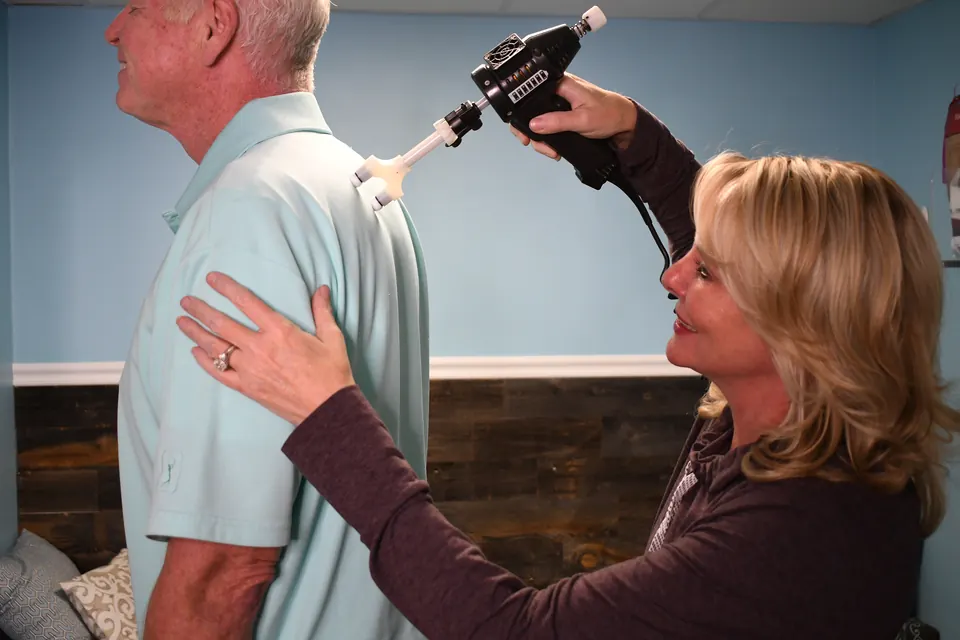
From there, our doctors use Koren Specific Technique (KST) and Talsky Tonal Chiropractic (TTC), gentle, nervous system-focused care with no cracking or twisting anywhere near a sensitive joint. KST uses a handheld, FDA-cleared instrument that delivers precise, low-force input without loading the joint directly, while TTC works through gentle, hands-on tonal contact aimed at helping your nervous system shift toward that calmer, parasympathetic state. Since arthritis is a long-term condition, we build a long-term plan, and we're glad to coordinate with your rheumatologist or primary care physician along the way. This isn't aimed at reversing joint changes that have already happened. It's aimed at giving your body better neurological conditions to manage the joint it has.
What Patients Often Notice
Many patients tell us morning stiffness starts easing within the first few weeks, meaning they're up and moving in minutes instead of needing an hour to loosen up. Range of motion often improves too, not because the joint structure changed, but because the muscle tension pattern around it did. Flare-ups tend to become less frequent and less intense as vagal tone strengthens.
It's common to hear that sleep improved before the joint pain did, which makes sense once you consider that the same nervous system pattern amplifying joint inflammation was also affecting sleep, energy, and stress tolerance the whole time. Several patients describe a shift in how they relate to their condition, from feeling like they're only managing decline to feeling like there's something they can actually influence.
Supporting Your Joints Between Visits
Care in our office is one part of the picture. What you do at home in between visits often matters just as much for how your joints feel day to day.
- Keep moving in short, gentle bursts rather than long stretches of stillness. Movement itself helps keep the joint fluid circulating.
- Pay attention to your stress load during flare-prone weeks, since stress and flare frequency tend to track together.
- Protect your sleep window as consistently as you can, since sleep quality and joint stiffness often move together.
- Track your good and bad days in a simple note or app so patterns with weather, activity, or stress become visible over time.
- Warm up stiff joints gently before activity rather than pushing straight into a task cold.
Where to Go From Here
If any of this sounds like your mornings, we'd like to help you look at the fuller picture. You can learn more about how we approach arthritis care at our practice, or get our free guide on the nervous system layer of arthritis for a deeper look at what we cover here. When you're ready, you can book online with our doctors or call our Royal Oak office at (248) 616-0900. Whether your joint pain started last year or a decade ago, it's rarely too late to give your nervous system a chance to help.

