
Once you understand what the vagus nerve does, the next question is usually the practical one. Is there anything you can actually do about it between visits? The answer is yes. None of these practices replace care aimed at the root tension that is holding the nervous system in a stressed state, but they are simple, low risk ways to support vagal tone day to day, and several of them work well for kids too.
Why Vagal Tone Responds to Simple Practice
Vagal tone refers to how efficiently the vagus nerve can shift the body from an alert state into a calm one. Some of that tone is shaped by physical tension in the upper neck and spine, which is where nervous system focused care comes in. But some of it also responds to repeated, simple signals that tell the nervous system it is safe to relax. That is what these practices are actually doing. They are small, repeatable signals of safety.
Breathing With a Longer Exhale
The way you breathe is one of the most direct levers you have over the vagus nerve. A slow inhale through the nose for about four counts, followed by a longer exhale through the mouth for six to eight counts, tends to shift the body toward calm within a few rounds. Five to ten minutes, once or twice a day, is plenty. For younger children who cannot follow verbal instructions well, blowing bubbles, using a pinwheel, or playing a harmonica accomplishes almost the same thing, since it naturally lengthens the exhale.
Humming, Singing, and Gargling
The muscles at the back of the throat and the vocal cords sit right along the path of the vagus nerve, so activating them tends to stimulate it directly. A slow hum, a favorite song sung out loud, or even a vigorous thirty second gargle with water all count. This is an easy one to build into a car ride or a bath time routine without it feeling like an exercise at all.
A Splash of Cool Water
Cool water on the face triggers what is sometimes called the diving reflex, a built in response that slows the heart rate and activates the vagus nerve. A cool washcloth held against the face for thirty seconds, a quick splash of cool water, or a cool pack against the back of the neck for twenty to thirty seconds are all gentle ways to use this. Start with cool, not ice cold, especially with kids, and stop right away if anyone feels dizzy or uncomfortable.
Movement and Gentle Massage
- Rhythmic movement such as swinging, rocking, or crawling helps regulate an overactive nervous system, particularly for kids who seem to need to move in order to settle
- A gentle circular massage around the outer ear, especially the upper hollow part, can have a calming effect in just a minute or two
- Slow, gentle strokes down the sides of the neck can be paired with slow breathing for a longer calming routine before bed
- Naming a few things you are grateful for out loud before sleep, with real detail, tends to shift the nervous system toward calm at the end of the day
What These Practices Will and Will Not Do
These are genuinely useful tools, and many families notice a real difference when they use them consistently. What they cannot do is release physical tension sitting in the upper neck and spine, where the vagus nerve begins its path down through the body. If that tension is part of the picture, breathing exercises alone tend to help for a few minutes and then wear off, because the underlying restriction is still there. That is where hands on, nervous system focused care comes in, working directly with the area these practices are only reaching indirectly.
How We Approach It
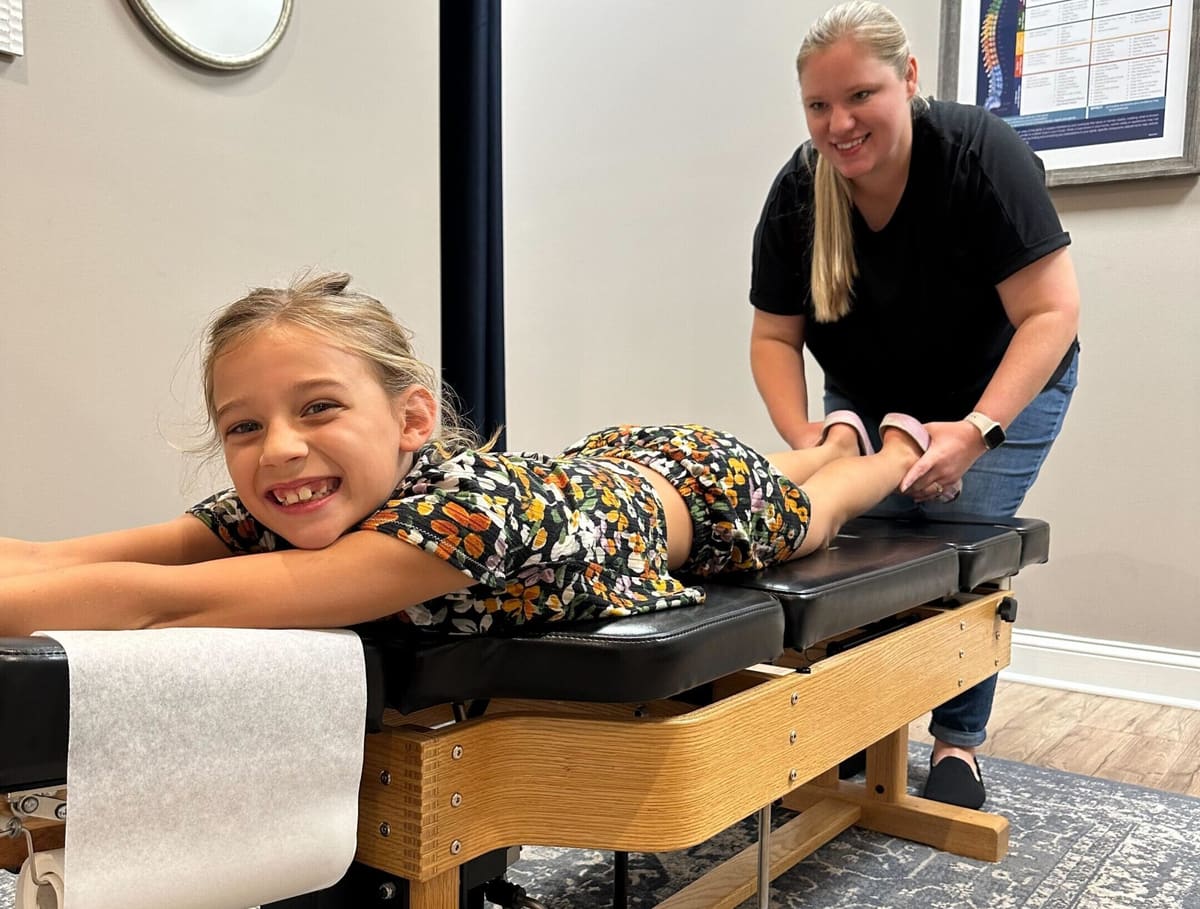
We start with a conversation about your history and what you have already tried. From there, a gentle exam and INSiGHT scanning show us where tension is actually being held in the nervous system. Using Koren Specific Technique and Talsky Tonal Chiropractic, our doctors work with light, nervous system focused contacts to ease that tension directly, which tends to make the at-home practices above land more effectively too, since the underlying restriction has more room to release.
A Few Practical Notes
Pause any cold water practice and check with your pediatrician first if your child has a heart condition, ear problems, or a significant respiratory issue. If you try these consistently for four to six weeks and notice no shift at all, that is useful information, and it is worth bringing up at your next visit so the plan can be adjusted. Keep in mind these tools tend to work best as a daily habit rather than something reached for only in the middle of a hard moment. A nervous system that practices calm regularly has an easier time finding it under pressure, the same way any skill improves with repetition rather than occasional use.
It also helps to notice which practice your particular child or your own body responds to best, since not every tool lands the same way for every nervous system. Some kids settle fastest with movement and rhythm, others with the stillness of a slow hum or a gratitude routine at bedtime. There is no need to do all six every day. Picking one or two that seem to genuinely help and building those into your regular rhythm tends to work better than trying to force a longer list that starts to feel like one more chore.
Where to Go From Here
Simple practices like these work best alongside care that addresses what is actually holding tension in the nervous system, not on their own. If your family could use support with sleep, digestion, or a nervous system that seems to run hot, our doctors in Royal Oak are here to help. Learn more about vagus nerve and nervous system care, book online, or call us at (248) 616-0900 with questions before your first visit.


