Search the vagus nerve and you will land in a world built for adults. Cold plunges, ice on the neck, elaborate breathing apps, athletes talking about biohacking their recovery. It is genuinely useful information, and almost none of it is written with a child in mind. That is a problem, because kids need a well toned vagus nerve at least as much as the grown ups scrolling past all that content, and the version that works for a six year old looks nothing like an ice bath.
Here is the piece most of that content skips entirely: kids come under vagus nerve stress early, often before they are old enough to have a say in it.
Why Your Child's Vagus Nerve Is Already Under Pressure
Pregnancy carries its own stress and uncertainty for a mom, and that stress does not stop once labor starts. A long labor, an assisted delivery, a C-section, a cord wrapped around the neck, all of these create real physical stress on a newborn's body, even when the birth looks completely uneventful from the outside. From there, ordinary childhood keeps adding to the pile: falls, inflammatory foods, chemical exposures, and the social and academic pressure kids carry younger than most parents expect.
Every one of those stressors nudges the vagus nerve in one of two directions. Either it stays strong and able to help a child calm down, rest, and settle after something upsetting, or it gets pushed down, leaving a child fast, wound up, and stuck leaning toward fight or flight more often than not.
What the Vagus Nerve Is Actually Doing
The vagus nerve is sometimes called the wandering nerve because of how far it travels, starting at the brainstem in the upper neck and branching out to the heart, lungs, and digestive system. It is the main driver of the body's rest and relax response. A vagus nerve that is working well slows the heart rate, supports steady digestion, and helps a child come back down after something stressful instead of staying revved up. When it is engaged the way it should be, kids find it easier to settle, focus, sleep, handle a loud room, and be around friends without getting overwhelmed.
Two Things That Work Fast
There are a couple of simple practices that give the vagus nerve a quick nudge in the right direction, and they are worth trying tonight rather than saving for later.
- Slow breathing from the belly. A long, slow inhale followed by an even longer exhale, repeated for a minute or two, sends a direct signal up through the vagus nerve that it is safe to settle. Some kids pick this up right away. Others need it turned into a game, blowing out imaginary birthday candles or breathing in time with a favorite song.
- Humming, singing, or chanting. Any activity that vibrates the throat and voice box works the same pathway. A child who hums or sings while winding down is not just self soothing out of habit, that vibration is doing real work on the vagus nerve. Turning on music your child can sing along to counts.
The Long Term Piece
Breathing exercises and humming are genuinely useful in the moment, but they are working with whatever baseline tone a child's vagus nerve already has. If a child's nervous system is carrying a lot of built up stress from birth or early life, those quick tools will only go so far before the same tension resurfaces.
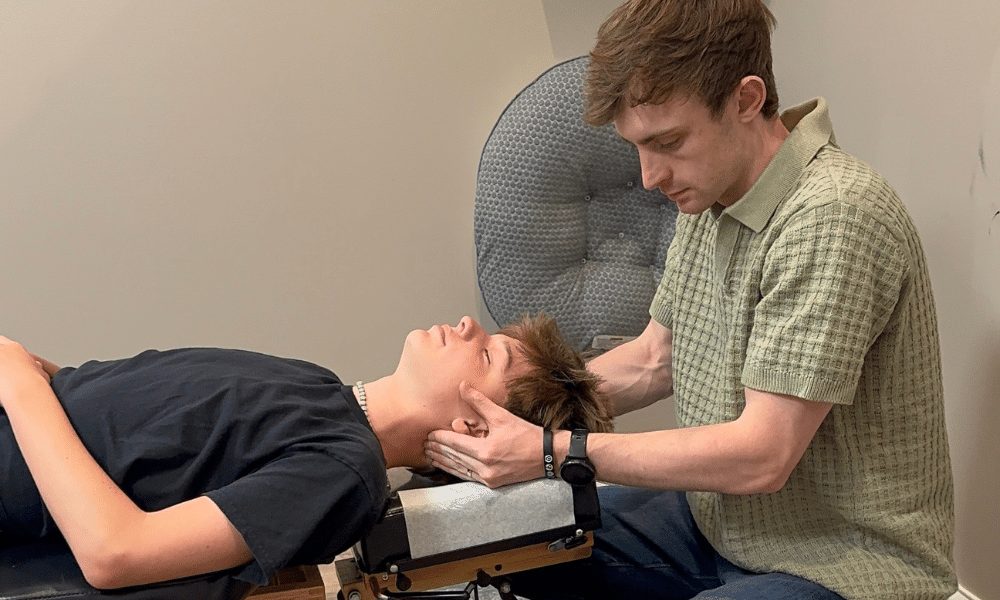
This is where nervous system focused chiropractic care fits in. Because the vagus nerve begins its path in the upper neck, that area gives our doctors real information about how much stress a child's nervous system is holding and where it sits. Every child arrives with a different history and a different pattern, so the goal is to measure what is actually going on rather than guess, then work with light, nervous system focused contacts to help ease that upper neck tension over time. As that area settles, a child's own ability to regulate, calm down, and bounce back after a stressful moment tends to strengthen right along with it.
What This Can Look Like for Your Family
Parents often start noticing small shifts before anything dramatic changes. A child settles a little faster after a meltdown. Bedtime takes less negotiating. A loud family gathering feels less overwhelming than it used to. None of that happens overnight, and every child's starting point is different, but supporting the vagus nerve consistently, both through the quick tools at home and through ongoing nervous system care, tends to move things in the same direction.
A calmer vagus nerve also tends to show up in places parents were not expecting, easier transitions between activities, steadier sleep, and a child who can be in a busy, noisy environment without unraveling. Some parents notice their child recovering faster after a disappointment or a scraped knee, bouncing back within a minute or two instead of staying rattled for the rest of the afternoon. Kids who struggle with anxious energy in particular often carry a vagus nerve that has a hard time fully engaging its brake, so supporting it here overlaps closely with what helps anxiety in children as well.
Where to Go From Here
If your child's nervous system seems stuck in high gear more often than it should be, no matter how many breathing exercises or calming routines you have tried, it is worth having their upper neck and nervous system looked at directly. You can read more about how we approach vagus nerve health in kids, or reach out to talk through what you are seeing. You can book online with our doctors in Royal Oak, or call us at (248) 616-0900 with any questions before your first visit.