Meltdowns that seem to come out of nowhere. Stomach aches with no clear medical cause. A child who cannot settle down at bedtime no matter how tired they are, or one who seems to shut down and go quiet the moment things get overwhelming. Parents often bring us a long list of these things, assuming they are unrelated. Very often, they are not. They point back to one underlying pattern: a nervous system that has lost the ability to move smoothly between alert and calm.
That pattern is called nervous system dysregulation, and it is worth understanding in full, because it sits underneath so much of what shows up on a pediatrician's checklist as separate diagnoses.
What Dysregulation Actually Is
Put simply, dysregulation happens when a child's autonomic nervous system can no longer smoothly switch between two states: the alarm response that revs the body up, and the settled response that lets it calm back down. Once that switching stops working the way it should, the effects ripple outward into digestion, sleep, immune function, mood, and everyday behavior.
A useful thing to know up front is that dysregulation is not itself a diagnosis. It describes how a nervous system is currently operating, a functional state rather than a labeled condition, which is exactly why it can quietly drive so many different symptom patterns without ever being named as the common thread.
It also does not look the same in every child. Some kids run hot, staying wired, jumpy, and quick to spiral no matter how calm the room around them is. Others run the opposite direction, going quiet, flat, and hard to reach. Plenty of kids move between both states over the course of a single day, which can make the underlying pattern tricky to spot from the outside.
The Gas Pedal and the Brake
The autonomic nervous system quietly handles the functions a child never has to think about, running heart rate, breathing, digestion, and blood pressure in the background. It does this through two branches. One branch works like a gas pedal, revving the body up when it senses stress or danger, tightening muscles and pausing digestion to get ready for action. The other branch works like a brake, easing the body back into a calm, recovering state once the demand has passed.
A dysregulated nervous system behaves as though the gas and the brake are both pressed down at once, which produces exhaustion and internal noise instead of a smooth shift between alert and calm. A large share of that braking power runs through the vagus nerve, which is part of why vagus nerve trouble and nervous system dysregulation tend to show up in the same child.
Where Dysregulation Comes From
In children, dysregulation usually develops from a buildup of stressors across three windows of development, not from any single event.
- Prenatal stress: elevated maternal stress hormones during pregnancy cross into a baby's nervous system while it is still forming
- Birth trauma and interventions: forceps, vacuum extraction, induction, or C-section place real physical strain on a newborn's upper neck and brainstem
- Early toxic load: repeated illness, frequent antibiotics, environmental exposures, sensory overload, and chronic stress keep a young nervous system in a defensive state
None of this builds overnight. It accumulates, layer by layer, during the years when a nervous system is at its most impressionable.
How It Shows Up at Different Ages
In infants, dysregulation often shows up physically before it shows up in behavior. A flattened head shape, a neck that stays turned to one side, strong nursing on one side only, arching and stiffening, or reflux and constipation clustered together are common early signs.
In older children, the signs spread across three categories. Physically: chronic headaches, digestive trouble, sleep disturbance, frequent illness. Cognitively and emotionally: trouble concentrating, low frustration tolerance, anxiety, brain fog. Behaviorally: hyperactivity, rigid routines, sensory sensitivity, difficulty with transitions.
Dysregulation also tends to show up as one of four stress patterns, and two of them are easy to miss entirely.
- Fight: aggression, tantrums, and behavior that gets a child labeled defiant
- Flight: constant motion, restlessness, and avoidance of anything overwhelming
- Freeze: shutting down, looking spaced out, struggling to make decisions
- Fawn: people pleasing that looks like good behavior but is really a stress response in disguise
Parents and teachers routinely mistake freeze and fawn for a calm, easy child. Getting the full picture of what is going on means watching for all four of these patterns, including the two quiet ones that hide in plain sight.
What Belongs to a Medical Workup
Dysregulation describes a functional pattern, and a handful of medical conditions can produce very similar signs. A physician is the right person to check for things like a thyroid issue, low iron, disrupted sleep breathing, a hormone imbalance, or a medication side effect before landing on any other explanation. A sudden shift in behavior right after an illness is also worth a closer look on its own, since some post-infectious presentations mimic dysregulation but need their own path forward. Looking at the nervous system and getting a proper medical workup are not rival approaches. Each one answers a different question, and most families end up wanting both pieces of the picture.
How Our Doctors Approach It
Our approach starts with your child's story: when patterns began, what makes them worse, and what has already been tried. From there, our doctors use a gentle exam along with INSiGHT neurological scanning, including heart rate variability, NeuroThermal, and sEMG, to get an objective read on where and how significantly a child's nervous system is out of balance rather than guessing from symptoms alone.
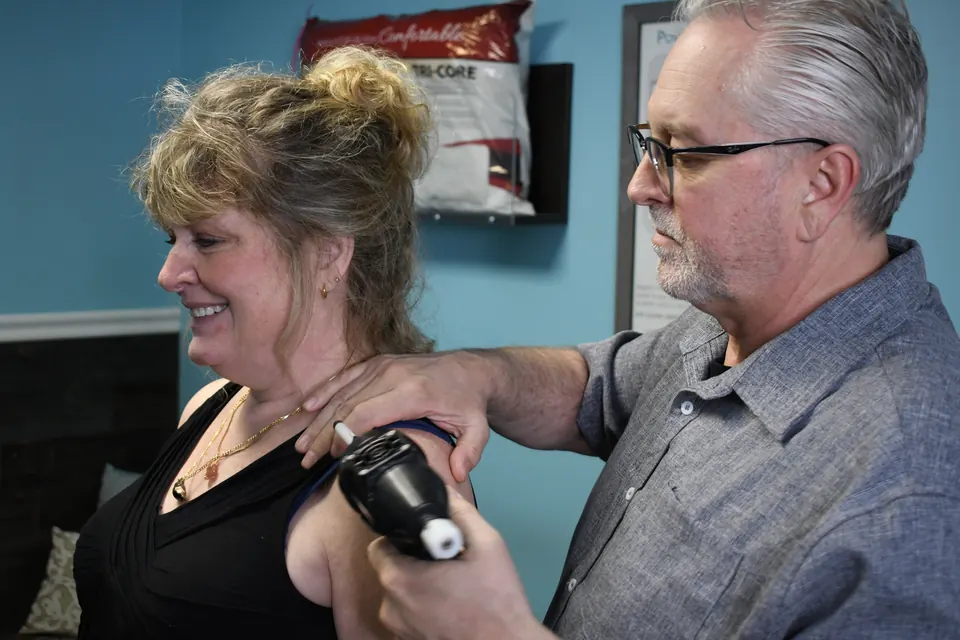
Using Koren Specific Technique and Talsky Tonal Chiropractic, our doctors deliver light, nervous system focused adjustments aimed at the upper cervical spine, where a lot of that stress pattern is held. The goal is to clear that interference so the nervous system regains a real shot at settling back into balance on its own. Families often notice the smaller things move first, an easier bedtime, a softer landing after a hard moment, before the bigger emotional patterns start to shift. Change usually arrives gradually and in stages, which fits with how gradually the pattern built in the first place.
Supporting Regulation Between Visits
A few things tend to reinforce the shift alongside care:
- Slow, paced breathing, which directly engages the vagus nerve and supports the parasympathetic side of the system
- Grounding through the senses, naming what you see, hear, and touch, which pulls attention out of a stress spiral
- Heavy work like pushing, pulling, or climbing, which delivers input that settles a system quickly
- Staying steady yourself during your child's dysregulation, since a child's nervous system takes real cues from a caregiver's
If this pattern sounds like your child, whether it shows up as meltdowns, stomach troubles, sensory overload, or a system that swings between wired and shut down, it is worth learning more about how nervous system care approaches nervous system regulation in children, especially alongside our page on anxiety in kids. When you are ready, you can book online with our doctors in Royal Oak, or call us at (248) 616-0900.