Your child gets decent grades. Has friends. Manages to look put together at school even on hard mornings. From the outside, ADHD does not seem to be the problem it is for other kids. This is often called high-functioning ADHD, and it is not a formal diagnosis so much as a description of a child who has learned to compensate well enough to get by in certain settings. What rarely gets said out loud is that compensating this well takes constant effort, and that effort has a real cost most people never see.
What High-Functioning ADHD Actually Looks Like
In children, this pattern often shows up as trouble with details and careless mistakes on schoolwork that does not match how capable your child clearly is, difficulty following through on multi step instructions, losing track of items needed for a task, and being easily pulled off course by anything happening nearby. Because these kids can pull it together for a teacher, a coach, or a grandparent, the struggle underneath is easy to miss or dismiss. Many of these same kids fall apart at home the moment the mask comes off, since holding it together all day takes a kind of effort that eventually needs somewhere to release.
The Cost of Masking
Just because a child appears to be managing does not mean their ADHD has stopped affecting them. The ongoing effort required to keep up appearances tends to show up as exhaustion, anxiety, and a kind of burnout that builds quietly over months. Kids who mask well are also at real risk for low self esteem, since so much of their energy goes toward appearing fine rather than actually feeling regulated. Sleep, digestion, and mood often carry the hidden weight of that effort even when report cards and parent teacher conferences look reassuring.
Time management and organization tend to stay difficult even when a child looks organized on the surface, since a lot of that appearance is propped up by extra effort rather than an easier underlying process. Some kids channel that effort into perfectionism, redoing homework until it looks right or refusing to turn in anything less than polished, which can look like diligence to a teacher while quietly draining a child at home. Social situations add another layer, since impulsivity and trouble reading a room can make friendships harder to hold onto even for a child who otherwise seems socially capable. Parents often describe a strange contradiction: relief that their child is doing fine at school, alongside a nagging sense that something underneath is not actually settled.
Why This Is Not About Willpower
Every child's nervous system splits its work between two modes. One mode pushes for alertness and action. The other, guided mostly by the vagus nerve, handles rest and recovery. For many kids carrying an ADHD pattern, the alertness mode stays dialed up no matter what a moment actually calls for. Masking is what happens when a child figures out how to hold that revved up state together in front of other people, not proof that the imbalance underneath has eased. Pushing a child in this pattern to just try harder misses what is really going on, because the part of the brain that handles sustained self control gets less of a say while alertness stays cranked. In effect, masking is a workaround your child has invented for a nervous system that has not learned to settle on its own, and workarounds built that way are draining to keep up day after day.
Where This Pattern Often Starts
This kind of pattern rarely traces back to one single thing. A hard pregnancy, a rough delivery, a string of antibiotics early on, or steady stress across the toddler years can each pile pressure onto a system that is still developing. Any one of these alone will not cause an ADHD pattern. Together, though, they can push a child toward a baseline that runs hot, one that eventually gets named ADHD once school starts demanding more than that baseline can quietly cover. Tightness around the upper neck, near where the vagus nerve travels, shows up again and again in kids like this, because that region has real influence over whether the calming side of the nervous system gets to do its job.
What Care Looks Like
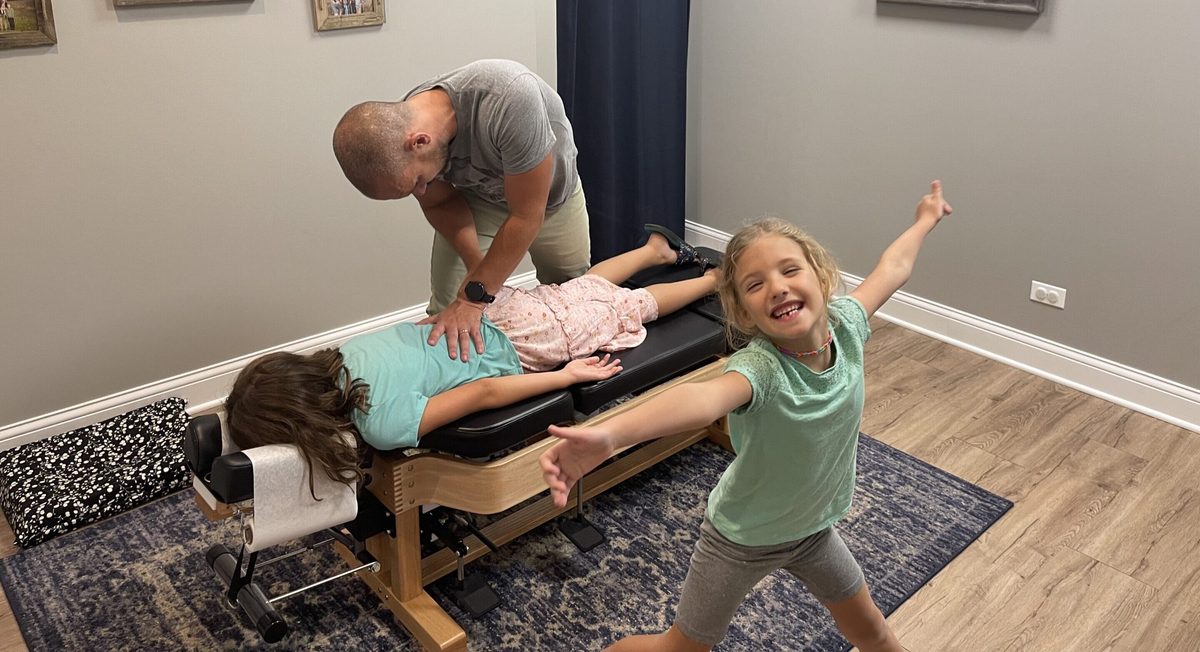
Care starts with a conversation, hearing the full arc of your child's story, including pregnancy, birth, and exactly how the masking and the after school unraveling tend to play out. From there we combine a gentle hands on exam with INSiGHT neurological scanning, looking at heart rate variability, muscle tension, and temperature regulation, so we have real information about how your child's nervous system is functioning instead of guessing from a checklist of behaviors. Using Koren Specific Technique and Talsky Tonal Chiropractic, our doctors apply light, nervous system focused adjustments to the areas tied to that alertness pattern, helping build a steadier balance over time. This works alongside whatever your child's care team already has going, whether that is school accommodations or outside therapy.
What Parents Often Notice
- Less exhaustion by the end of the school day, even on demanding days
- Fewer meltdowns once your child gets home and the mask comes off
- Steadier sleep, which tends to lighten the load the next morning
- A gradual easing of the anxiety that often rides alongside constant masking
Where to Go From Here
When your child holds it together for everyone else but the toll shows up the moment you are home alone, that pattern underneath the label is worth a real look. Read more about our approach to ADHD and focus issues, and grab our free guide covering the nervous system side of attention and behavior. When you feel ready, our doctors in Royal Oak are happy to book online, or you can reach the office directly at (248) 616-0900.