
The other driver ran the light, or you got rear-ended at a stoplight, or a patch of ice sent someone into your bumper. Your heart was pounding, you traded information, maybe you called the police. Then you drove home, and aside from being rattled, you felt basically fine. No blood, nothing broken, nothing that sent you to the emergency room. A few days go by and you start to relax about it. Then your neck stops turning all the way. A headache shows up that will not quite go away. You feel foggier than usual and cannot explain why. It is easy to assume this is unrelated to the accident, since the accident already feels like old news. It usually is not unrelated at all.
Why Whiplash Symptoms Show Up Late
Whiplash happens when the head gets thrown forward and back, or side to side, faster than the neck muscles can brace for it. That sudden motion strains the ligaments, muscles, and joints of the cervical spine and can irritate the nerves running through it. What catches almost everyone off guard is timing. Whiplash symptoms often do not appear for 24 to 72 hours after a crash, and sometimes longer than that. Feeling okay in the minutes after impact does not mean nothing happened. It often just means the swelling, muscle guarding, and nervous system response have not fully built up yet.
It also does not take a dramatic crash to cause a real injury. Whiplash injuries have been documented at collision speeds as low as 5 mph, especially when the head was turned at the moment of impact. A fender bender that barely leaves a mark on either car can still leave a mark on a neck. This is part of why so many people end up confused later, since a minor accident with no visible damage does not match the story most of us have in our heads about what a real injury looks like.
What the Delay Actually Is
The upper cervical spine sits close to the brainstem, and a sudden jolt there does more than strain muscle. Picture the nervous system as having a gas pedal and a brake. The impact presses the gas pedal down hard: stress hormones release, and the muscles around the neck and shoulders clamp down to guard and protect the area, the way a hand instinctively pulls back from something hot. That guarding response is not instant pain. It builds over the hours and days that follow as the body keeps bracing against a threat it has not yet been told has passed. That is a large part of why the ache, the stiffness, and the headache tend to creep in rather than announce themselves right at the scene.
Signs Worth Paying Attention To
Whiplash symptoms rarely stay confined to one obvious spot. In the days after an accident, it is worth watching for a few things in particular:
- Neck pain or stiffness that makes it hard to check your blind spot or turn your head comfortably
- A headache that seems to start at the base of the skull and work forward
- Aching between the shoulder blades or tingling that runs down an arm
- Dizziness, a jaw that suddenly clicks or aches, or blurred vision
- Sleep that will not settle, or a mental fog that makes ordinary tasks feel harder than usual
None of these need to show up all at once, and none of them need to be severe to be worth mentioning to a doctor. A dull ache that is slowly getting worse over several days is its own kind of signal.
Why Getting Checked Early Matters
Early evaluation after an accident gives the best chance of catching what is happening before a fresh injury has a chance to settle into a longer running pattern. That does not mean rushing past your own good judgment. If anything feels seriously wrong right after an accident, chest pain, loss of consciousness, severe or worsening pain, numbness that is spreading, that is always a reason to seek emergency care first. Nervous system focused chiropractic care is meant to work alongside your doctor and any emergency evaluation, not instead of it, and it is worth keeping your physician in the loop as your recovery continues either way.
For the more common scenario, where nothing showed up as an emergency but something still does not feel right in the days that follow, getting your neck and nervous system looked at early is worth taking seriously rather than waiting to see if it resolves on its own.
What an Early Evaluation Looks Like With Our Doctors
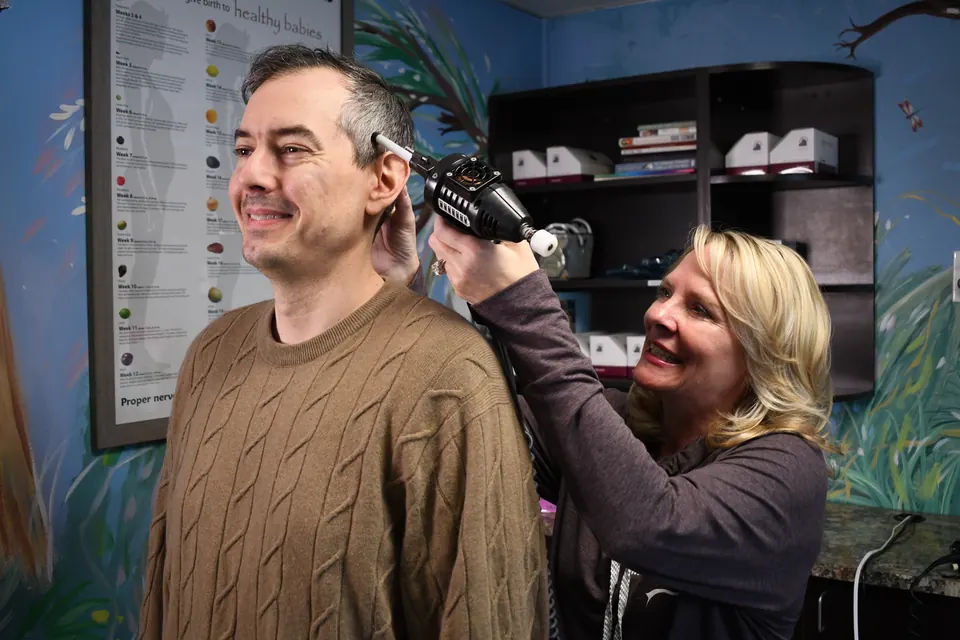
Our doctors start by listening to the full story of what happened: how the impact occurred, which direction your head was facing, and exactly what you have noticed since, even symptoms that feel minor or hard to describe. From there, a gentle exam alongside INSiGHT neurological scanning, which measures thermal patterns, heart rate variability, and muscle tension along the spine, gives an objective look at how your nervous system responded to the impact rather than relying on guesswork. Using Koren Specific Technique and Talsky Tonal Chiropractic, our doctors then work with light, nervous system focused contacts, no cracking, twisting, or forceful manipulation, which matters for a neck that has already been through enough for one week. Every visit is adjusted based on how your body responded to the last one.
What to Do in the Meantime
Whether or not you have symptoms yet, a few habits in the days right after an accident tend to help:
- Write down what happened while it is still fresh: the direction of impact, the speed, and anything you noticed right after, even if it seemed minor at the time
- Keep a simple daily note of any new symptoms as they show up, since patterns are much easier to spot with a record than from memory alone
- Move gently rather than staying completely still. Short, easy walks and slow neck rotations within a comfortable range tend to help more than freezing up around the area
- Give yourself permission to rest in the first few days, even if nothing feels obviously wrong yet
Where to Go From Here
You do not have to wait for a symptom to become unbearable before it is worth a closer look. If you were recently in an accident, however minor it seemed, our doctors in Royal Oak would be glad to check your nervous system and help you understand what, if anything, is building underneath. You can read more about our approach on the whiplash and auto injury page, or grab our free guide on what actually happens in the body after a crash. When you are ready, you can book online with our doctors, or call the office at (248) 616-0900 and we will walk you through what to expect.