When people talk about anxiety in kids, the conversation usually stays in the realm of thoughts and feelings, worry, fear, overthinking. What gets missed far more often is the physical side, the muscle tension, the restlessness, the digestive complaints that show up right alongside the worry and often show up first.
Before assuming your child's anxiety is purely a mindset issue, it is worth running through a quick physical check. What you find may point toward a nervous system pattern that a scan can confirm and that gentle care can actually address.
The Physical Self Check
Go through these questions honestly, thinking about the last month or so:
- Does your child seem restless or on edge even during downtime, struggling to sit still or settle into calm activities?
- Do they tire out fast, seeming wiped out by things that would not have exhausted them a year ago?
- Do they have trouble concentrating, or does their mind seem to go blank under pressure?
- Are they quick to irritation or anger over things that would not have bothered them before?
- Do they complain of tight or sore muscles, or constantly want to stretch or crack their neck and back?
- Do they struggle to fall asleep, stay asleep, or wake up feeling like the sleep did not count?
- Do they deal with a nervous stomach, nausea, or constipation, especially around stressful events like school mornings?
If you found yourself nodding along to three or more of these, especially spread across different categories, physical tension and worry, sleep and digestion, there is a real chance the anxiety you are seeing has a strong physical, nervous system component driving it, not just a thinking pattern to talk through.
Why Muscle Tension Shows Up With Anxiety
In older kids and teens, this physical tension is usually easy to spot, neck stiffness, tension headaches, an achy upper back. In younger children, it is harder to catch because they cannot always describe it that way. Instead it shows up as what might be better called sensory or emotional tension, a body that feels keyed up even when nothing is visibly wrong.
Think about how you feel after a night of poor sleep with a stiff neck. More irritable, quicker to react, harder time settling down. That everyday experience is a small window into what a child with chronic muscle tension and nervous system stress is dealing with far more often than an occasional bad night.
What an INSiGHT Scan Adds to the Picture
Self checks like the one above are a useful starting point, but they rely on observation alone. An INSiGHT neurological scan gives an objective, measurable read on what is actually happening in a child's nervous system, rather than relying only on a list of symptoms.
The scan looks at tension patterns along the entire spine, from the brainstem down, giving a much fuller picture than focusing on any one area alone. It also includes heart rate variability testing, which shows how a child's nervous system is shifting between an alert, keyed up state and a calmer, settled one. Together, these readings frequently confirm exactly what a physical self check like the one above would suggest, a nervous system spending too much time stuck in an alert, sympathetic leaning state, with the calming side struggling to catch up.
Why This Matters for How Anxiety Gets Addressed
When anxiety is treated only as a thinking pattern, a lot of families find the usual coping tools do not fully land, because a nervous system stuck in an alert state has trouble accessing the calm, reasoning part of the brain those tools rely on. Identifying the physical piece changes where care starts. Rather than asking a worried, wound up nervous system to simply think its way to calm, the work begins with easing the tension that is keeping that system locked in overdrive in the first place.
Anxiety Rarely Travels Alone
Something else worth noticing during this self check is what else shows up alongside the worry. Anxiety in kids very often pairs with other signs of a stressed nervous system, trouble focusing, low grade digestive issues, a weakened immune system, or hormonal shifts that seem unrelated on the surface. That pattern is common enough that it should change how you think about the worry itself. Rather than a stand alone problem to solve, chronic childhood anxiety usually behaves like one visible piece of a wider nervous system picture, which is exactly why a physical check, not just a conversation about feelings, tends to be so revealing.
Our Approach
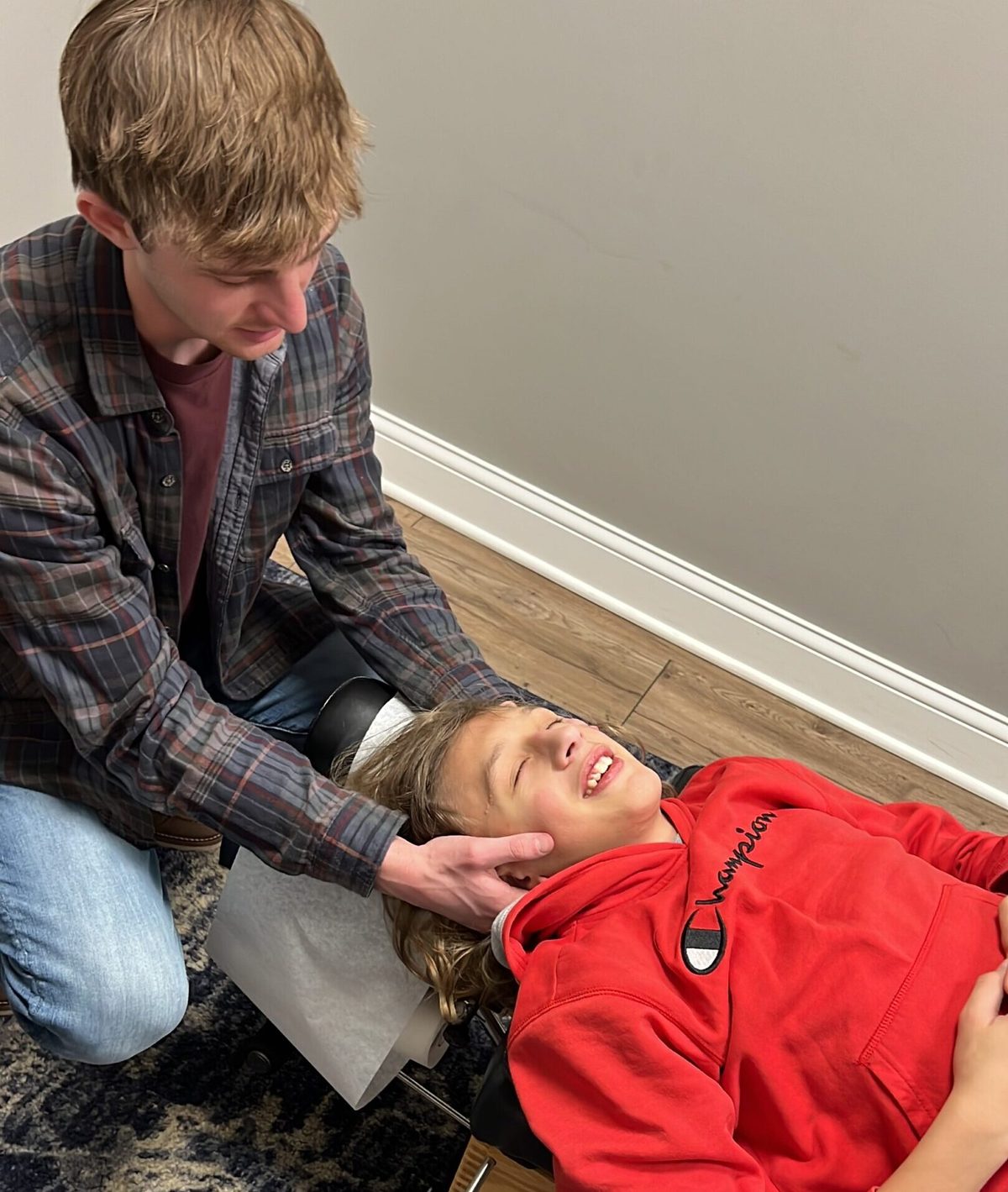
Our doctors start with your child's story and the physical self check above, then use INSiGHT scanning to confirm what is actually happening in their nervous system. From there, using Koren Specific Technique and Talsky Tonal Chiropractic, gentle, nervous system focused adjustments work at whatever pace your child needs, with no cracking, popping, or twisting involved, to ease the tension patterns feeding that stuck, alert state. As the nervous system settles, many families notice the physical signs ease first, better sleep, fewer stomachaches, less muscle tension, with steadier emotional regulation following close behind.
Where to Go From Here
Checking several boxes above does not mean something is wrong with your child. It means their nervous system has been working overtime, and that pattern responds well to the right kind of attention. Rather than waiting to see if worry fades with age, an objective look now can save months of guessing.
Our anxiety in children page goes deeper into how this shows up day to day, and our page on a stuck fight or flight response explains the underlying pattern in more detail. There is also a downloadable guide available on the anxiety in children page for families who want to read more before their first visit. Call our Royal Oak office at (248) 616-0900 with any questions, or go ahead and book online to get your child's own scan results.