
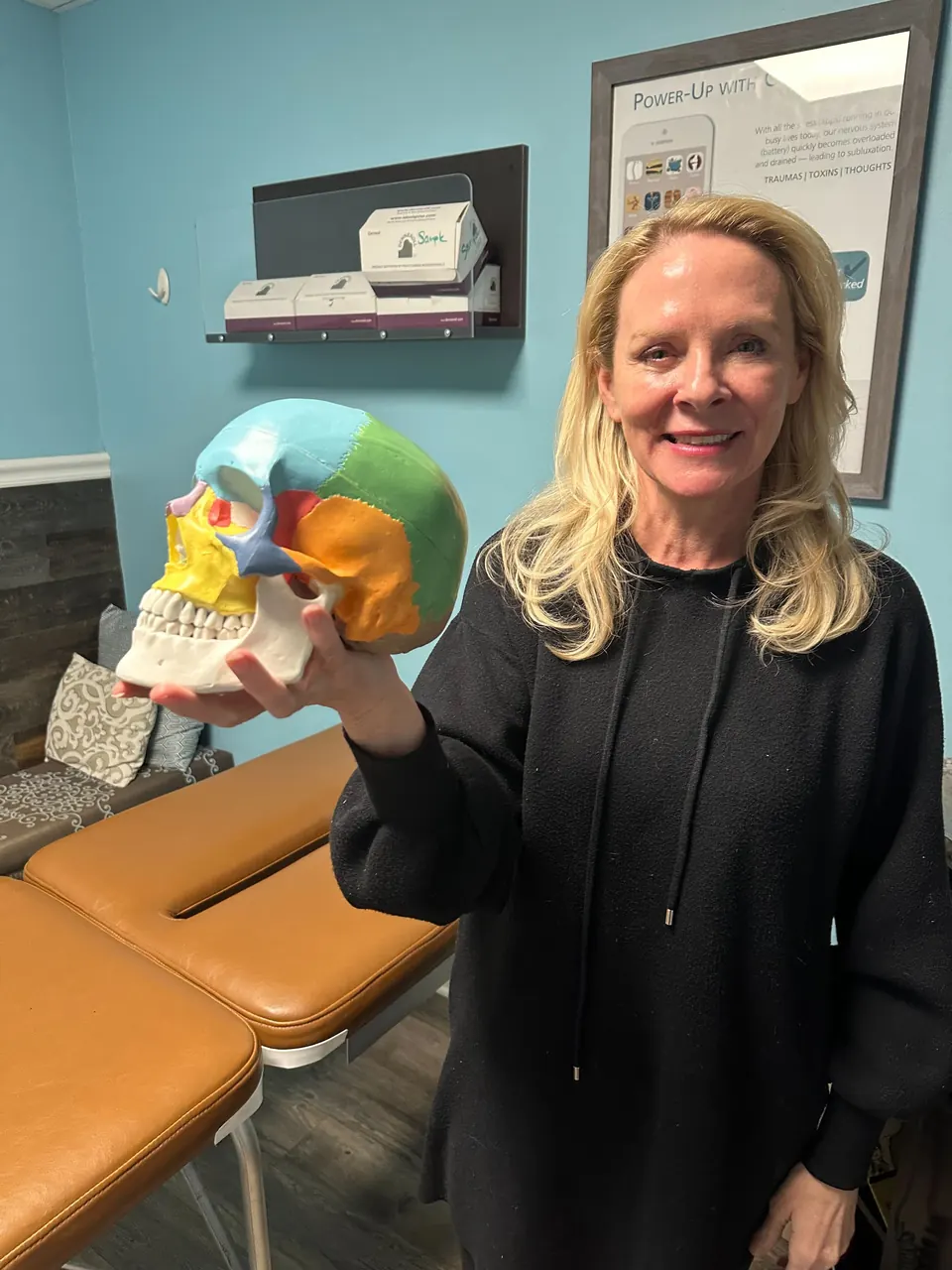
Picture your skull and you probably picture a single, solid dome of bone, something like a helmet that got permanently welded shut sometime in early childhood. That picture is wrong, and it is worth correcting, because what is actually true about your skull explains a surprising number of symptoms that otherwise seem unrelated to each other.
What Your Skull Actually Is
Your skull is made up of many separate bones, eight larger ones that protect the brain and fourteen smaller ones that form the lower front of the face. These bones stay distinct from one another for your entire life. They do not melt into one piece the way people assume. Between them are seams called sutures, filled with connective tissue, nerves, and blood vessels, and each bone has its own small, specific range of motion. That subtle, ongoing motion is part of why the cranial system is worth paying attention to rather than dismissing as settled and finished the moment the soft spots on a baby's head close over.
What Happens When a Cranial Bone Gets Stuck
When one of these bones locks up or shifts slightly out of its correct position, the effects rarely stay contained to the head. A cranial bone that is not moving properly can put pressure on the tissue and nerves running through the nearby sutures, and because those pathways connect to the brain and spinal cord, the downstream effects can show up almost anywhere in the body.
A difficult birth is one of the more common causes, whether that involved a long labor, forceps, vacuum extraction, or a C-section. Even a birth that looked completely uneventful from the outside can leave a newborn's still-soft cranial bones under real mechanical stress. Falls, sports injuries, and other trauma later in life can do the same thing to an adult skull, and so can severe emotional stress or a jaw that has spent years clenching under pressure.
Why This Is Worth Looking At
The cranial bones sit directly around the brain, the brainstem, and the top of the spinal cord, which is part of why restrictions here can ripple outward in ways that are easy to miss if nobody is specifically checking for them. Tension held in this area can influence how well the nervous system as a whole is able to settle, regulate, and communicate with the rest of the body.
This is not about chasing every headache back to the skull. It is about recognizing that when a cluster of symptoms does not have an obvious explanation elsewhere, the cranial bones are a place worth checking rather than skipping past, especially in someone with a history of head trauma, a difficult birth, or years of unresolved jaw tension.
How Our Doctors Check and Support Cranial Function
Cranial work does not look or feel like a typical spinal adjustment. Using Koren Specific Technique (KST), our doctors use a small handheld instrument that delivers a light, specific tap directly to the cranial bone that needs it, gently encouraging it back toward its correct position and releasing the tension held around it. There is no cracking, no twisting, and no pressure beyond what you would use to check whether a piece of fruit is ripe. Patients from newborns to great-grandparents typically find it comfortable, and many describe the sensation as barely noticeable.
We start by listening to your history, including anything about your birth, past head injuries, or ongoing jaw and neck tension that might point toward the cranial system. From there, our doctors assess where restriction is being held, along with INSiGHT neurological scanning where it fits into the bigger picture of what your nervous system is carrying. Cranial corrections tend to hold well over time. Occasionally a bone needs to be addressed more than once, particularly after a significant head injury, repeated trauma, or dehydration, but for most people a session brings a change that sticks rather than something requiring constant rechecking.
What People Often Notice
Patients who come in specifically for cranial work often describe changes that go well beyond what originally brought them through the door. Some common threads:
- Fewer headaches, particularly ones that seemed to start at the base of the skull or behind the eyes
- A sense of mental clarity that they had not realized was missing
- Steadier mood, especially in people who had been carrying chronic tension for years
- A physical sense of pressure releasing, sometimes described as something finally letting go after a long time
- Better sleep, since a nervous system carrying less cranial tension often settles more easily at night
Every person's cranial pattern is different, shaped by their own history of trauma, birth, and accumulated stress, so the timeline for noticing change varies. What tends to be consistent is that once the restriction is addressed, it does not simply reappear the next week.
Is This Right for You or Your Child
Cranial work is appropriate at nearly any age, and birth itself is one of the more demanding experiences a set of cranial bones will ever go through, which is one reason so many parents bring infants in for an evaluation early on. For adults, a history of concussion, whiplash, a hard fall, or years of jaw clenching are all reasons this area is worth having looked at, even if the connection to your current symptoms is not obvious at first glance.
If you have been dealing with headaches, a foggy feeling, or tension that never quite resolves and have never had your cranial bones specifically evaluated, our doctors would be glad to take a look and show you what we find. You can read more on our cranial work page, or reach out directly. When you are ready, you can book online with our doctors in Royal Oak, or call us at (248) 616-0900 with any questions before your first visit.