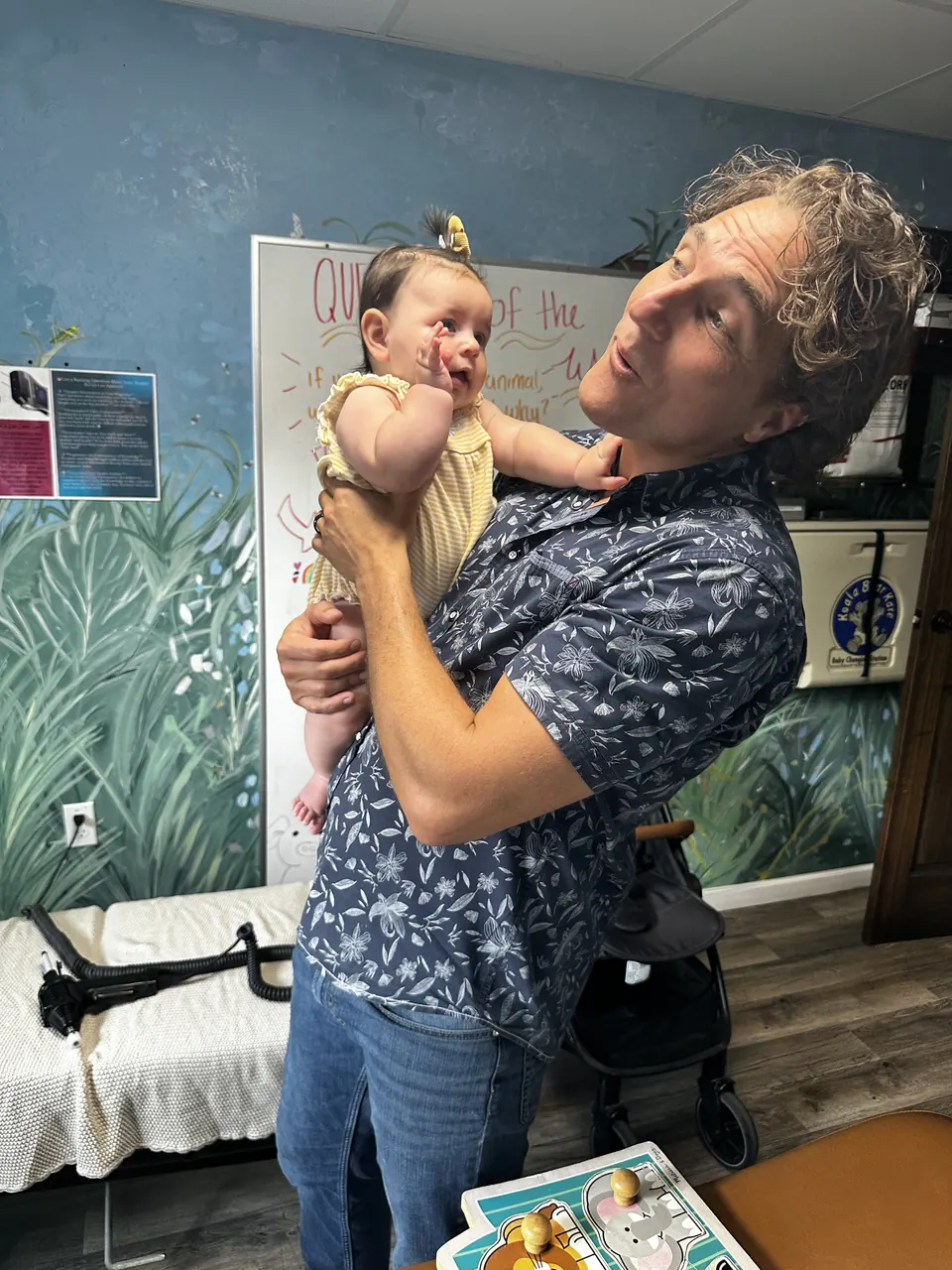

Somewhere in the middle of another sleepless night, a doctor may have told you the crying, the arching, the gas, the constant unsettled feeling would pass. Wait it out. They will grow out of it. And maybe the worst of it does ease with time. But plenty of parents notice something else: the baby who screamed through every evening turns into the toddler with big sensory reactions, or the preschooler who cannot settle at nap time, or the school age kid who struggles with focus and big emotions. Different labels, same nervous system underneath.
That pattern is worth taking seriously, not because it means something is permanently wrong, but because it points to where the real starting point of colic usually is, and it is not only in the stomach.
The Piece That Often Gets Left Out
Most explanations for colic focus on digestion. Gas, indigestion, a buildup of pressure in a still-developing gut. That is real and worth addressing, and it is why so many families try eliminating dairy, keeping a food journal, or adding probiotics and gas drops. Some of it helps a little. Rarely does it fully resolve the crying, because digestion in a newborn is not running the show on its own.
In a brand new baby, the whole digestive process, moving food along, breaking it down, absorbing what is needed and clearing the rest, is directed by the autonomic nervous system. Before there is a gut problem, there is usually a nervous system that is working overtime just to keep up. Address only the gut symptoms and you can ease things at the edges without ever reaching what is actually driving them.
Where the Stress Usually Starts
For a large share of colicky babies, the story traces back to pregnancy and birth. A pregnancy with a lot of physical or emotional stress, an unusual position in the womb, or a birth involving a long labor, vacuum extraction, forceps, or a cesarean section all place real physical strain on an infant's upper neck and spine. That area functions as a kind of control hub for the autonomic nervous system, and the vagus nerve, which travels from the brainstem down through the neck to open the esophagus and switch on digestive activity, runs right through it.
When tension builds in that region, it can interfere with the vagus nerve's signal, and digestion becomes harder work than it should be. It also explains a detail many parents notice but cannot quite name: colicky babies often arch their back, stiffen their neck, and lean backward instead of curling forward the way you might expect from stomach pain. That posture looks a lot like what an adult does after a long day hunched at a desk, stretching and arching to relieve built up tension. A baby is doing the same thing, and it is a signal worth listening to. The discomfort may be showing up in the belly, but the tension driving it often sits in the neck and spine.
So Does a Baby Actually Grow Out of It?
Sometimes the crying itself fades as a baby's system matures, which is likely where the reassurance comes from. But the underlying tension pattern does not necessarily resolve just because the loudest symptom quiets down. The same upper neck and brainstem region involved in digestion also coordinates early motor milestones, head control, pushing up, rolling, sitting, crawling, so when that area is under strain, it can show up in more than one way as a baby grows.
This is part of why colic, frequent ear infections, and sensory sensitivities often appear in the same child at different ages rather than as separate, unrelated issues. It is not that colic causes ear infections or sensory challenges directly. It is that an unresolved nervous system pattern can express itself differently at six weeks, six months, and six years. Recognizing that early gives families a chance to address the pattern itself instead of chasing each new symptom as it appears, one exhausting phase at a time, without ever circling back to where the strain first took hold.
What Care Looks Like for Your Baby
Our doctors start by hearing the full picture, the pregnancy, the birth, the feeding pattern, and everything you have already tried. From there, a gentle exam, along with INSiGHT neurological scanning when appropriate, helps show where stress is being held in your baby's spine and nervous system. Using Koren Specific Technique and Talsky Tonal Chiropractic, our doctors work with light, nervous system focused contacts, more gentle than the pressure you would use to check a piece of fruit, to help ease tension in the upper neck, mid back, and lower spine. Babies frequently relax visibly during a session, and many drift off to sleep. Parents often tell us the change shows up first at the next feed, an easier latch, less arching, a calmer stretch of minutes afterward, well before the bigger patterns settle in.
Supporting Your Baby Between Visits
- Hold your baby upright for ten to fifteen minutes after feeds to give trapped air a chance to move
- Keep a simple log of when the crying spikes, since patterns tied to time of day are useful information
- Try gentle bicycle-leg motions between feeds to ease a tight, gassy belly
- Keep your pediatrician informed of what you are seeing and trying
- Give changes time. Nervous system patterns that built up over pregnancy and birth do not always ease overnight
Where to Go From Here
If you have been told to simply wait it out and your gut says there is more going on, it is worth a closer look. Read more about how we support colic and infant digestive concerns, or download our free guide on the nervous system side of colic. When you are ready, you can book online with our doctors in Royal Oak, or call us at (248) 616-0900.